Gluten-free snacks high in zinc don’t have to be complicated or taste the same every day. A handful of pumpkin seeds, crunchy roasted chickpeas, cheese with gluten-free crackers, or plain yogurt topped with seeds can all be practical choices. Some fortified cereals also provide zinc, although the amount depends on the brand and serving size. The key is knowing which ingredients contribute meaningful amounts and how to fit them into your routine. In this guide, you’ll discover 10 easy snack ideas, compare zinc content per serving, and explore vegetarian and plant-based options. You’ll also learn what to check on food labels when choosing zinc-rich gluten-free snacks.
Which Zinc-Rich Ingredients Make the Biggest Difference in a Snack-Sized Serving?
Some snack ingredients provide a useful amount of zinc without requiring a large portion. Pumpkin seeds are an easy example, while cheese, lentils, yogurt, and fortified cereal offer other options for different tastes and dietary preferences.
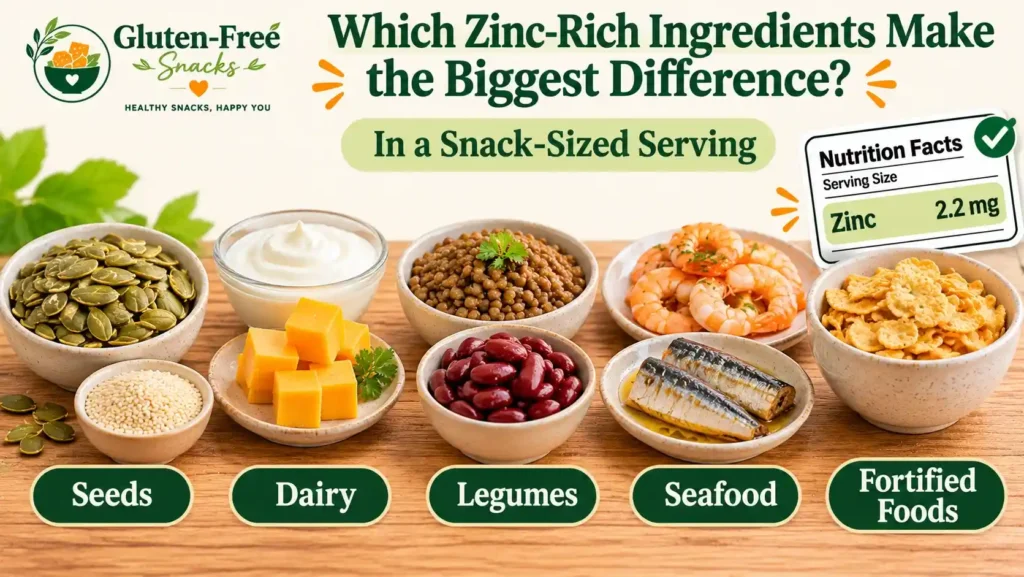
Here’s how selected foods compare using the serving sizes listed by the NIH Office of Dietary Supplements.
| Food or ingredient | Reference serving | Zinc |
| Fortified breakfast cereal | 1 serving (25% Daily Value) | 2.8 mg |
| Roasted pumpkin seeds | 1 oz (28 g) | 2.2 mg |
| Cheddar cheese | 1.5 oz (43 g) | 1.5 mg |
| Cooked shrimp | 3 oz (85 g) | 1.4 mg |
| Cooked lentils | ½ cup | 1.3 mg |
| Canned sardines with bones | 3 oz (85 g) | 1.1 mg |
| Plain Greek yogurt | 6 oz (170 g) | 1.0 mg |
| Dry-roasted peanuts | 1 oz (28 g) | 0.8 mg |
| One large egg | 1 egg | 0.6 mg |
| Canned kidney beans | ½ cup | 0.6 mg |
These figures are reference estimates, not guarantees for every product. Oysters, for example, contain much more zinc than most everyday snack ingredients, but they may not be a practical choice for everyone. For snack planning, comparing realistic serving sizes is more useful than looking only at zinc per 100 g. If you choose fortified cereal, check both its zinc content and its gluten-free suitability, since fortification levels and ingredients vary by brand.
10 Zinc-Rich Gluten-Free Snacks Worth Making at Home
You can add zinc to your snack routine without relying on expensive bars or complicated recipes. From crunchy seeds to creamy yogurt and savory chickpeas, these ideas use familiar ingredients and are easy to adapt to your taste. The amount of zinc varies, so the serving size and ingredients matter.
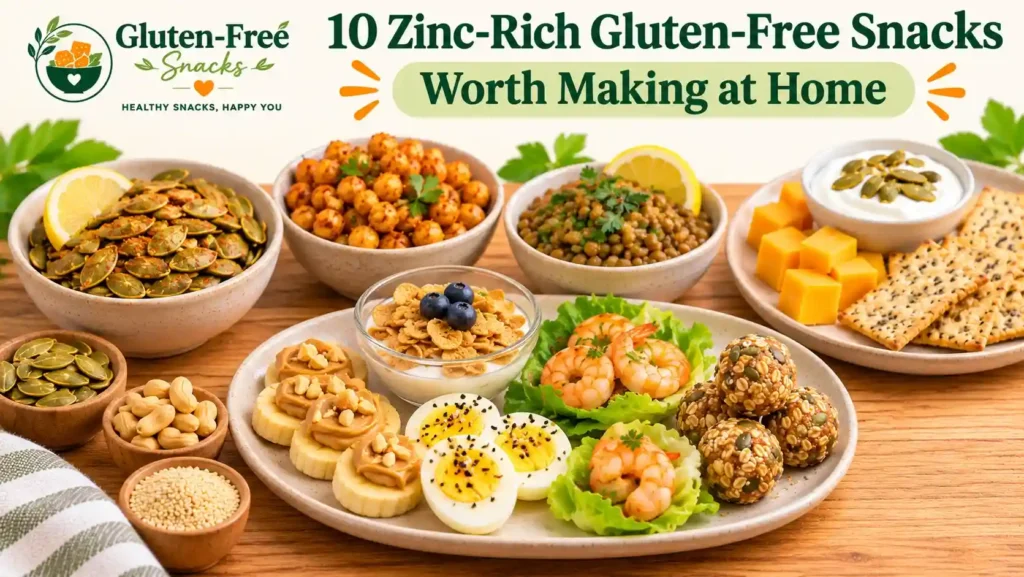
1. Roasted Pumpkin Seeds with Lemon and Smoked Paprika
Pumpkin seeds are one of the most convenient plant-based sources of zinc. The NIH zinc food table lists about 2.2 mg of zinc per ounce (28 g) of roasted pumpkin seeds. Toss a small portion with lemon juice, smoked paprika, and a pinch of salt for a flavorful snack. If you buy seasoned seeds, check the ingredient list for gluten-containing additions.
2. Crunchy Roasted Chickpeas with Cumin
For a crunchy snack, toss cooked chickpeas with a little oil, cumin, and paprika, then roast them until crisp. Chickpeas provide zinc, plant-based protein, and fiber, making them useful for more than just hummus. Their zinc content depends on the portion and preparation. For another way to enjoy them, try our homemade gluten-free snacks.
3. A Small Lentil Bowl with Lemon and Fresh Herbs
Cooked lentils can be just as useful for snacking as they are for meals. The NIH lists approximately 1.3 mg of zinc per half-cup serving. Spoon the lentils into a small bowl and add lemon juice, chopped herbs, and a little olive oil. Make a batch ahead of time, refrigerate it promptly, and check any packaged seasonings for gluten-free suitability.
4. Cheddar with Gluten-Free Crackers
When you want something simple, pair a measured portion of cheddar with crunchy gluten-free crackers. Cheese provides zinc, along with protein and calcium, so it can be a useful addition to a varied snack routine. Choose crackers that are clearly suitable for your dietary needs, particularly if you have celiac disease. Check their ingredients and gluten-free labeling rather than relying on appearance alone.
5. Greek Yogurt Topped with Pumpkin Seeds
Spoon plain Greek yogurt into a bowl and sprinkle pumpkin seeds over the top for a quick snack with contrasting creamy and crunchy textures. The seeds provide much of the zinc in this combination, while the yogurt contributes a smaller amount. Choose plain yogurt to keep the flavor simple, then add berries or cinnamon if you like. The total zinc depends on the portions you use.
6. Peanut Butter on Banana Slices or Rice Cakes
Spread peanut butter over banana slices for a naturally sweet snack, or use a suitable rice cake when you want something crunchy. Peanuts contain zinc, although they generally provide less per serving than pumpkin seeds. Choose a peanut butter that suits your dietary needs, and check flavored varieties and packaged rice cakes for added ingredients that may affect gluten-free suitability.
7. Gluten-Free Cereal with Milk or Yogurt
Some fortified breakfast cereals provide useful amounts of zinc, making them an option when you need a quick snack. Serve a measured portion with milk or plain yogurt, or enjoy the cereal on its own. Check the nutrition label because zinc fortification varies between brands. Also verify that the cereal is suitable for a gluten-free diet, especially if it contains oats or other grains.
8. Boiled Eggs with a Sprinkle of Sesame Seeds
A boiled egg topped with sesame seeds, black pepper, and a squeeze of lemon makes an easy savory snack. Eggs contribute zinc, while sesame seeds add another plant-based source. The amount will depend on the portions, so avoid assuming a light sprinkle provides a large share of your daily needs. Use seasonings that are suitable for your gluten-free diet.
9. Crab or Shrimp in Crisp Lettuce Cups
For a seafood option, place properly cooked crab or shrimp in lettuce leaves and add lemon juice and fresh herbs. Seafood can be a useful source of zinc, although the amount varies by species and serving size. This snack offers a change from seeds and dairy-based choices. If you use packaged seafood, sauces, or seasoning mixes, check the ingredients and gluten-free suitability before serving.
10. No-Bake Peanut Butter Energy Bites with Seeds
For a snack you can prepare ahead, try our 5-Ingredient No-Bake Peanut Butter Energy Balls. Peanut butter and seeds contribute zinc, while dates help bind the mixture and add sweetness. The amount of zinc per bite depends on the ingredients and number of portions. If the recipe includes oats, choose oats suitable for a gluten-free diet.
A helpful reminder: These snacks do not all provide the same amount of zinc. Pumpkin seeds are a particularly useful plant-based source, while other options contribute smaller amounts or offer a combination of nutrients. Choose a variety you enjoy, pay attention to serving sizes, and check packaged ingredients when needed.
Getting Zinc from Vegetarian Snacks Without Eating the Same Foods Every Day
You don’t need meat or seafood to enjoy zinc-rich snacks. Pumpkin seeds, roasted chickpeas, lentils, peanuts, cashews, and suitable zinc-fortified cereals all offer vegetarian options that are easy to work into your routine. Try sprinkling pumpkin seeds over yogurt, keeping roasted chickpeas ready for a savory bite, or making small peanut butter and seed snacks.
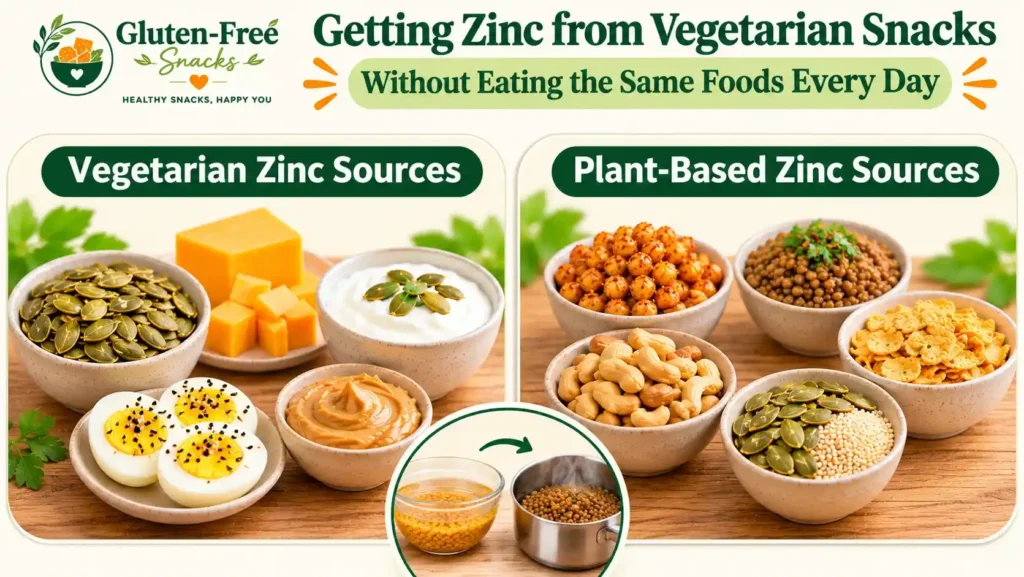
There is one useful detail to know: zinc content and zinc absorption are not quite the same thing. Plant foods contain zinc, but phytates in legumes and whole grains can reduce how much your body absorbs. Soaking, sprouting, fermenting, and cooking certain foods can influence mineral availability. This doesn’t make plant-based snacks a poor choice. It simply makes variety important, especially when most of your zinc comes from plant foods.
How Much Zinc Should Your Daily Snacks Add?
You don’t need to get all your zinc from snacks. The goal is to include a variety of zinc-containing foods throughout the day, alongside your regular meals. According to the National Institutes of Health (NIH), adults generally need 11 mg of zinc per day for men and 8 mg for women. Requirements differ during pregnancy, breastfeeding, adolescence, and other stages of life.
A handful of pumpkin seeds, a serving of fortified cereal, or a small bowl of lentils can all contribute to your daily zinc intake. The amount depends on the food and portion size. Instead of trying to meet your entire daily requirement with one snack, mix and match zinc-rich foods that you enjoy as part of a varied diet.
What to Check on Labels Before Buying Zinc-Rich Snacks
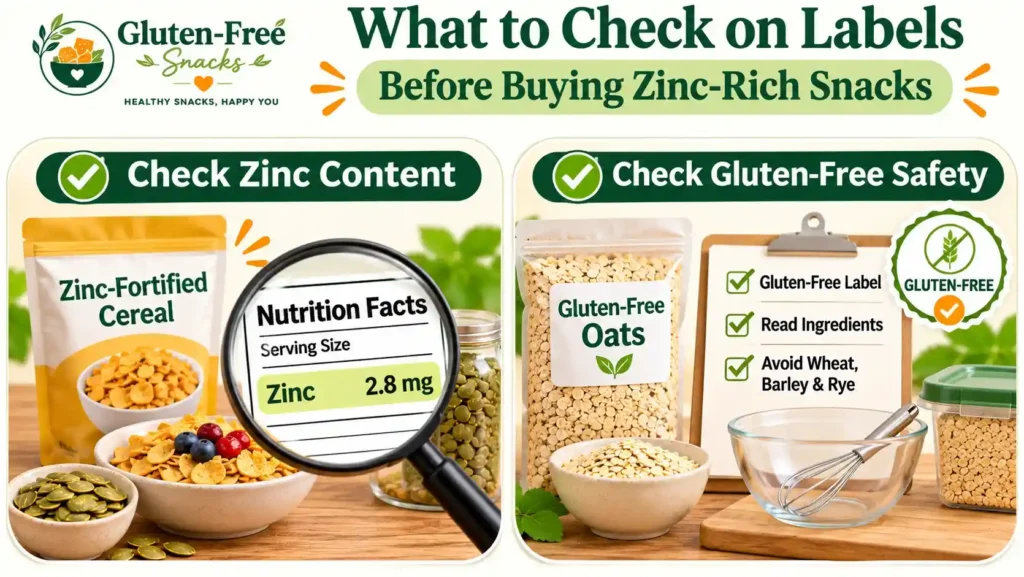
Pumpkin seeds, peanuts, chickpeas, and other basic ingredients can be naturally gluten-free, but packaged versions deserve a closer look. Flavored nuts, seasoned seeds, snack bars, crackers, breakfast cereals, and spice mixes may contain added ingredients or be exposed to gluten during processing. Oats also need particular care because cross-contact with wheat, barley, or rye can occur.
Before buying a snack, read the ingredient list and look for a gluten-free label when appropriate. In the United States, the FDA requires foods labeled gluten-free to contain less than 20 parts per million (ppm) of gluten. Other countries may have different labeling requirements.
If you have celiac disease, preparation matters too. Shared utensils, surfaces, and storage containers can introduce gluten even when the main ingredient is naturally gluten-free. For practical shopping tips, see our guide to reading gluten-free food labels. You can also consult our gluten-free diet safety and labeling guide.
Make Zinc-Rich Snacking Easy to Maintain
Adding zinc to your gluten-free routine doesn’t have to mean changing everything you eat. Pumpkin seeds, lentils, roasted chickpeas, cheese, yogurt, and suitable fortified cereals all offer useful options. Mix and match snacks you enjoy, pay attention to realistic serving sizes, and check packaged ingredients when needed. A little variety makes everyday snacking easier and more practical.
Quick Answers About Zinc-Rich Snacks, Fruit, and Everyday Choices
It depends on the portion and ingredients. Pumpkin seeds are a convenient plant-based choice, providing about 2.2 mg of zinc per ounce (28 g). Some seafood, particularly oysters, can contain considerably more zinc per serving. The NIH zinc guide provides useful comparisons.
Most fruits and vegetables contain relatively small amounts. You can still enjoy them as part of a balanced snack, but pairing apple slices with pumpkin seeds or adding seeds to a fruit bowl provides a more meaningful source of zinc.
Cashews and peanuts are useful options. Pumpkin seeds are technically seeds rather than nuts, but they deserve a place in a zinc-focused snack guide. Compare realistic serving sizes instead of relying only on zinc content per 100 g.
Zinc supports normal skin function and wound healing. However, eating a particular snack is not a proven treatment for acne or other skin conditions. If you’re concerned about persistent skin problems or a possible zinc deficiency, seek advice from a qualified healthcare professional.