Iron-Rich Snacks Should Fit Real Life, Not Just a Nutrition Chart
Trying to add more iron to a gluten-free diet can quickly turn into a search through long food lists and full meal plans. But when you need something between meals, you probably want a snack you can put together without much fuss, not a whole new cooking routine.
These gluten-free snacks high in iron focus on practical options made with pumpkin seeds, chickpeas, lentils, dried fruit, iron-fortified gluten-free cereals, and selected meat or seafood choices. You’ll also discover easy ways to pair plant-based iron sources with vitamin C-rich foods such as strawberries, oranges, and bell peppers, which can help your body absorb non-heme iron.
No single snack treats iron deficiency, but thoughtful food choices can add variety to your gluten-free routine. For more everyday guidance, explore our gluten-free snack fundamentals.
The Iron Source Matters as Much as the Snack You Make
Not all dietary iron is absorbed in the same way. Heme iron is found in animal foods such as beef and seafood and is generally absorbed more readily. Non-heme iron comes from plant foods and fortified products, including chickpeas, lentils, pumpkin seeds, tofu, and fortified cereals. Both can contribute to your iron intake.
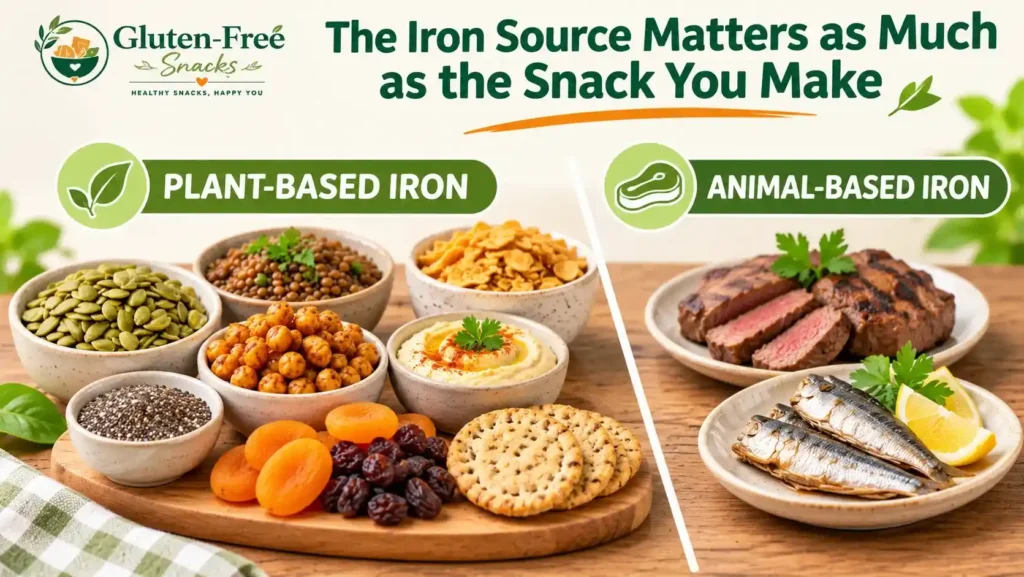
The Canadian Celiac Association’s iron guide highlights a range of options that can fit into a gluten-free diet. Here are a few ways to use them as snacks.
| Iron source | Snack-friendly foods | Easy way to use them |
| Seeds | Pumpkin seeds, chia seeds | Mix with fruit or add to a snack mix |
| Legumes | Chickpeas, lentils, hummus | Make roasted snacks, dips, or mini patties |
| Fortified foods | Gluten-free fortified cereal | Check the iron amount on the nutrition label |
| Animal sources | Beef, sardines | Serve with suitable gluten-free crackers |
Iron content varies by food and serving size, so check the nutrition information before describing a product as high in iron. The NIH iron guide provides more detail on food sources and absorption.
Give Plant-Based Iron a Bright Sidekick
Plant foods such as chickpeas, lentils, pumpkin seeds, and fortified cereals provide non-heme iron. Here’s a useful trick when building gluten-free snacks with iron and vitamin C: vitamin C helps your body absorb non-heme iron from plant foods. You don’t need a complicated recipe, just pair an iron source with a vitamin C-rich ingredient.
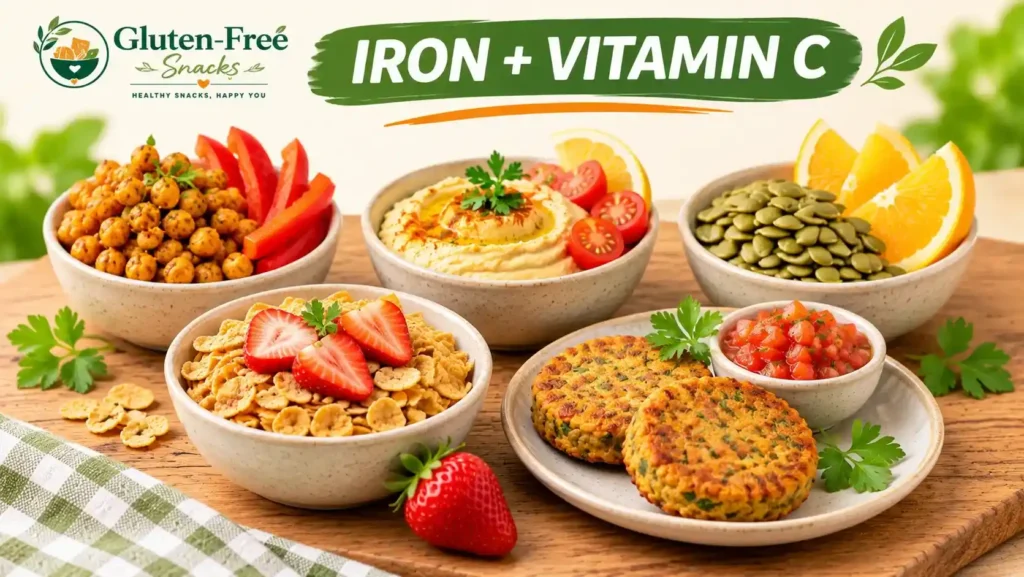
Try these simple combinations:
- Roasted chickpeas with red bell pepper: Chickpeas provide iron, while red pepper adds vitamin C and a fresh crunch.
- Hummus with tomato and lemon: Chickpeas supply non-heme iron; tomato and lemon add vitamin C.
- Pumpkin seeds with orange or kiwi: Seeds contribute iron, while the fruit provides vitamin C.
- Iron-fortified gluten-free cereal with strawberries: The cereal supplies iron, and strawberries add vitamin C.
- Lentil patties with tomato salsa: Lentils provide plant-based iron, while tomatoes bring extra vitamin C.
These plant-based gluten-free snacks high in iron offer practical ways to combine nutrients. Vitamin C can improve iron absorption, but no single pairing guarantees a particular result or treats iron deficiency. For more high-protein gluten-free vegan snack ideas, explore options made with ingredients such as chickpeas, edamame, nuts, and seeds. For additional details, see the NIH guide to iron and the Canadian Celiac Association’s iron guide.
Turn Iron-Rich Ingredients Into Snacks You Would Actually Reach For
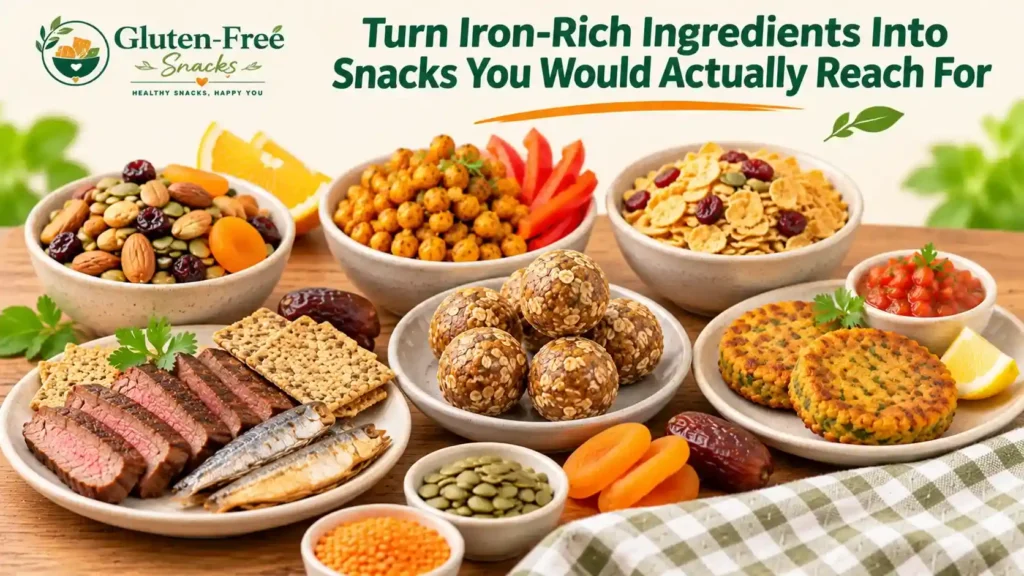
Iron-rich foods don’t have to stay in a meal plan or a nutrition chart. With a few familiar ingredients, you can turn seeds, legumes, fortified cereals, and other iron sources into snacks that are easy to prepare and enjoyable to eat. You can find more homemade gluten-free snack recipes for additional ideas.
Pumpkin Seeds, Fruit, and Something Crunchy
Pumpkin seeds make a convenient base for a homemade snack mix. Combine them with a few almonds and dried apricots, then add fresh orange or kiwi when you’re ready to eat. The seeds contribute non-heme iron, while the fruit provides vitamin C, which helps your body absorb iron from plant foods. Remember that the amount of iron you get depends on the portion you eat.
Chickpeas That Go Beyond Hummus
Chickpeas offer more than one way to enjoy a savory snack. Roast them with suitable seasonings for a crunchy option, or serve hummus with red bell pepper strips. If you have leftover chickpeas, mash them into small patties and serve with tomato salsa. These combinations provide plant-based iron alongside ingredients that add color, flavor, and vitamin C.
The Fortified Cereal Snack You Might Have Overlooked
Some gluten-free cereals are fortified with iron, making them worth checking when shopping. Sprinkle a suitable cereal over yogurt or combine it with dried fruit and seeds for a simple snack mix. Fortification levels vary, so look at the Nutrition Facts panel rather than assuming every cereal contains a substantial amount of iron.
Dates, Seeds, and Homemade Energy Bites
Dates bring natural sweetness to a mixture of pumpkin seeds, chia seeds, and suitable gluten-free oats. You can combine these ingredients with nut butter to make no-bake bites for the fridge. For a ready-to-follow recipe, try our No-Bake Energy Bites. Check the ingredients if you need strict gluten avoidance. You can also explore gluten-free snacks with flax seeds for more seed-based snack inspiration.
Lentil Patties With Tomato or Lemon Dip
Cooked lentils can become small savory patties with herbs and suitable gluten-free ingredients. Serve them with tomato salsa or a lemon dressing for a bright, tangy finish. This is also a practical way to use leftover lentils rather than preparing a completely new snack.
A Meat-Based Option for Savory Snackers
If you eat meat or seafood, small pieces of cooked beef or sardines can provide heme iron, which is generally absorbed more readily than non-heme iron from plant foods. Serve with suitable gluten-free crackers or sliced vegetables.
Keep in mind that iron content varies with the ingredient, portion size, and preparation method. For reliable food-source information, consult the NIH guide to iron.
When You Prefer Plant-Based Snacks, Start With These Three Staples
You don’t need a complicated recipe to add more plant-based iron to your gluten-free routine. Keep three useful ingredients within reach: seeds, legumes, and iron-fortified gluten-free foods.
Seeds such as pumpkin, chia, and sesame are easy to sprinkle over yogurt, mix with dried fruit, or add to homemade snack bites.
Legumes offer more variety than you might expect. Chickpeas, lentils, and beans can become roasted snacks, hummus, or small savory patties. Pairing these plant foods with vitamin C-rich ingredients can help your body absorb non-heme iron.
Fortified gluten-free foods are another option. Some cereals contain added iron, but the amount varies by product, so check the nutrition label.
These staples make it easier to vary your plant-based snacks instead of relying on a single ingredient. If you prefer to prepare several options in advance, see our guide to make-ahead gluten-free snacks.
The Package Can Tell You Two Different Things: Iron Content and Gluten Safety
A snack can contain iron without being gluten-free, and a gluten-free label doesn’t automatically mean it’s a good source of iron. When shopping, check both details rather than assuming one guarantees the other.
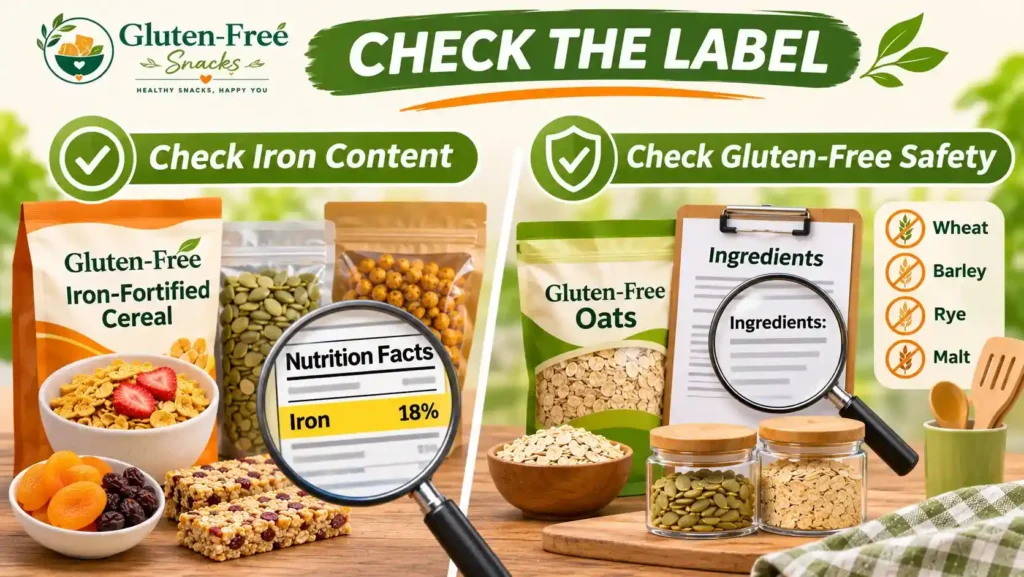
Start with the ingredient list. Look for wheat, barley, rye, and malt, including in seasonings, coatings, and flavorings. For products such as oats and fortified cereals, choose versions specifically labeled gluten-free when you need to avoid gluten strictly.
Next, check the nutrition panel. The amount of iron per serving is more useful than a vague front-of-pack claim. Remember that serving sizes differ, so compare like with like when choosing between products.
Cross-contact can also occur when foods share equipment or production areas with gluten-containing ingredients. If you have celiac disease, clear gluten-free labeling can help you make a more informed choice. Our guide to gluten-free diet safety and labeling explains these considerations in more detail.
In the United States, the FDA’s gluten-free labeling guidance explains the requirements for using a gluten-free claim, including a limit of less than 20 parts per million of gluten.
For more practical advice, see our guide to Reading Food Labels: A Simple Guide to Choosing Gluten-Free Foods.
Choose a Packaged Snack Without Guessing
Packaged snacks can be helpful when you need something convenient for work, travel, or a busy afternoon. The trick is to choose products based on their actual iron content and gluten-free status, not just their marketing. Our gluten-free snack products and buying guides offer additional guidance for comparing packaged options.
| Packaged snack | Why consider it | What to verify |
| Iron-fortified gluten-free cereal | May provide a useful amount of iron per serving | Gluten-free claim and iron on the nutrition panel |
| Pumpkin-seed packs | Portable source of plant-based iron | Serving size and nutrition information |
| Roasted chickpeas | Crunchy, savory option | Ingredients, seasonings, and cross-contact |
| Dried apricots or raisins | Convenient for snack mixes | Serving size and added ingredients |
| Gluten-free snack bars | Easy to carry on busy days | Iron amount, gluten-free claim, and full ingredient list |
Not every seed pack or dried-fruit snack provides the same amount of iron. If you’re comparing products, check the iron amount per serving and confirm that the exact product is suitable for your gluten-free needs. That simple check makes shopping more reliable without turning it into a guessing game.
Make Iron-Rich Snacking Part of Your Usual Routine
You don’t need to buy every iron-rich ingredient or prepare a separate recipe each day. Keep a few reliable options handy, such as pumpkin seeds with fruit, chickpeas with bell peppers, lentil patties, or suitable fortified cereal. Check labels, vary your choices, and remember that snacks support your diet rather than replace medical care when iron deficiency is a concern. For a broader look at different types of gluten-free snacks, explore the site’s snack guide.
Questions Readers Ask About Gluten-Free Snacks High in Iron
Pumpkin seeds, roasted chickpeas, hummus, lentil patties, and iron-fortified gluten-free cereals are useful options. Beef and sardines provide another choice. The iron content depends on the food and serving size.
Certain shellfish, such as clams and oysters, and organ meats such as liver are concentrated sources of iron. Lentils, seeds, and fortified cereals offer alternatives, although the amount varies by serving. See Healthline’s guide to iron-rich foods.
Try pumpkin seeds, roasted chickpeas, hummus, lentil patties, or appropriately labeled iron-fortified gluten-free cereal. Pair plant-based iron sources with vitamin C-rich foods, such as strawberries or bell peppers, to help your body absorb non-heme iron.
Some dried fruits, including dried apricots and raisins, contain iron, although fruit is generally not a concentrated source. Oranges, kiwi, and strawberries can be useful pairings because their vitamin C helps with non-heme iron absorption.
Snacks can contribute to dietary iron, but they cannot be relied on to treat diagnosed iron deficiency or anemia. If you suspect a deficiency or experience persistent fatigue, speak with a healthcare professional about appropriate assessment and treatment.