A small baked potato with yogurt dip or a bowl of lemon-seasoned edamame can be an easy way to add potassium to your snack routine. There are plenty of gluten-free snacks high in potassium, so you don’t have to rely on fruit alone. Lentils, bananas with peanut butter, and dried fruit with yogurt offer other simple options. The amount of potassium you get depends on the food and portion size, which makes comparing real servings useful. Below, you’ll find 10 practical snack ideas, a quick chart showing potassium content, and simple tips for choosing packaged foods that suit a gluten-free diet.
Which Gluten-Free Snacks Provide the Most Potassium in a Realistic Serving?
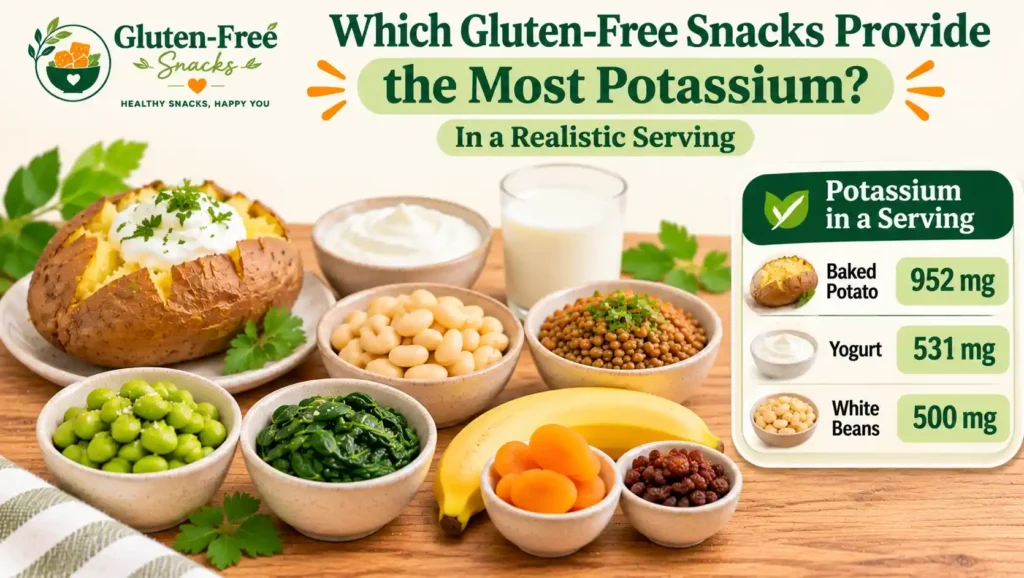
Some everyday foods contain more potassium than you might expect. A baked potato, a serving of yogurt, or a small bowl of beans can provide a meaningful amount without requiring a complicated recipe. The comparison below uses serving-size estimates from Harvard Health’s guide to potassium-rich foods, which draws on USDA food data.
| Food | Reference serving | Potassium |
| Baked russet potato with skin | 1 medium | 952 mg |
| Plain low-fat yogurt | 1 cup | 531 mg |
| Cooked white beans | ½ cup | 500 mg |
| Cooked edamame | ½ cup | 485 mg |
| Milk | 1 cup | 382 mg |
| Cooked lentils | ½ cup | 365 mg |
| Banana | 1 medium | 422 mg |
| Cooked spinach | ½ cup | 419 mg |
| Dried apricots | ¼ cup | 378 mg |
| Raisins | 1½ oz | 318 mg |
These figures are reference amounts, not guarantees for every brand or recipe. Your actual intake depends on the portion and preparation. Use the chart to compare everyday options, and remember that packaged products still need appropriate gluten-free checks.
10 Potassium-Rich Gluten-Free Snacks That Fit Easily Into Your Day
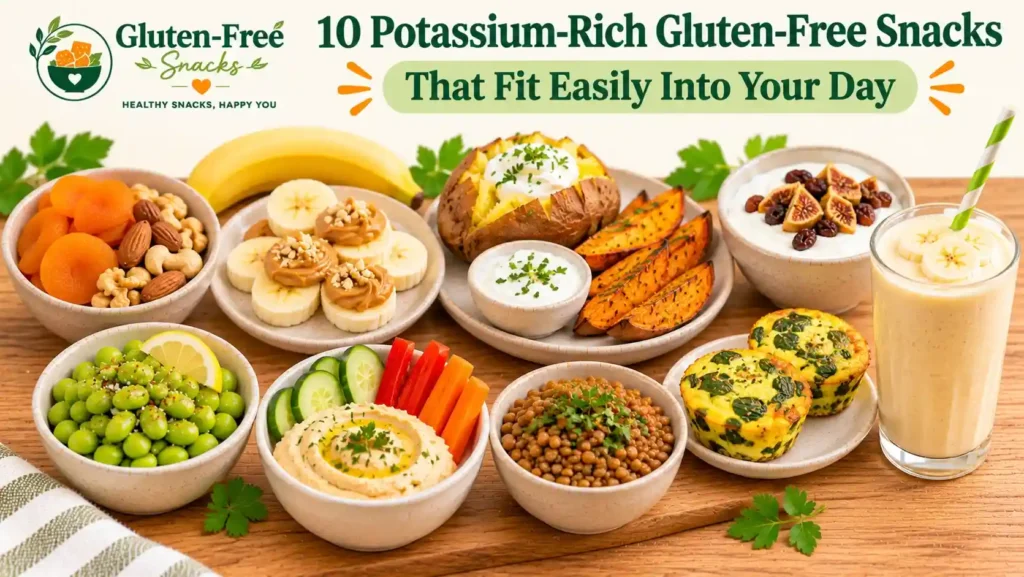
Potassium-rich snacks don’t have to be complicated. A few everyday ingredients can become refreshing fruit combinations, savory bites, or simple snacks you can prepare ahead. Here are ten ideas with different flavors and textures, so you can find options that fit your routine. For more inspiration, explore these different types of gluten-free snacks.
1. Dried Apricots with a Small Handful of Nuts
Keep a small container of dried apricots and unsalted nuts ready for busy days. Dried apricots provide potassium in a convenient portion, while nuts add crunch. Check packaged varieties for coatings or added ingredients, and enjoy a measured serving rather than eating straight from a large bag.
2. Banana Slices with Peanut Butter
Slice a banana and serve it with a little peanut butter for an easy sweet snack. Both ingredients contribute potassium, and there’s no cooking involved. Choose a peanut butter that suits your needs, and check flavored varieties for added ingredients. This familiar combination is simple to prepare at home or pack for later.
3. Quick-Baked Potato Bites with Yogurt Dip
Cut a cooked potato into bite-sized pieces and serve it with plain yogurt mixed with lemon juice and herbs. Potatoes are a useful source of potassium, while the yogurt adds more. If you use packaged seasoning or a ready-made dip, check the label to make sure it’s suitable for a gluten-free diet.
4. Baked Sweet Potato Wedges with Herbs
Cut a sweet potato into wedges, toss them with a little oil and suitable herbs, and bake until tender. The sweet potato supplies potassium and makes a satisfying alternative to packaged chips. The amount you get depends on the portion size. If using a ready-made seasoning blend, check its ingredients before adding it.
5. Yogurt with Raisins or Chopped Dried Figs
Add a small portion of raisins or chopped dried figs to a bowl of plain yogurt. Both the yogurt and dried fruit contribute potassium, making this an easy snack that needs little preparation. Check flavored yogurt for added ingredients and choose dried fruit without coatings that may affect its gluten-free suitability.
6. Lemon-Seasoned Edamame in a Snack Cup
Cook shelled edamame according to the package directions, then add lemon juice and a little suitable seasoning. A half-cup serving provides a useful reference portion for comparing potassium content. Edamame also supplies plant-based protein, making it a good savory option when you want something different from fruit or dairy.
7. White Bean Dip with Cucumber and Bell Pepper
Blend cooked white beans with lemon juice, olive oil, and fresh herbs to make a simple dip. Serve it with cucumber and bell pepper strips for a mix of creamy and crunchy textures. The beans supply potassium, while the vegetables add freshness. Check canned beans and seasoning blends for suitable ingredients.
8. A Small Lemon-and-Herb Lentil Cup
Combine cooked lentils with lemon juice, chopped herbs, and a little olive oil. Serve a small portion chilled or at room temperature for a convenient savory snack. Lentils provide potassium as well as fiber and plant protein. Refrigerate leftovers promptly, and check packaged seasonings for gluten-containing ingredients.
9. Spinach-and-Egg Bites
Mix cooked spinach with beaten eggs and suitable seasoning, then bake in small muffin cups until the eggs are fully set. These bites are handy to prepare ahead for quick snacks. Spinach provides much of the potassium in this combination, although the amount per bite depends on the recipe and how much spinach you use.
10. A Banana, Yogurt, and Milk Smoothie
Blend a banana with plain yogurt and milk for a quick drinkable snack. All three ingredients contribute potassium, although the total depends on your portions. It’s an easy way to combine fruit and dairy without following a complicated recipe. Check flavored dairy products if you use them, and adjust the serving to suit your needs.
How Potassium Supports Your Body, and How Much You Need
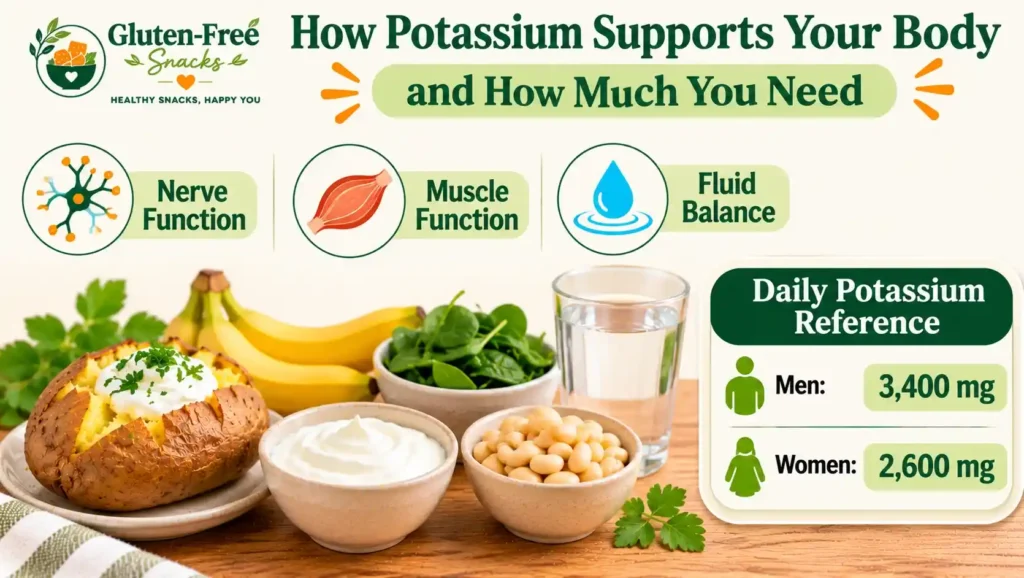
Potassium does more than appear on nutrition labels. This essential mineral helps your nerves send signals, supports normal muscle contraction, and plays a role in kidney function and fluid balance. Getting enough through food is part of maintaining these normal bodily processes. You can also explore our guide to healthy gluten-free snacks for more everyday snack ideas.
According to the National Institutes of Health (NIH), the daily adequate intake for adults is 3,400 mg for men and 2,600 mg for women. Requirements differ for children, teenagers, pregnancy, and breastfeeding.
These figures are general reference values for healthy people, not personal targets for everyone. You don’t need to calculate the potassium in every snack. Instead, enjoy a variety of potassium-containing foods throughout the day, while following any individual dietary advice from your healthcare professional.
When a High-Potassium Snack May Not Be Right for Everyone
For many people, potassium-rich foods can be part of a varied diet. However, if you have chronic kidney disease, high blood potassium, or take certain medicines that affect potassium levels, you may need to be more careful about how much you eat. Your kidneys help regulate potassium, and when they cannot remove enough, it can build up in your blood. The NIDDK recommends working with a healthcare professional or dietitian to find an appropriate intake.
Having high blood pressure alone does not mean you must avoid potassium-rich foods. Potassium can help balance some of sodium’s effects, but individual needs vary. Don’t follow a blanket list of foods to avoid or change a prescribed diet without professional guidance.
What to Check Before Buying a Packaged Potassium-Rich Snack
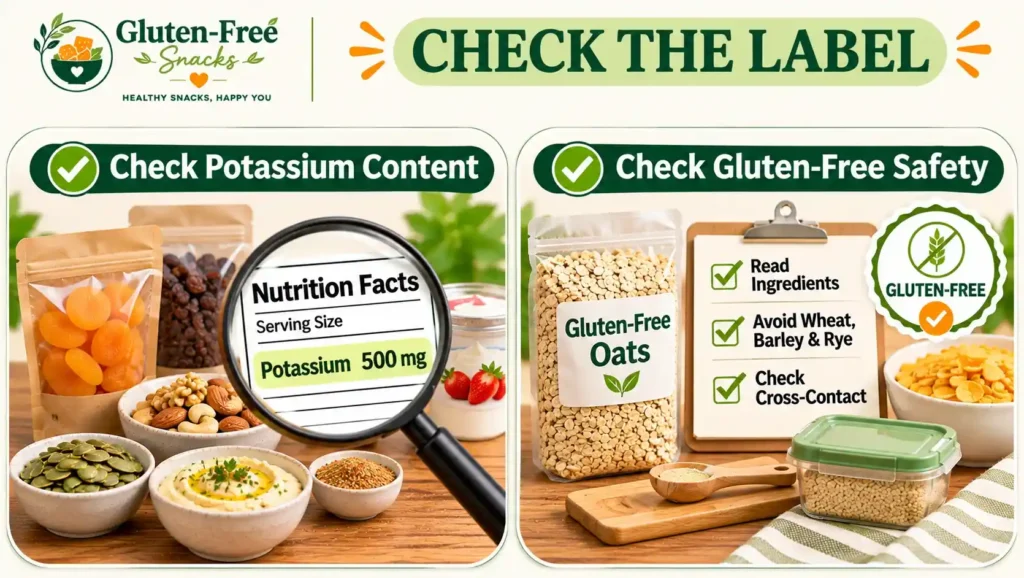
Potatoes, beans, dried fruit, and plain yogurt can fit into a gluten-free diet, but packaged versions deserve a closer look. Flavored nuts, rice cakes, granola, crackers, spice blends, and ready-made dips may contain added ingredients or be exposed to gluten during processing. The main ingredient alone doesn’t guarantee that the finished product is gluten-free. Our gluten-free snack buying guides provide more guidance on choosing packaged options.
Read the ingredient list and look for a gluten-free claim when appropriate. In the United States, the FDA requires foods labeled gluten-free to meet its standard of less than 20 parts per million (ppm) of gluten. Rules may differ in other countries. If you have celiac disease, shared utensils, preparation surfaces, and storage containers can also cause cross-contact. For more detail, see our guide to gluten-free diet safety and labeling.
If you’re comparing potassium content, check the nutrition label for the amount per serving, too. For more shopping advice, see our guide to reading gluten-free food labels.
Find Potassium-Rich Snacks That Fit Your Routine
Bananas with peanut butter, yogurt with dried fruit, baked potato bites, edamame, and simple bean snacks offer plenty of variety. Choose combinations you enjoy, compare realistic serving sizes, and check packaged ingredients for gluten-free suitability. Most importantly, remember that your ideal potassium intake depends on your individual health needs. You can also explore gluten-free snacks for different everyday situations when choosing options for home, work, or travel.
Quick Answers About Potassium-Rich Gluten-Free Snacks
There’s no single winner for every serving size. A medium baked russet potato with its skin provides about 952 mg of potassium, while a cup of plain low-fat yogurt provides around 531 mg. These reference amounts from Harvard Health’s potassium guide can help you compare everyday options.
Yes. A medium banana provides approximately 422 mg of potassium. Enjoy it on its own or pair it with peanut butter for a simple snack.
Milk and some fruit or vegetable juices provide potassium, although amounts vary. Check nutrition labels when comparing drinks, especially if you need to monitor your intake.
Not automatically. Potassium-rich foods can support a balanced eating pattern, but people with kidney disease or certain medication regimens may need individualized advice. Ask your healthcare professional before making significant dietary changes.
People who have been advised to limit potassium may be directed toward options such as apples, berries, grapes, or peaches. However, suitable choices depend on individual needs, kidney function, and blood test results. Follow advice from your healthcare professional rather than relying on a general list of foods to avoid.