Finding gluten-free snacks your child will actually eat can take trial and error, especially when you also want to include more fiber. You do not need fancy ingredients. Apples, berries, hummus with vegetables, and snacks made with certified gluten-free oats are practical places to start. Here are 12 ideas for lunchboxes and after-school breaks, plus tips for checking labels and choosing snacks that fit your child’s age and needs. You can find more gluten-free snacks for school and other situations for different routines and occasions.
Start With These Easy High-Fiber Snacks for Kids
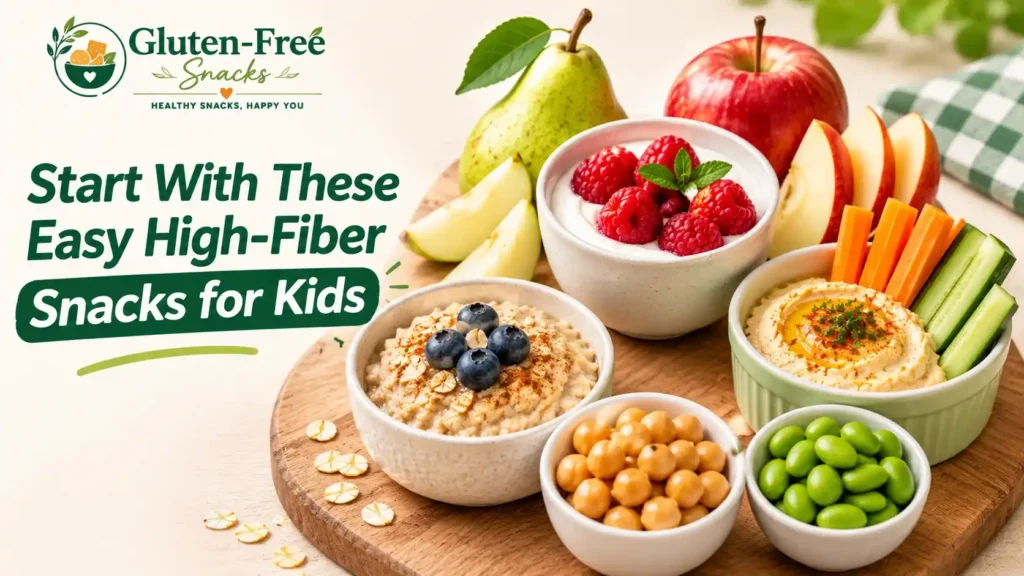
Fruit, beans, and oats can fit into lunchboxes or after-school routines. These estimates offer a quick comparison; recipes and brands vary.
| Snack | Example child-sized serving | Approximate fiber | Why it works |
| Pear with skin | ½ medium pear | About 2.8 g | Portable fruit with fiber |
| Raspberries with yogurt | ½ cup raspberries, plus plain yogurt | About 4 g from the berries | Fruit with a source of protein |
| Apple with skin | ½ medium apple | About 2.3 g | Easy to pair with a suitable spread |
| Hummus with vegetables | 2 tbsp hummus and about ½ cup vegetable pieces | About 2–3 g | Chickpeas and vegetables contribute fiber; amounts vary by recipe |
| Cooked gluten-free oatmeal | ½ cup cooked | About 2 g | A soft whole-grain option |
| Cooked chickpeas | ¼ cup, mashed if needed | About 3.1 g | Useful in dips or soft snacks |
| Shelled edamame | ¼ cup cooked | About 2 g | Provides fiber and plant protein |
| Air-popped popcorn | 1 cup | About 1.2 g | A whole-grain option for children who can safely eat it |
For school, check the allergy policy and choose portions and textures your child can manage safely.
Gluten-Free Doesn’t Automatically Mean High-Fiber
A gluten-free label does not tell you how much fiber a product contains. Some crackers, cookies, and snack bars rely on refined rice flour or tapioca starch and may provide little fiber; others contain added fiber. Checking the label is more useful than guessing.
When choosing healthy gluten-free snacks for kids, check three things:
- Serving size: See how much food the nutrition information represents.
- Fiber content: Compare grams of fiber per serving.
- Ingredients: Look for fruit, beans, seeds, or suitable whole grains.
If your child has celiac disease, also check gluten-free labeling and prevent cross-contact during preparation. The NIDDK’s guide to eating gluten-free offers practical advice for families.
Twelve Snack Ideas Kids Can Actually Enjoy
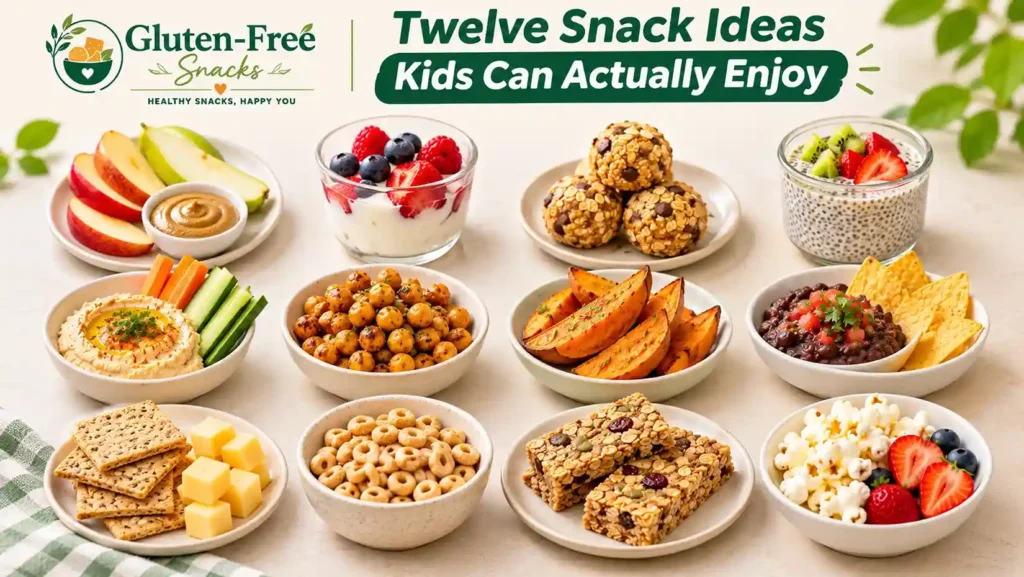
Familiar foods that take little preparation are often easiest to keep in rotation. These ideas use everyday ingredients that can contribute fiber.
1. Apple or Pear Slices With Seed Butter
Slice an apple or pear and serve with a thin spread of sunflower seed butter. Leave the skin on after washing when appropriate. Peanut or almond butter may also work if your child can safely eat it and the school permits it. For younger children, prepare fruit in a texture and shape they can manage safely.
2. Berry Yogurt Cups With Ground Flaxseed
Add strawberries or raspberries and a little ground flaxseed to plain yogurt. Pack it only when it can be kept chilled. Check the label if gluten cross-contact or other ingredients are a concern.
3. Banana and Gluten-Free Oat Bites
Mash a ripe banana with certified gluten-free oats, shape into small bites, and bake until set. Fiber content depends on the recipe and bite size.
4. Chia Pudding With Fresh Fruit
Mix chia seeds with milk or a suitable alternative, refrigerate until thick, and top with soft fruit. Prepare portions the night before, and check milk-alternative labels for allergens and added sugar.
5. Hummus With Carrot and Bell Pepper Pieces
Serve hummus with vegetables prepared in a texture your child can manage safely. Chickpeas and vegetables contribute fiber. Many hummus products contain tahini (sesame), so check the label for allergies.
6. Crispy Roasted Chickpeas
Toss cooked chickpeas with a little olive oil and mild spices, then roast until crisp. Check seasoning labels for gluten. Because they can be hard, skip roasted chickpeas for children under four; offer soft hummus or mashed chickpeas instead.
7. Sweet Potato Wedges
Bake sweet potato wedges with a little oil until soft inside. For younger children, cook until tender and cut into easy-to-manage pieces.
8. Black Bean Dip With Gluten-Free Corn Chips
Mash black beans with chopped tomato and lime. Serve with labeled gluten-free corn chips only when the child can manage them safely; younger children can have the soft dip with an age-appropriate alternative.
9. Gluten-Free Crackers With Hummus or Cheese
Pair gluten-free crackers with hummus or cheese. Crackers vary in fiber, so check the label. Follow school rules and allergy needs before packing dairy- or sesame-containing dips.
10. Gluten-Free Whole-Grain Cereal
Keep suitable gluten-free cereal for busy days. Serve a small portion dry or with yogurt, and compare fiber and added sugar on the label. Choose a texture appropriate for your child’s age.
11. Homemade Oat and Seed Snack Bars
Combine certified gluten-free oats, seeds, and chopped dried fruit to make simple bars in advance. Check every ingredient. For younger children, avoid hard bars with whole seeds or nuts and choose a softer texture.
For more batch-preparation ideas, explore these homemade gluten-free snacks, including energy balls, snack bars, and other easy recipes.
12. Air-Popped Popcorn With Fruit
For children old enough to eat popcorn safely, pair a small bowl of plain air-popped popcorn with fruit. The CDC lists popcorn as a choking hazard for young children, so do not serve it to children under four. Offer soft fruit instead.
Pack a Lunchbox That Comes Home Empty
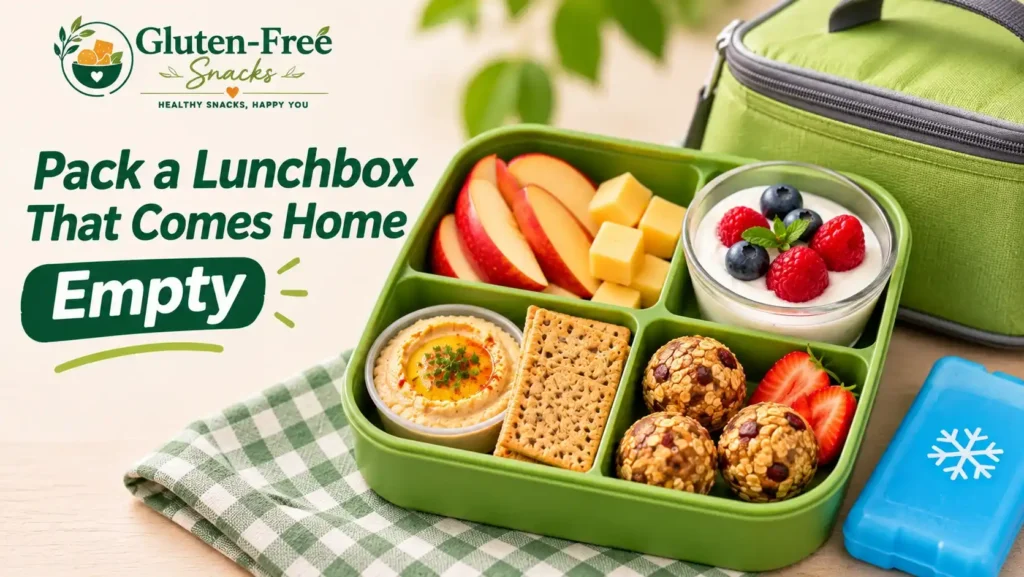
Pack familiar foods with a little variety: apple slices with cheese, yogurt and berries, hummus with gluten-free crackers, or an oat bite with fruit. Let your child choose between two options so the lunchbox feels familiar.
Check the school’s allergy policy and use clean containers and preparation surfaces to prevent gluten cross-contact. Pack yogurt or cheese in an insulated bag with cold packs.
What to Check Before Buying a Packaged Kids’ Snack
Store-bought snacks save time, but gluten-free does not automatically mean high in fiber. Crackers, cereal, and snack bars vary, so check the label before buying.
- Fiber per serving: Compare grams of fiber and the stated serving size.
- Ingredients: Look for fruit, seeds, beans, or suitable whole grains.
- Gluten-free labeling: In the United States, foods labeled gluten-free must meet FDA requirements, including containing less than 20 parts per million of gluten.
- Other needs: Check added sugars, sodium, allergens, and whether your child likes the taste.
A little more guidance can help when comparing gluten-free snack products and buying guides, especially when you want to consider fiber, ingredients, serving sizes, and allergens alongside gluten-free labeling.
A note about allergies: These ideas include foods that may contain milk (yogurt and cheese), soy (edamame), sesame (often in hummus through tahini), peanuts or tree nuts (if used as spreads), and other seeds. Check labels and your child’s allergy plan, and follow the school’s rules. The FDA lists milk, soy, sesame, peanuts, and tree nuts among the nine major U.S. food allergens; other seeds can also cause allergies. See the FDA’s food allergy labeling guidance.
Remember, gluten-free status and fiber content are two separate checks.
Make Snacks Work for Picky Eaters, Allergies, and Different Ages
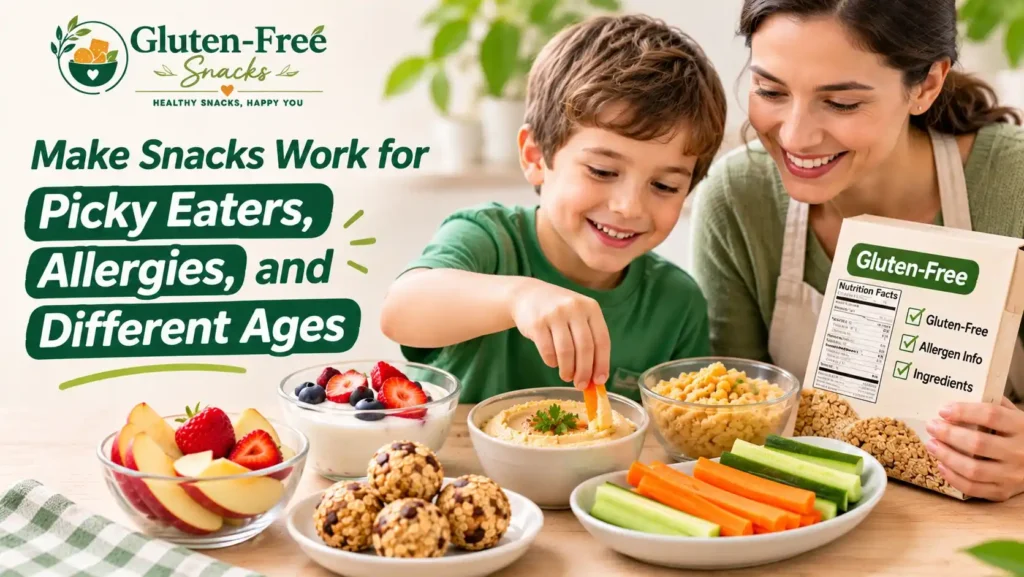
New snacks can take time to grow on children. Offer one alongside a familiar favorite, and let kids choose between two options or help assemble fruit with yogurt or hummus with vegetables.
For nut-free school snacks, consider fruit or suitable gluten-free oat bites. Hummus may contain sesame, and other products may contain soy or dairy, so check ingredients and school rules.
Age matters, too. The CDC lists popcorn, whole nuts and seeds, whole beans, and spoonfuls of nut or seed butter as choking hazards for young children. Skip hard roasted chickpeas for children under four; offer soft hummus or mashed chickpeas instead. Prepare foods to suit your child’s chewing ability, have children sit while eating, and supervise them.
Make Gluten-Free Snack Time Easier on Busy Days
Snack time does not need complicated recipes. Keep fruit, gluten-free oats, hummus, and family favorites on hand; try new combinations gradually and check packaged-food labels. If you are unsure about a particular ingredient, use our gluten-free ingredient checker. For another simple idea, try these 5-ingredient no-bake peanut butter energy balls.
Frequently Asked Questions About High-Fiber Gluten-Free Snacks for Kids
Good options include pears, berries, apple slices with a safe spread, hummus with vegetables, soft chickpeas, and certified gluten-free oat snacks. Choose foods your child enjoys and can eat safely.
Try apple slices with cheese, yogurt and berries, hummus with gluten-free crackers, or an oat bite with fruit. Check allergy rules, prevent cross-contact, and keep perishable foods chilled.
Not always. Fiber varies by product, so compare serving sizes, ingredients, allergen information, and gluten-free claims on the label.
According to CHOC’s pediatric fiber guidance, general daily targets are 14 g for ages 2–3; 17–20 g for ages 4–8; 22–25 g for ages 9–13; and 25–31 g for ages 14–18, with ranges reflecting sex-specific recommendations. These are general guides, not individual prescriptions; needs vary by child.
Choose oats labeled gluten-free because they can be contaminated with wheat, barley, or rye during growing and processing. Some people with celiac disease may not tolerate oats, so ask your child’s healthcare professional or dietitian. See the NIDDK’s celiac disease guidance.