Training hard means you need food that can keep up with you. But when you also follow a gluten-free diet, finding a snack that is high in protein, easy to pack, and actually enjoyable to eat can take a little more planning. You do not want to discover that your convenient protein bar contains gluten, and you do not want every training day to revolve around the same snack.
Fortunately, there are plenty of simple options. Greek yogurt, eggs, cottage cheese, tuna, turkey, edamame, chickpeas, nuts, seeds, and tofu can all become practical snacks for active days. Some work well before training, while others make more sense after exercise when protein and carbohydrates can support recovery.
In this guide, we’ll cover high-protein gluten-free snacks for athletes from several angles, including pre-workout fuel, post-workout recovery, portable gym-bag choices, vegetarian and dairy-free options, and packaged snacks worth considering.
What Should a High-Protein Gluten-Free Snack Actually Do for an Athlete?

A good snack for an athlete needs to do more than simply contain protein. Protein supports muscle repair and recovery, while carbohydrates are an important source of fuel for exercise. Fiber, healthy fats, vitamins, and minerals also contribute to overall nutrition. The right combination depends on the sport, training session, timing, and how well you personally tolerate different foods.
For gluten-free sports nutrition, there is another consideration: the food needs to genuinely fit a gluten-free diet. A food that is naturally gluten-free may require a closer look once it has been flavored, seasoned, processed, or packaged.
USADA’s 2026 Nutrition Guide describes carbohydrates as a primary fuel source for many sporting activities and emphasizes that protein plays an important role in muscle building and repair without replacing carbohydrates as the main exercise fuel.
Start With a Protein Source You Can Rely On
Plenty of everyday foods can provide protein without gluten. Greek yogurt, cottage cheese, eggs, tuna, salmon, turkey, chicken, edamame, chickpeas, tofu, nuts, seeds, and peanut butter all give athletes different ways to build a protein-rich snack.
You can keep things simple by pairing one protein source with another food that suits your training schedule. Try cottage cheese with fruit, tuna with gluten-free crackers, or edamame with rice crackers.
Don’t Forget Carbohydrates Around Training
Protein gets plenty of attention, but athletes should not overlook carbohydrates. Depending on the activity, carbohydrates can provide important training fuel and help replenish glycogen after exercise.
Gluten-free carbohydrate choices include:
- Fruit: bananas, berries, apples, oranges, and dried fruit
- Starchy foods: potatoes and sweet potatoes
- Gluten-free grains: rice, quinoa, and corn
- Gluten-free oats: useful for oatmeal and homemade snacks
- Gluten-free bread and tortillas: handy for sandwiches and wraps
- Rice cakes: an easy base for nut butter or other toppings
The timing matters. A snack eaten several hours before training can look very different from one eaten shortly before the workout. USADA recommends adjusting food choices according to the time available for digestion, with simpler carbohydrate-rich foods becoming more useful close to an event.
Before Training, Choose Snacks That Fuel the Workout Without Feeling Heavy
There is no single gluten-free pre-workout snack that works for everyone. A snack that feels comfortable before a moderate gym session may not feel as good before a fast run or intense practice.
Timing, portion size, and digestibility all matter. When you have more time before exercise, there is greater room for protein, carbohydrates, and other nutrients. As training gets closer, simpler foods may feel more comfortable.
When You Have Plenty of Time Before Training
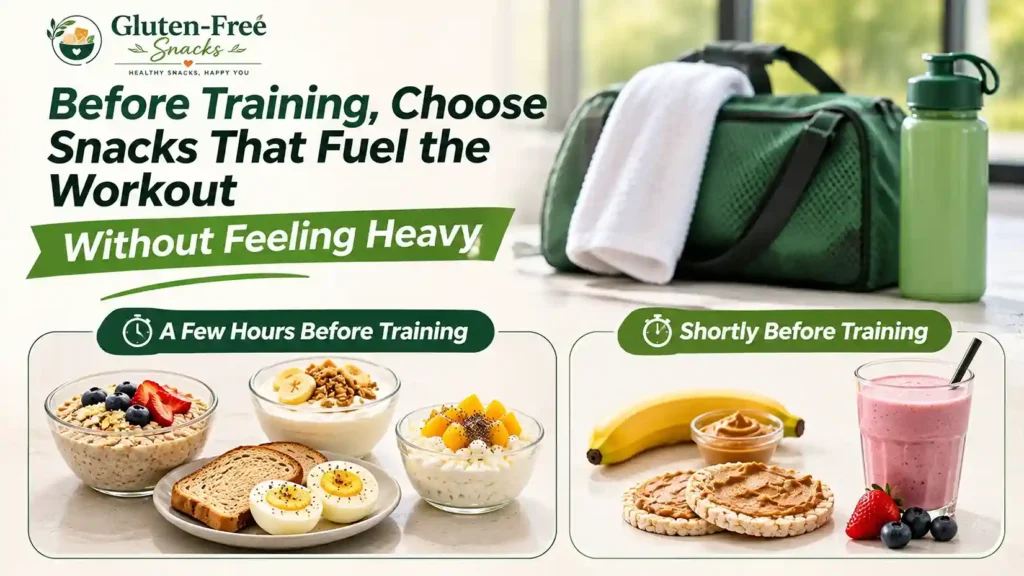
If you have a couple of hours before practice or a workout, you can build a more balanced pre-workout snack for athletes.
Good options include:
- Greek yogurt + banana
- Gluten-free oats + milk + berries
- Eggs + gluten-free toast
- Cottage cheese + fruit
USADA recommends allowing more time for foods containing protein, fat, and fiber because these nutrients can slow digestion.
When Practice Starts Soon
When training is just around the corner, a large snack may not feel comfortable. In that situation, simpler choices may work better.
Try:
- Banana + a small amount of peanut butter
- Yogurt drink
- Rice cakes + peanut butter
- Fruit-and-yogurt smoothie
- Gluten-free crackers + a light protein source
For the final 30–60 minutes before an event, USADA’s 2026 guidance places greater emphasis on easily digested carbohydrate-rich foods and minimal protein or fat when gastrointestinal comfort is a concern.
The practical lesson is simple: do not force a heavy protein snack immediately before exercise just because it is labeled high-protein. Choose something your body handles well, and test new foods during regular training rather than for the first time on competition day.
After Training, Pair Protein With Carbohydrates for Recovery
Once training ends, your snack has a different purpose. A gluten-free recovery snack can help bridge the gap until your next full meal while providing protein and carbohydrates after exercise.
Protein supplies amino acids needed for muscle repair, while carbohydrates help replenish glycogen used during activity. USADA’s 2026 guide recommends focusing on both nutrients during recovery rather than treating protein as the only priority.
Easy Post-Workout Combinations
| Post-workout snack | Protein | Carbohydrate |
| Greek yogurt + berries + GF granola | Greek yogurt | Fruit + granola |
| Protein-rich milk + banana | Milk | Banana |
| Cottage cheese + pineapple | Cottage cheese | Pineapple |
| Eggs + gluten-free toast | Eggs | Toast |
| Tuna + gluten-free crackers | Tuna | Crackers |
| Yogurt and fruit smoothie | Yogurt or milk | Fruit |
| Turkey + gluten-free wrap | Turkey | GF tortilla |
The best choice depends on the session and when you expect to eat your next meal. After a long practice, a turkey-filled gluten-free wrap may make more sense than a small snack. After a shorter session, yogurt and fruit may be all you need before your next meal.
For athletes competing more than once in a day, recovery between events becomes especially important. USADA recommends using easily digested foods when only a short time is available between events and combining carbohydrates with some protein when there is more time to digest.
10 High-Protein Gluten-Free Snacks Athletes Can Actually Keep Eating
The best snack is not necessarily the most complicated one. It is the one that tastes good enough to become part of your routine and is practical enough to prepare or pack.
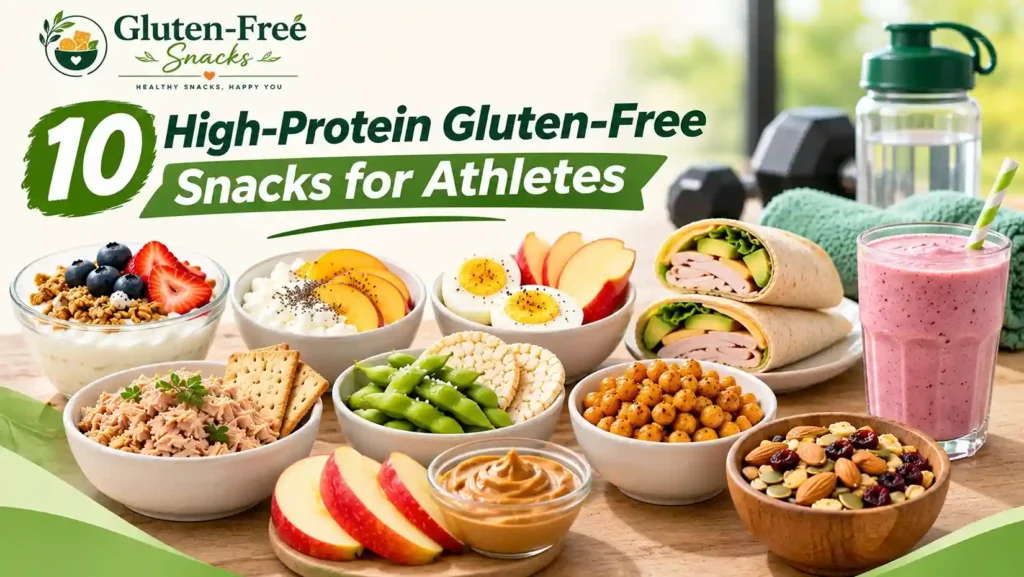
Greek Yogurt, Berries and Gluten-Free Granola
Greek yogurt makes an easy protein-rich base, while berries add freshness and gluten-free granola provides crunch and carbohydrates. Choose a granola clearly labeled gluten-free, especially if cross-contact is a concern. This works particularly well after training or as a quick snack at home.
Cottage Cheese With Peaches and Chia
Cottage cheese is an underrated athlete snack. Pair it with sliced peaches and chia seeds for protein, fruit, and texture. You can swap peaches for pineapple, berries, or banana when you want a different combination. It takes almost no preparation, which makes it especially useful on busy training days.
Hard-Boiled Eggs With Fruit
Hard-boiled eggs are naturally gluten-free and easy to prepare ahead. Pair them with a banana, apple, berries, or another fruit for a simple combination between meals or after lighter training. A little salt and black pepper is all you need, although gluten-free seasonings can add more flavor.
Turkey, Cheese and Avocado in a Gluten-Free Wrap
When you want something more substantial, fill a gluten-free wrap with turkey, cheese, and avocado. Add lettuce, cucumber, or tomato for freshness. Turkey and cheese provide protein, while avocado adds healthy fats and a creamy texture. Check processed turkey and the wrap label before buying, since packaged products can vary.
Tuna With Gluten-Free Crackers
Tuna turns a basic crunchy snack into something more substantial. Mix canned tuna with plain Greek yogurt or mayonnaise, then serve it with gluten-free crackers. Cucumber or bell pepper makes a good side. This is also a natural place to explore your existing gluten-free cracker content through internal linking.
Edamame and Rice Crackers
Edamame provides plant-based protein, while rice crackers give the snack a familiar crunch. Steam frozen edamame according to the package directions and add a little salt or another gluten-free seasoning. This combination works especially well for vegetarian athletes who want an alternative to dairy and meat-based snacks.
Crispy Roasted Chickpeas
Roasted chickpeas are ideal when you want crunch without reaching for ordinary chips. Toss cooked chickpeas with olive oil and seasonings such as cumin, paprika, garlic, or black pepper, then roast until crisp. Make a batch ahead and keep them ready for training days. Check packaged seasonings carefully if you need strict gluten avoidance.
For more make-ahead ideas, explore our homemade gluten-free snacks, including simple options such as roasted chickpeas and energy bites.
Apple or Banana With Peanut Butter
Fruit with peanut butter is quick, familiar, and easy to carry. Apples provide a crisp texture, while bananas work well when you want something softer. Peanut butter adds protein and healthy fats. Almond butter or sunflower seed butter can be used for variety. For packaged products, check the ingredient list and gluten-free information when necessary.
Protein Smoothie With Greek Yogurt
A smoothie is useful when solid food does not sound appealing after exercise. Blend Greek yogurt with milk and fruit, then add chia seeds or nut butter if desired. A gluten-free protein powder can be convenient, but it should be checked carefully rather than assumed to be gluten-free.
Trail Mix With Nuts, Seeds and Dried Fruit
Make your own trail mix with almonds, walnuts, pumpkin seeds, sunflower seeds, and dried fruit. It is easy to carry and works well as a portable gluten-free protein snack. Making your own mix also gives you control over the ingredients. For packaged trail mix, check the current label because added ingredients and cross-contact information can vary.
The Best Snacks Change With the Athlete, Not Just the Food
The best gluten-free snacks for athletes depend partly on the activity. Runners and endurance athletes may want portable, carbohydrate-friendly choices that are comfortable before longer sessions. For strength training and gym workouts, protein-rich foods such as Greek yogurt, cottage cheese, eggs, milk, turkey, tuna, and smoothies can fit naturally into the day.
Competition days require another layer of planning. Familiar foods are usually easier to manage than experimenting with something new immediately before an event. When athletes have multiple events in one day, foods that are easy to digest become especially useful between competitions.
When Your Snack Has to Survive the Gym Bag
A little planning goes a long way when you need portable high-protein gluten-free snacks. Use the simple rule of one fresh option plus one shelf-stable backup.
Fresh options include Greek yogurt, cottage cheese, eggs, cheese, and turkey roll-ups. These need appropriate refrigeration, so an insulated lunch bag can be useful.
Shelf-stable choices include:
- Nuts and seeds
- Roasted chickpeas
- Pumpkin seeds
- Nut butter packets
- Suitable jerky
- Clearly labeled protein bars
For more ideas matched to different routines, including exercise, travel, and snacks that do not need refrigeration, see our gluten-free snacks by situation guide.
For long training days, having a backup means you are less likely to depend on whatever food happens to be available at the gym, field, or competition venue.
Vegetarian and Dairy-Free Athletes Have Plenty of Protein Options
Athletes following vegetarian or dairy-free diets still have plenty of ways to build high-protein gluten-free snacks. Vegetarian choices include eggs, Greek yogurt, cottage cheese, edamame, chickpeas, hummus, nuts, and seeds.
For dairy-free or plant-based athletes, useful options include tofu, edamame, lentils, chickpeas, hummus, peanut butter, almond butter, hemp seeds, chia seeds, and pumpkin seeds.
| Protein source | Easy athlete snack |
| Edamame | Edamame + rice crackers |
| Chickpeas | Roasted chickpeas + fruit |
| Tofu | Seasoned tofu bites |
| Nut butter | Apple + peanut butter |
| Pumpkin seeds | Seeds + dried fruit |
The important thing is variety. Rotating legumes, soy, eggs, nuts, and seeds makes plant-based gluten-free sports nutrition much easier to manage.
Don’t Assume a Sports Snack Is Gluten-Free Just Because It’s High in Protein
A protein bar, jerky stick, or sports snack may be packed with protein and still require careful label checking. High protein does not automatically mean gluten-free.
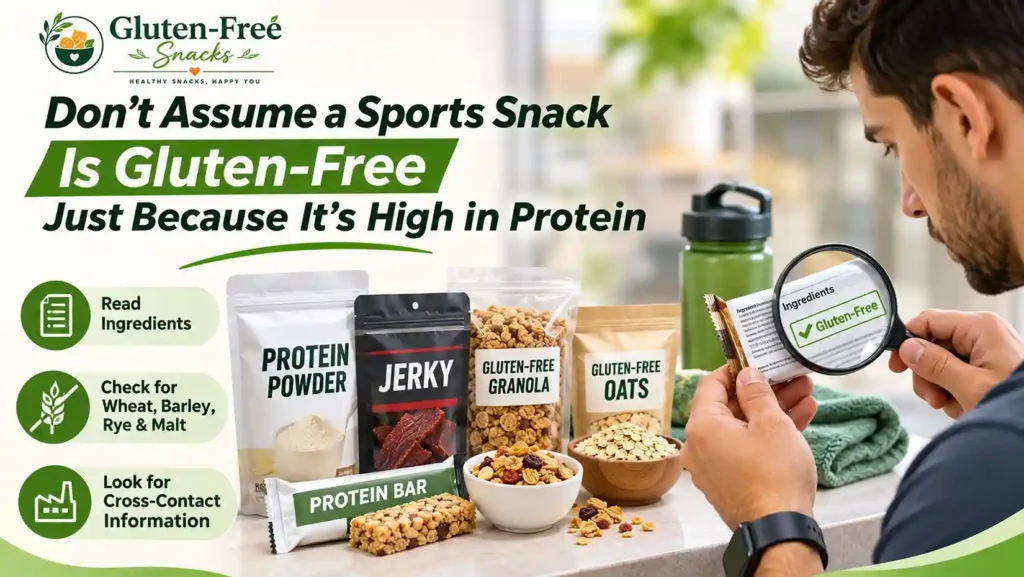
Check Protein Bars, Jerky and Protein Powders
Protein bars, meat snacks, and protein powders often contain several ingredients, and flavorings or sauces can change the gluten-free status of a product. Check the individual package rather than assuming that every flavor from a brand has the same formulation.
Jerky deserves particular attention because marinades and sauces can introduce ingredients that need checking. Protein powders should also be reviewed individually, especially when they contain flavor blends or other added ingredients.
Be Careful With Oats, Granola and Seasonings
Oats, granola, roasted snacks, and seasoning blends may look simple, but packaged versions can have additional ingredients or cross-contact considerations.
When buying gluten-free protein snacks, look for a clear gluten-free claim when applicable and free” claim to meet specific requirements, including less than 20 parts per million of gluten. U.S. Food and Drug Administration read the full ingredient list. In the United States, FDA regulations require foods using a “gluten-
Read the Label Every Time You Buy a New Product
Do not rely solely on memory. Product formulas can change, and different varieties of the same product can have different ingredients.
Pay attention to:
- Wheat
- Barley
- Rye
- Triticale
- Malt
- Sauces and marinades
- Seasonings
- Coatings and breading
- Cross-contact information
For a deeper explanation of serving sizes, ingredient lists, allergen statements, gluten-free claims, and cross-contact, see our Reading Food Labels: A Simple Guide to Choosing Gluten-Free Foods.
When gluten avoidance is medically necessary, product-specific labeling and manufacturer information are more useful than guessing from the food’s main ingredient. FDA guidance also notes that people with celiac disease should scrutinize labels and may contact manufacturers when they have questions about a product.
What to Look for When Buying Gluten-Free Protein Snacks
The grocery aisle is full of products that advertise themselves as “protein” snacks. That front-of-package claim is only the beginning.
Start by checking protein per serving and the actual protein source. Then look at the ingredients, gluten-free labeling, serving size, and whether the product fits your training situation.
| Snack type | Best use | What to check |
| Protein bar | Travel | Protein + gluten-free label |
| Jerky | Portable | Seasonings and marinades |
| Yogurt | Recovery | Protein + ingredients |
| Roasted chickpeas | Crunchy snack | Seasonings + GF status |
| Protein powder | Smoothies | Ingredients + gluten-free labeling |
Convenience matters too. A yogurt may be excellent after training but not useful when you are traveling without refrigeration. A bar may fit easily into a gym bag but require more label checking than a piece of fresh fruit paired with another protein source.
The best gluten-free protein snacks to buy are the ones that fit the athlete, the training situation, the dietary requirements, and the practical realities of the day. Our gluten-free snack products and buying guides can help you compare packaged options and understand what to check before buying.
Keep a Few Athlete-Friendly Snacks Ready
You do not need to reinvent your snack routine every training day. A small rotation is usually more practical: one pre-workout choice, one recovery option, one portable snack, and one shelf-stable backup.
That might mean Greek yogurt before or after training, a turkey-and-cheese wrap after a longer session, nuts or roasted chickpeas in your gym bag, and a clearly labeled protein bar for emergencies.
The best high-protein gluten-free snacks for athletes are not necessarily the fanciest ones. They are the foods you can trust, enjoy, pack easily, and fit naturally around your training. With a few dependable choices ready to go, gluten-free sports nutrition becomes much simpler.
FAQs About High-Protein Gluten-Free Snacks for Athletes
Greek yogurt, eggs, fruit with nut butter, roasted chickpeas, edamame, turkey roll-ups, tuna with gluten-free crackers, and suitable protein bars are all practical choices. The best option depends on the sport, timing, digestion, and whether refrigeration is available.
A high-protein gluten-free snack combines a meaningful protein source with foods that meet gluten-free requirements. Examples include Greek yogurt, eggs, cottage cheese, tuna, edamame, chickpeas, nuts, seeds, and suitable packaged protein snacks.
Athletes can choose Greek yogurt, cottage cheese, eggs, turkey, tuna, edamame, nuts, seeds, smoothies, or homemade energy bites. Pairing protein with a gluten-free carbohydrate can be useful around training.
Eggs, dairy foods, fish, meat, chickpeas, edamame, tofu, nuts, seeds, and many other whole foods are naturally gluten-free and can provide protein.
The answer depends on timing. With more time before training, options such as Greek yogurt with fruit, gluten-free oats with milk, eggs with gluten-free toast, or cottage cheese with fruit can work. Closer to exercise, simpler carbohydrate-rich foods may feel more comfortable.
Greek yogurt with fruit, cottage cheese with pineapple, eggs with gluten-free toast, tuna with gluten-free crackers, turkey in a gluten-free wrap, or a yogurt-and-fruit smoothie are practical recovery combinations.
Nuts, seeds, roasted chickpeas, nut butter packets, suitable jerky, and clearly labeled shelf-stable protein bars are convenient options. Perishable foods such as yogurt, eggs, cheese, and turkey need appropriate refrigeration.