Gluten-free snacks high in calcium can be simple, tasty, and easy to fit into your day. Options such as yogurt with berries, cheese with gluten-free crackers, sardines with edible bones, and tahini dip can help add calcium between meals. If you avoid dairy, chia pudding made with calcium-fortified plant milk or fortified soy yogurt can offer alternatives. However, not all calcium-rich gluten-free snacks provide the same amount. Serving size, ingredients, and product fortification all make a difference. Below, you’ll find practical snack ideas, including dairy-free choices, along with tips for checking calcium content and choosing packaged foods suitable for a gluten-free diet.
Which Gluten-Free Snacks Give You the Most Calcium per Serving?
Some gluten-free snacks contain much more calcium than others. Comparing realistic serving sizes makes it easier to choose foods that contribute a meaningful amount to your daily calcium intake.
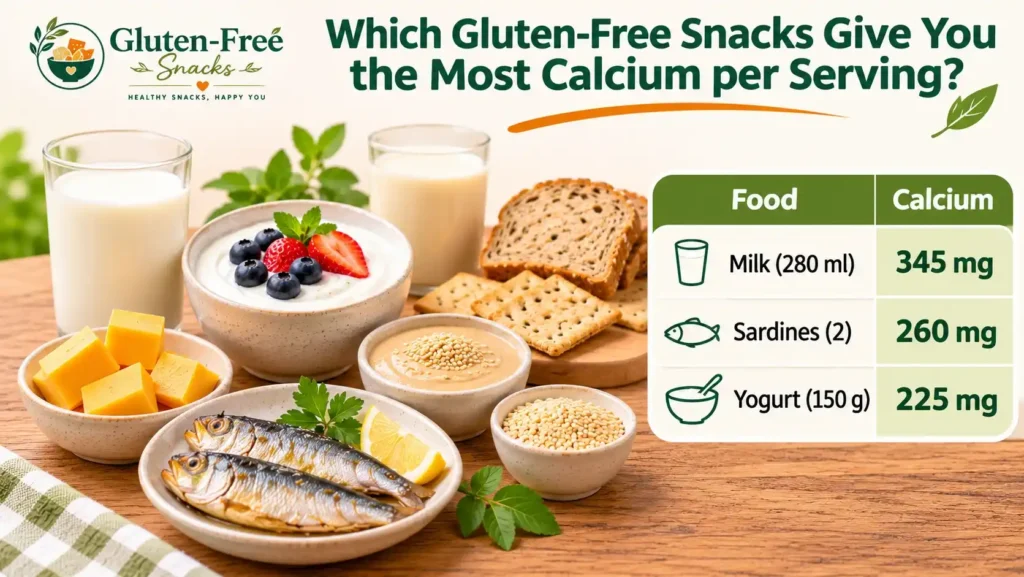
Here are reference estimates from the NHS calcium-content guide, reviewed in February 2023.
| Snack or food | Reference serving | Calcium |
| Semi-skimmed milk | 280 ml | 345 mg |
| Plain yogurt | 150 g | 225 mg |
| Cheddar cheese | 30 g | 220 mg |
| Canned sardines with bones | 2 sardines | 260 mg |
| Tahini (sesame paste) | 1 tablespoon | 130 mg |
| Calcium-fortified plant milk | Check serving size | Varies |
| Gluten-free bread | 2 slices | Varies widely |
These figures are estimates, not guarantees for every brand. Calcium-fortified plant milk can be a useful dairy-free option, but the amount depends on the product. Gluten-free bread also varies considerably in calcium content. Check the nutrition label for calcium per serving, and remember that a food containing some calcium is not necessarily a rich source.
10 Calcium-Rich Snack Combinations That Work in Everyday Life
Getting more calcium into your gluten-free diet can be as simple as changing what you pair together. These snack ideas use familiar ingredients, require little preparation, and include options for both dairy lovers and plant-based eaters. Their calcium content varies, so choose the portions and products that suit your needs.

1. Greek Yogurt with Berries and Chia
Spoon plain Greek yogurt into a small bowl, add fresh berries, and sprinkle a little chia on top. The yogurt supplies much of the calcium, while the berries bring freshness and the chia seeds add texture. Choose plain yogurt and check flavored varieties if needed. For another easy yogurt snack, try our Berry Yogurt Parfait.
2. Cheddar Cubes with Gluten-Free Crackers and Apple
A few cheddar cubes, crisp apple slices, and gluten-free crackers make a satisfying combination of creamy, sweet, and crunchy textures. According to the NHS calcium-content guide, a 30 g serving of cheddar provides approximately 220 mg of calcium. Check the cracker packaging for gluten-free suitability, especially when preparing food for someone with celiac disease.
3. Sardines with Edible Bones on Rice Cakes
For a savory snack, mash canned sardines with a little lemon juice and spread them over rice cakes. The edible bones are an important part of the calcium contribution. The NHS guide estimates that two canned sardines with bones provide around 260 mg of calcium. Check the rice cake and any added seasonings to ensure they are suitable for a gluten-free diet.
4. Chia Pudding Made with Calcium-Fortified Soy Milk
Mix chia seeds with calcium-fortified soy milk and leave the mixture in the refrigerator until it thickens. Add cinnamon, vanilla, or berries for flavor. The fortified soy milk is the key calcium source here, although chia contributes some too. Check the nutrition label because not every plant-based drink contains added calcium, and the amount can vary between brands.
5. Apple Slices with a Tahini Dip
Stir a tablespoon of tahini with a little water and lemon juice until it becomes a smooth dip. Serve it with apple slices for an easy snack that needs no cooking. The NHS guide lists approximately 130 mg of calcium in one tablespoon of tahini. Sesame is the main calcium contributor, so check the ingredient label if buying a prepared tahini dip.
6. Seasoned Calcium-Set Tofu Cubes
Cut firm calcium-set tofu into bite-sized cubes and add a little lemon juice, black pepper, or your favorite suitable seasoning. You can eat it chilled or lightly bake it for a firmer texture. Tofu made with calcium salts can provide useful amounts of calcium, but not all tofu contains the same amount. Check the ingredient list and nutrition panel before choosing a product.
7. Fortified Soy Yogurt with Figs or Berries
For a dairy-free option, spoon fortified soy yogurt into a bowl or jar and top it with fresh berries or chopped figs. It makes a quick snack without needing any cooking. Look for a product that actually lists calcium on its nutrition panel, as plant-based yogurts can differ considerably in their nutrient content. Choose dried fruit without gluten-containing coatings or added ingredients when applicable.
8. Gluten-Free Cereal with Milk or a Fortified Alternative
A small bowl of gluten-free cereal with milk can be a convenient snack when you need something quick. Milk provides calcium, while some cereals contain additional calcium through fortification. For a dairy-free version, choose a calcium-fortified plant drink. Check that the cereal is labeled gluten-free when necessary, particularly if it contains oats, and compare calcium per serving rather than relying on the front of the package. Our gluten-free snack buying guides offer more guidance for evaluating packaged options.
9. Dried Figs and Almonds
Keep a small container of dried figs and almonds ready for busy afternoons or days away from home. Both contain calcium, although the amount depends on the portion. They are convenient because they need no preparation or refrigeration. Treat this combination as a useful contribution to your calcium intake rather than assuming it provides as much calcium as a serving of cheese or a fortified drink.
10. Homemade Sesame-Date Bites
Combine sesame seeds with soft dates and a little suitable nut butter, then shape the mixture into small bites. Sesame supplies much of the calcium, while dates help hold everything together and add natural sweetness. Keep the portions modest and remember that these bites are a concentrated snack, not a substitute for a varied diet. Check all packaged ingredients for gluten-free suitability, and consider sesame and nut allergies when serving others. For more ideas you can prepare at home, see our homemade gluten-free snacks guide.
Getting Calcium Without Dairy: What to Look for
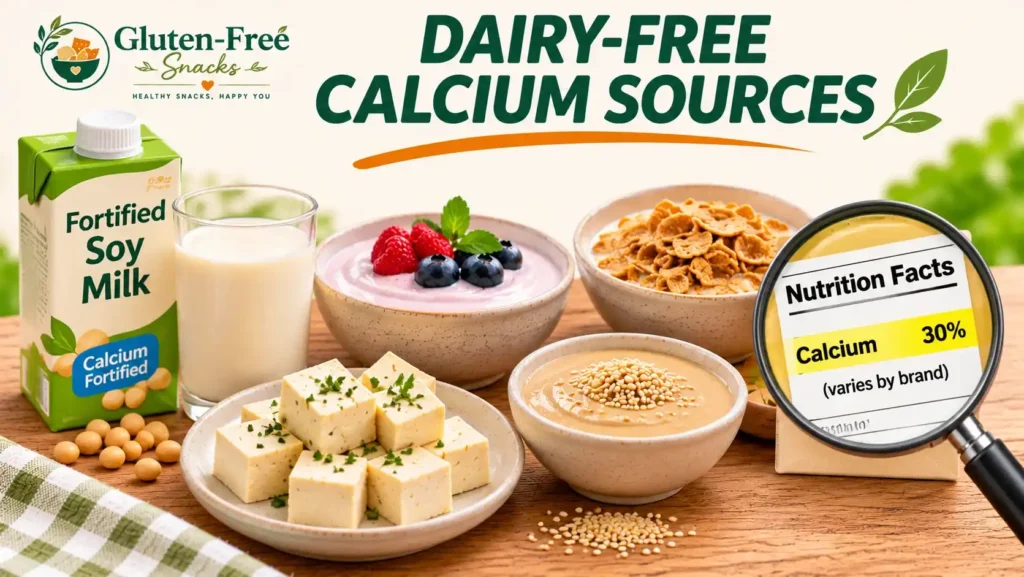
Avoiding dairy doesn’t mean you have to miss out on calcium. Calcium-fortified soy milk is a practical alternative, and some soy yogurts also contain added calcium. However, fortification varies, so check the nutrition label rather than assuming every plant-based product offers the same benefits.
Calcium-set tofu is another useful option, but its calcium content depends on how it is made. Some breakfast cereals also contain added calcium, making them worth considering when choosing gluten-free snacks. The NIH calcium guide explains that checking product labels is important when choosing fortified foods.
It’s also worth knowing the difference between lactose-free dairy and dairy-free alternatives. Lactose-free milk is still dairy, but it can provide similar amounts of calcium to regular milk. Plant-based drinks, on the other hand, may contain very different amounts depending on the product.
Before You Buy, Check Both the Calcium and Gluten-Free Details
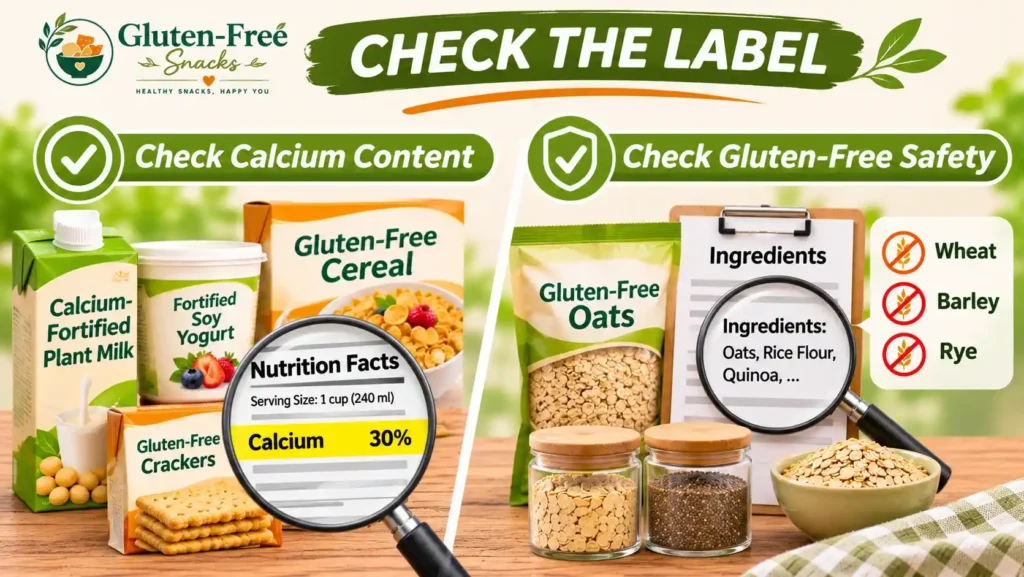
A snack can look nutritious on the front of the package but tell a different story when you turn it over. Before buying gluten-free crackers, cereal, snack bars, or flavored products, take a moment to check two things: how much calcium you get in a normal serving and whether the product is suitable for your gluten-free diet.
Start with the nutrition label. Compare similar serving sizes and look for calcium per serving. A product may appear high in calcium per 100 g, but your usual portion could provide much less. For fortified plant milk and cereal, check whether calcium has actually been added and how much each serving contains.
Next, read the ingredient list and look for a gluten-free claim. In the United States, the FDA requires foods carrying this claim to meet its gluten-free standard, including containing less than 20 parts per million of gluten. Rules can differ in other countries, so check the requirements where you live.
For more guidance, see our food-label reading guide and Is It Gluten-Free? checker. You can also review our guide to gluten-free diet safety and labeling for more information about gluten-free claims and cross-contact. Remember, ingredients and cross-contact risks can vary between products, even within the same brand.
How Much Calcium Should You Aim to Get From a Snack?
There’s no fixed amount of calcium that every snack needs to provide. What matters is how your food choices add up throughout the day. According to the National Institutes of Health (NIH), adults aged 19–50 generally need 1,000 mg of calcium per day, although requirements vary with age and life stage.
A snack containing 150–250 mg of calcium can make a useful contribution, while smaller amounts from foods such as almonds, figs, or vegetables can add up across different meals. You don’t need to rely on one food to meet your needs. Vitamin D also plays an important role because it helps your body absorb calcium. For more on food sources of this nutrient, see our guide to gluten-free snacks with vitamin D. Aim for variety, and speak with a healthcare professional if you’re concerned about your calcium intake.
Small Snack Choices Can Add Up
You don’t need to overhaul your diet to get more calcium. Start with simple swaps, such as pairing cheddar with gluten-free crackers, stirring chia seeds into yogurt, or making pudding with calcium-fortified soy milk. Try different combinations throughout the week, and check the calcium content of packaged foods before buying. If you want more everyday ideas, explore our collection of healthy gluten-free snacks. The best snack is one you enjoy, can prepare easily, and know is suitable for your gluten-free needs.
Questions Readers Ask About Calcium-Rich Gluten-Free Snacks
No. Gluten-free simply means a food meets the relevant criteria for gluten content. It does not guarantee that the food provides much calcium. Always check the nutrition label to understand what you’re getting.
Calcium-fortified soy milk, fortified soy yogurt, calcium-set tofu, and tahini are useful options. Almonds and dried figs can contribute calcium too, although the amount depends on the serving size and product.
Not necessarily. Calcium levels differ between brands and recipes. Check the nutrition panel rather than assuming every gluten-free loaf provides a similar amount.
A varied gluten-free diet can include calcium from suitable dairy products, fortified alternatives, seeds, and other foods. If you’re concerned about your calcium intake or possible deficiency, speak with a qualified healthcare professional for advice tailored to your needs.