A gluten-free snack can be easy to find, but one that provides a substantial amount of fiber takes a little more thought. A handful of crackers might satisfy a craving, yet offer very little fiber. The good news is that you don’t need specialty products or complicated recipes to make a more fiber-rich choice.
Everyday ingredients such as chia seeds, raspberries, chickpeas, and black beans can do much of the work. The key is knowing how much to use and which foods pair well together. These snack ideas include measured portions, estimated fiber totals, and simple preparation tips. Some provide more than 10 grams, while others can be adjusted to get closer to that amount.
What 10 Grams of Fiber Looks Like on a Snack Plate
Ten grams of fiber can come from one particularly fiber-rich ingredient or a combination of foods. Chia seeds are especially concentrated, while raspberries and pears provide fiber alongside natural sweetness. Chickpeas contribute fiber and plant-based protein, and almonds add a little more crunch.

Here is how common portions compare:
| Food | Example serving | Approximate fiber |
| Chia seeds | 1 oz (28 g) | 9.8 g |
| Raspberries | 1 cup (123 g) | 8 g |
| Cooked chickpeas | ½ cup (about 82 g) | 6.2 g |
| Medium pear with skin | 1 medium | 5–6 g |
| Almonds | 1 oz (28 g) | 3.5 g |
These figures are estimates from common USDA food-composition data. You can check the relevant foods in USDA FoodData Central. The exact amount varies with serving weight, variety, and preparation. Figures checked October 2026.
For context, the U.S. Food and Drug Administration (FDA) sets the Daily Value for dietary fiber at 28 grams on Nutrition Facts labels. Ten grams is about 36% of that reference value, but it is not a requirement for every snack. The FDA’s Nutrition Facts label guidance explains how fiber grams and percentage Daily Value appear on packaged foods.
Sweet Snacks That Reach the 10-Gram Mark
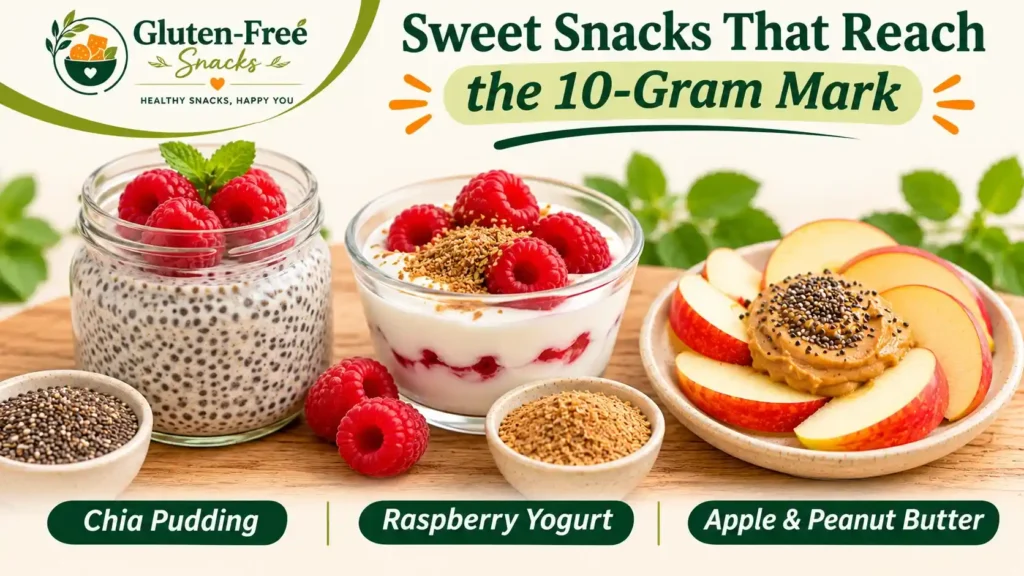
Fruit and seeds make it possible to build a sweet snack with plenty of fiber without relying on specialty bars or powders. The trick is measuring the ingredients: chia seeds contribute a lot in a small portion, while yogurt adds creaminess and protein but very little fiber.
Chia Pudding With Raspberries
Mix 28 g of chia seeds with ½ cup of milk or an unsweetened dairy-free alternative. Refrigerate for a few hours or overnight, until the seeds absorb the liquid and form a thick, spoonable pudding. Top with ½ cup of raspberries for a fresh, slightly tart finish.
The chia seeds provide about 9.8 g of fiber, and the raspberries add around 4 g. That brings the snack to approximately 14 g of fiber. If you are not used to eating much fiber, try a smaller portion first and increase gradually.
Raspberries With Yogurt and Ground Flaxseed
Combine 1 cup of raspberries, ¾ cup of plain yogurt, and 1 tablespoon of ground flaxseed. The berries bring juicy sweetness, while flax adds a mild, nutty taste. Yogurt makes the bowl creamy and contributes protein, but most of the fiber comes from the raspberries and flax.
This combination provides roughly 10 g of fiber: about 8 g from the raspberries and around 2 g from the flaxseed. Choose plain yogurt if you want to limit added sugar, and check the label on flavored or specialty products.
Apple, Peanut Butter, and Chia
Slice 1 medium apple with its skin, add 2 tablespoons of peanut butter, and sprinkle over 1 tablespoon of chia seeds. The apple gives you a crisp bite, peanut butter brings a rich, nutty flavor and protein, and chia helps lift the fiber total.
Estimated fiber: about 10 g approximately 4.4 g from the apple, 1.6 g from peanut butter, and 4.1 g from chia seeds. Actual values vary with apple size and the peanut butter brand, so use the package label when available.
If you have a peanut allergy, choose a suitable alternative only if it is safe for you, and check its ingredients and fiber content.
Savory Snacks Built Around Chickpeas, Beans, and Vegetables
If sweet snacks aren’t your thing, chickpeas and beans offer another route to a fiber-rich gluten-free snack. They pair well with smoky spices, creamy dips, and fresh vegetables, so you can build a savory plate without relying on crackers alone.
Crispy Roasted Chickpeas With Paprika
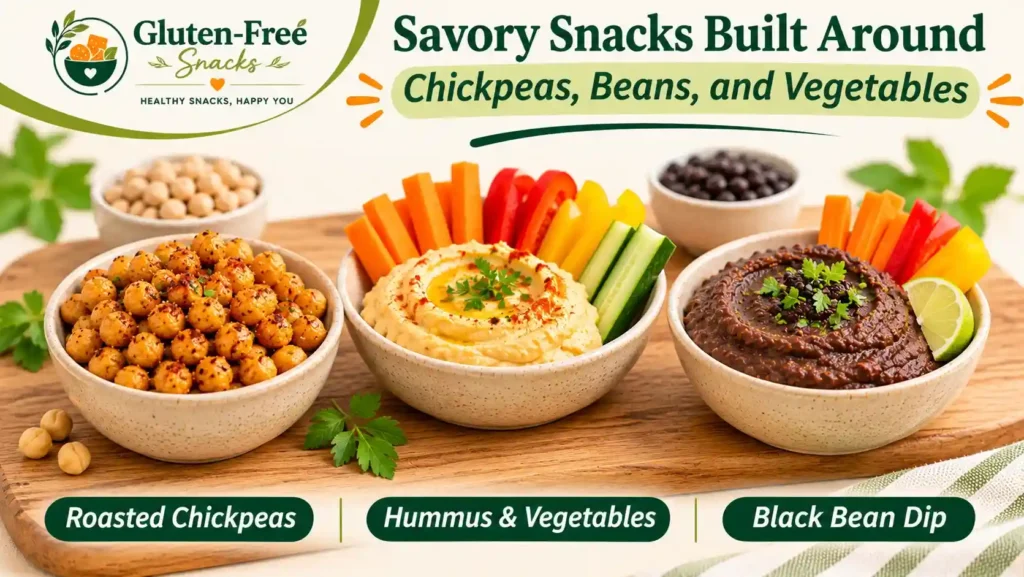
Drain and rinse canned chickpeas, then pat them thoroughly dry. Toss with a little olive oil, paprika, and a pinch of salt. Roast at 400°F (200°C) for 25–35 minutes, shaking the tray occasionally, until crisp. Let them cool before storing.
A ½-cup serving of cooked chickpeas provides roughly 6–7 g of fiber. That’s a useful amount for a crunchy snack, even if it doesn’t reach 10 g by itself. Try cumin, garlic powder, or dried herbs for different flavors. Check canned chickpeas and seasonings for gluten-free suitability when needed.
Hummus With Carrots and Bell Peppers
Pack ¼ cup of hummus with 1 cup of raw carrot sticks and sliced bell pepper. The vegetables add crunch and freshness, while the hummus makes the snack creamy and easy to dip. Depending on the vegetable mix and hummus recipe, the combination typically provides around 4–6 g of fiber.
For a portable option, keep the hummus in a small sealed container and pack the vegetables separately. Hummus often contains tahini, which is made from sesame, so check the ingredients if sesame is an allergen concern.
Black Bean Dip With Crunchy Vegetables
Mash ½ cup of cooked black beans with lime juice, cumin, and a little water until the mixture is easy to scoop. Serve with ½ cup of carrot and bell pepper strips. The beans supply fiber and plant-based protein, while the vegetables add color and crunch.
This combination provides approximately 9–10 g of fiber, depending on the vegetables and exact serving weights. For a smoother dip, blend the beans; for more texture, mash them with a fork. If you use canned beans or packaged seasonings, check their labels and any relevant gluten cross-contact warnings.
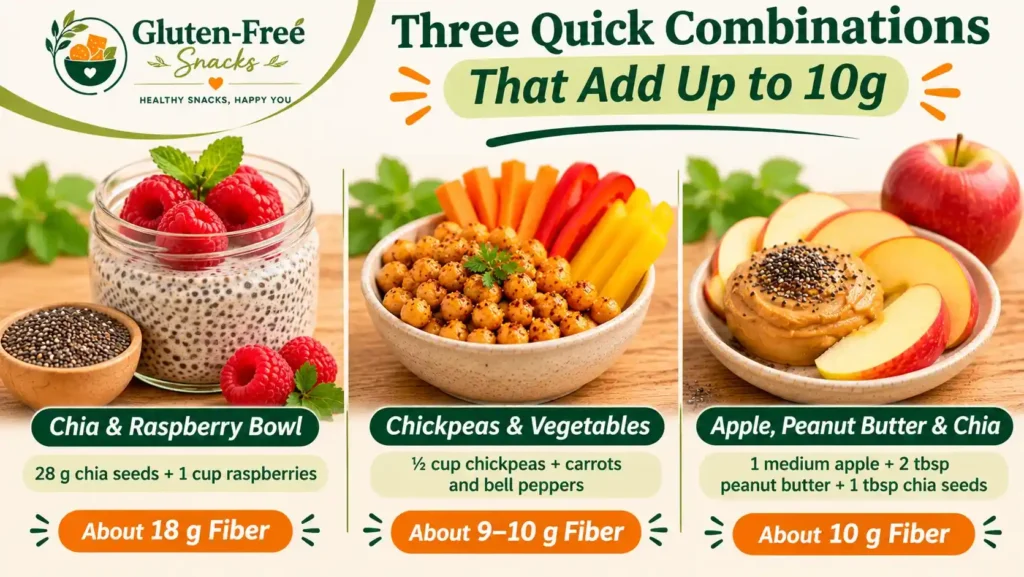
Three Quick Combinations That Add Up to 10g
When planning a high-fiber gluten-free snack, add the fiber from each ingredient instead of guessing from the name of the dish. These combinations use everyday foods and portions you can measure at home.
| Snack combination | Serving details | Estimated fiber total |
| Chia and raspberry bowl | 1 oz (28 g) chia seeds + 1 cup raspberries | About 18 g (9.8 + 8 g) |
| Chickpeas with vegetables | ½ cup cooked chickpeas + ½ cup carrots + ½ cup bell pepper | About 9–10 g (6.2 g + approximately 2 g + 1–1.5 g) |
| Apple with peanut butter and chia | 1 medium apple with skin + 2 tbsp peanut butter + 1 tbsp chia seeds | About 10 g (4.4 + 1.6 + 4.1 g) |
These are estimates based on common food-composition values, not guaranteed totals. Produce size, preparation, and product brands can change the result. For packaged peanut butter, dips, and seasonings, use the nutrition label when calculating your own snack.
Store-Bought Gluten-Free Snacks Worth Checking
Some days, there is no time to roast chickpeas or prepare chia pudding. For a snack you can keep in your bag, desk drawer, or lunchbox, look for products made with seeds, nuts, beans, or whole grains such as oats labeled gluten-free.
Before buying, check four details:
- Fiber per serving: Compare the grams on the Nutrition Facts panel rather than relying on claims such as “wholesome.”
- Serving size: A packet may contain more than one serving, so check how much you will actually eat.
- Ingredients: Seeds, legumes, nuts, and whole grains can contribute fiber, but the amount depends on the recipe.
- Gluten-free suitability: In the United States, the FDA requires foods labeled “gluten-free” to meet its standard of less than 20 parts per million of gluten. Read the ingredient list and consider cross-contact precautions, especially if you have celiac disease. See the FDA’s gluten-free labeling guidance.
Gluten-free does not automatically mean high-fiber. For more help interpreting package claims and ingredients, read our guide to choosing gluten-free foods and reading food labels.
Oats deserve special attention because they can come into contact with wheat, barley, or rye during production. If you include them, choose products labeled gluten-free. The Celiac Disease Foundation’s guide to gluten-free foods explains why oat labeling matters.
Make High-Fiber Snacking Easier to Keep Up With
A little preparation makes fiber-rich snacks easier to reach for when you’re hungry. Wash fruit ahead of time, roast a batch of chickpeas, keep chia seeds or ground flaxseed handy, or prepare chia pudding the night before. Rotate between fruit, legumes, nuts, and seeds rather than relying on one ingredient every day.
If you’re adding more fiber than usual, increase it gradually and drink enough fluids. A sudden increase can cause gas or bloating. The National Institute of Diabetes and Digestive and Kidney Diseases recommends increasing fiber gradually and drinking plenty of liquids to help it work better. If you have a digestive condition or persistent symptoms, ask a qualified healthcare professional what approach is right for you.
Find the Fiber in Foods You Already Enjoy
You don’t need to overhaul your snack routine to get more fiber. Start with foods you enjoy, measure the portions, and combine ingredients where needed. Chia seeds, fruit, chickpeas, and beans offer flexible ways to build gluten-free snacks with around 10 grams of fiber. Treat the totals as estimates, check product labels when relevant, and adjust portions to suit your needs.
Allergen note: These ideas include chia and flax seeds, peanuts, and potentially other nuts, dairy, and sesame. Check labels and choose alternatives that are safe for your individual allergies. For celiac disease, also pay attention to gluten-free labeling and cross-contact.
Questions About Gluten-Free Snacks and Fiber
Chia pudding with raspberries, an apple with peanut butter and chia, and black bean dip with vegetables can all provide substantial fiber. The final amount depends on the measured portions, so add up the ingredients rather than assuming every serving reaches 10 g.
An ounce (28 g) of chia seeds provides roughly 10 g of fiber. Other snacks may need a combination of fruit, seeds, beans, or vegetables to reach a similar amount. Check the serving weight, especially when measuring chia by spoon rather than weighing it.
Beans, lentils, chia seeds, berries, pears, vegetables, nuts, quinoa, and oats labeled gluten-free are useful options. Fiber content varies by food and portion size, and packaged versions should be checked for ingredients and gluten-free suitability.
Vary fruit, legumes, seeds, nuts, and suitable gluten-free whole grains. Don’t rely only on refined packaged gluten-free snacks, which may contain little fiber. A mix of naturally gluten-free foods can help add variety to your routine.
Fiber supports normal bowel function, and drinking enough fluids helps it work better. However, individual needs and tolerance vary. Increase fiber gradually, and speak with a healthcare professional if constipation persists or you have a digestive condition.