Flax seeds can do more than add a little crunch to food. When ground and mixed with water, they form a gel that can help bind ingredients in certain gluten-free recipes. That makes them particularly useful in homemade crackers, where the mixture needs to hold together before it goes into the oven.
Their mild, nutty flavor works well with garlic, rosemary, sesame seeds, and other savory ingredients. In this guide, you’ll learn how to make flaxseed crackers, when to use whole seeds or ground flaxseed, and how to avoid the common problems that leave homemade crackers soft in the middle or difficult to break apart. For a better understanding of everyday gluten-free snack choices, explore our gluten-free snack fundamentals.
Why Flax Seeds Work So Well in Gluten-Free Snacks
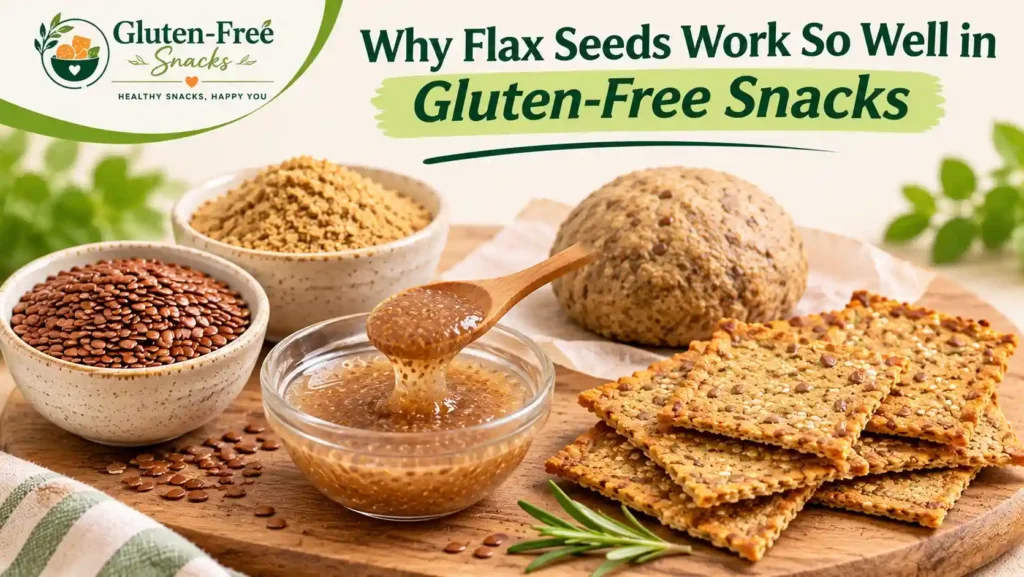
Gluten-free snacks can be tricky to make when a recipe relies on seeds rather than conventional flour. Ground flaxseed absorbs water and develops a gel-like consistency, helping the ingredients bind together. This is useful in a cracker mixture that needs to be spread into a thin sheet and baked until crisp.
Whole flax seeds offer something different: visible flecks and a little texture in every bite. Both forms contain dietary fiber, but they behave differently in recipes. Choosing the right form from the start can make the difference between a mixture that’s easy to shape and one that crumbles or sticks to the parchment.
Whole Flax Seeds or Flaxseed Meal: Which Should You Use?
Whole flax seeds and flaxseed meal come from the same plant, but grinding changes how the seeds behave.
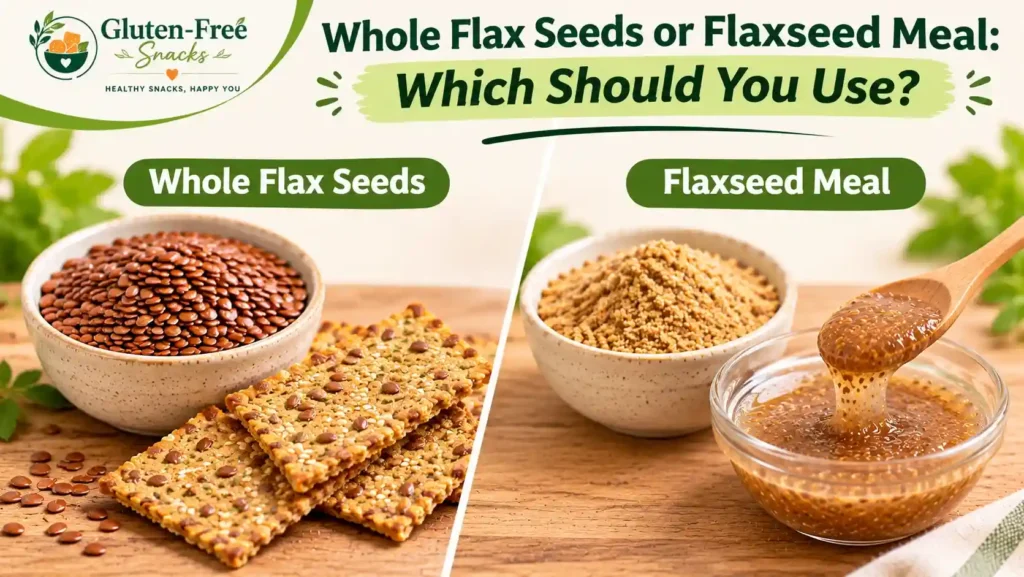
Ground flaxseed, also called flaxseed meal, is usually the better choice when a recipe depends on binding. Once mixed with water, it forms a gel that helps hold ingredients together. Finely ground meal is also easier to digest than whole flaxseed, which may pass through the digestive system without being fully broken down, according to MedlinePlus.
Whole flax seeds add texture, but they don’t provide the same binding effect. The fineness of the meal matters, too, because coarsely ground seeds may absorb water differently from a fine powder.
Follow the form specified in your recipe. Flaxseed oil is not a substitute for whole seeds or flaxseed meal because it doesn’t contain the same fiber-rich seed material.
The Easy Gluten-Free Flax Seed Cracker Recipe
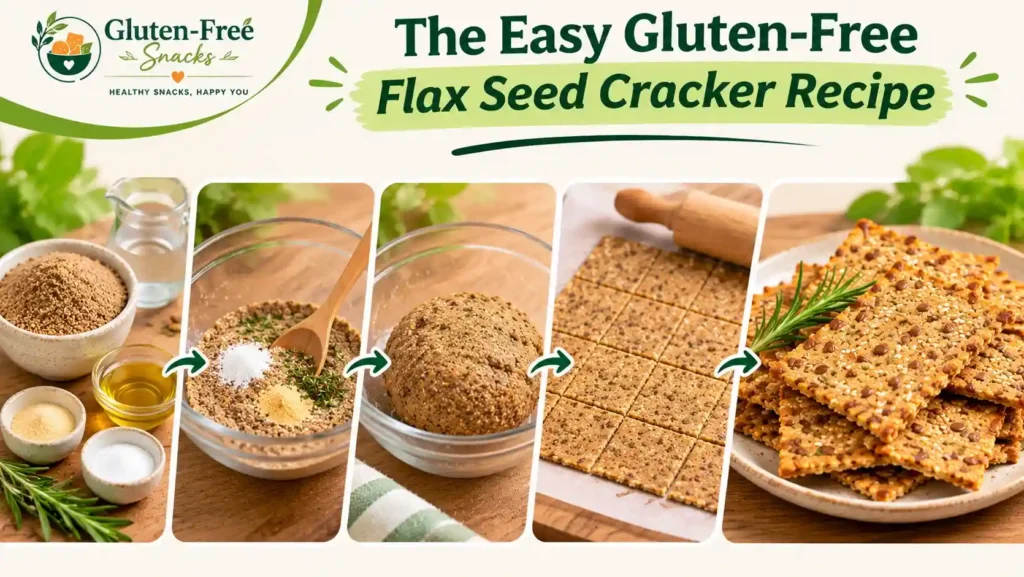
These savory flaxseed crackers use ground flaxseed, water, and simple seasonings. The method follows established flaxseed-cracker techniques, including allowing the seeds to absorb water, rolling the mixture evenly, and baking until dry. For comparison, see the published methods from The Vegan Larder and Dish by Dish.
Recipe at a Glance
- Prep time: 10 minutes
- Resting time: 10 minutes
- Bake time: Approximately 25–35 minutes, depending on thickness and oven
- Oven temperature: 180°C (356°F)
- Yield: Approximately 30 small crackers
- Serving size: 6 crackers
- Dietary suitability: Gluten-free, vegan, dairy-free, and egg-free when suitable ingredients are used
- Estimated fiber: Approximately 7–8 g per serving of six crackers
Ingredients for Simple Flaxseed Meal Crackers
| Ingredient | Amount |
| Whole flax seeds, to grind into meal | 150 g |
| Water | Up to 80 ml |
| Olive oil | 5 g (1 teaspoon) |
| Baking powder | Approximately 4 g (1 teaspoon) |
| Fine salt | 2–3 g, to taste |
| Garlic powder | Approximately 3 g (1 teaspoon) |
| Fresh rosemary, finely chopped | Approximately 1 teaspoon |
Use finely ground flaxseed meal and add the water gradually. Depending on the seeds and their grind, you may not need every drop.
How to Make the Crackers
- Prepare the oven. Preheat to 180°C (356°F) and line a baking tray with parchment paper.
- Grind the seeds. If starting with whole flax seeds, grind them into a fine meal using a clean coffee grinder or suitable food processor.
- Mix the dry ingredients. Combine the flaxseed meal, baking powder, salt, garlic powder, and rosemary in a bowl.
- Add the liquid gradually. Stir in the olive oil and add the water a little at a time. Stop when the mixture forms a thick dough that holds together without becoming runny. Cover and rest for 10 minutes.
- Roll and score. Place the dough between two sheets of parchment and roll it evenly to approximately 3 mm thick. Remove the top sheet and score the mixture into small squares.
- Bake and check. Bake for approximately 25–30 minutes, checking the edges and center as it cooks. If the edges are browning before the center dries, reduce the oven temperature to around 160°C (320°F) and continue checking at short intervals.
- Cool completely. Let the sheet cool before breaking the crackers apart along the scored lines. If the center remains soft, return it to the oven briefly and check again before storing.
How Much Fiber Is in These Flaxseed Crackers?
The fiber estimate is calculated from the flaxseed in the recipe, not from a laboratory analysis of the finished crackers. USDA-linked food composition data lists approximately 23.1–27.3 g of fiber per 100 g of ground or whole flaxseed, depending on the dataset.
For 150 g of flaxseed, that works out to approximately 34.7–41 g of fiber in the batch. If the recipe yields 30 crackers and a serving contains six, each serving would provide roughly 7–8 g of fiber from the flaxseed.
Actual values depend on the product, final yield, serving size, and ingredient label. You can check the underlying records through USDA FoodData Central for flaxseed and the USDA record for ground flaxseed.
Two-Ingredient and Three-Ingredient Flaxseed Crackers
Can You Make Two-Ingredient Flax Seed Crackers?
Yes. Some simple recipes use just ground flaxseed and water. The seeds absorb the liquid and help the mixture hold together. However, a two-ingredient version is a separate formulation, so don’t assume it will bake exactly like the seasoned recipe above.
What Changes in a Three-Ingredient Recipe?
Adding salt gives the crackers more flavor while keeping the ingredient list short. Herbs and garlic powder can add further flavor, but they increase the ingredient count. Fewer ingredients make preparation simpler; they don’t automatically guarantee a crispier result.
For the most reliable texture, follow a formula written for the precise number and type of ingredients you’re using.
Other Ways to Enjoy Gluten-Free Snacks With Flax Seeds
Crackers aren’t the only way to use flaxseed in a homemade snack. Two other formats are worth exploring, provided you use a formula designed for each one.
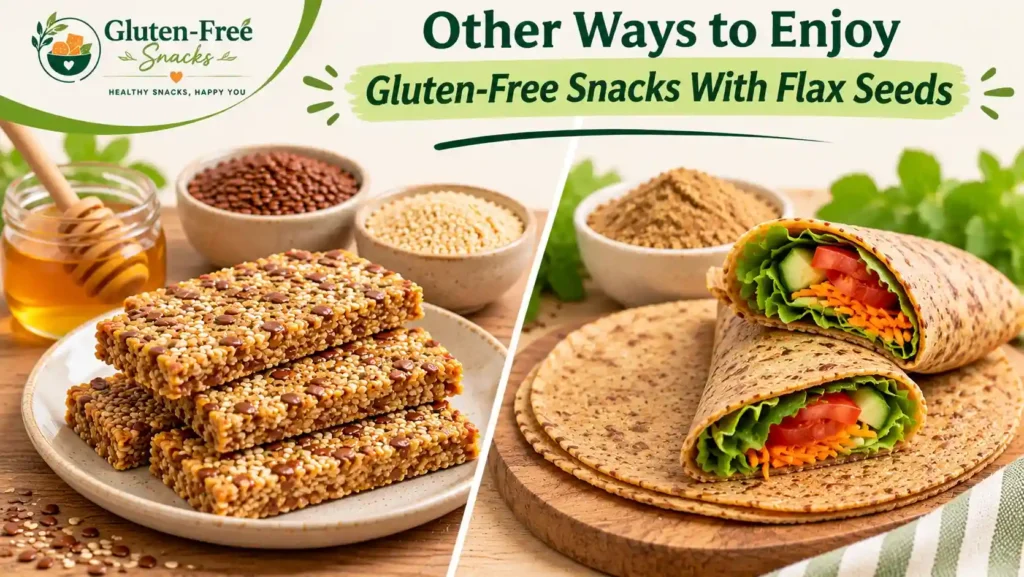
Sesame-flax seed bars combine flax seeds and sesame seeds with a sticky binder, such as honey or maple syrup. The mixture must be pressed firmly into a lined pan, baked according to its recipe, and allowed to cool enough to set before cutting. Honey is not vegan, while maple syrup is plant-based.
Flaxseed wraps use finely ground flaxseed meal and hot water to form a flexible dough. Unlike cracker dough, the aim is to keep the wrap soft enough to fold. Overcooking can dry it out and make it crisp.
Bars and wraps need different ingredient proportions and cooking methods from crackers. Treat them as separate recipes rather than trying to convert the cracker mixture into another snack.
For more inspiration, explore these homemade gluten-free snacks, including homemade crackers, snack bars, energy balls, and other simple ideas.
How to Get Crispy Crackers Instead of a Soft, Chewy Sheet
The most important factors are even thickness, enough drying time, and careful cooling.
- Roll evenly. Thick spots take longer to dry, leaving the center softer than the edges.
- Allow time for hydration. Resting the flaxseed mixture helps the ground seeds absorb water before you shape the dough.
- Watch the edges. If they darken while the middle remains soft, lower the oven temperature rather than letting the edges burn.
- Check the center. If it is still moist after baking, continue in short intervals and check again.
- Cool before packing. Warm crackers release steam. Trapping that moisture in a sealed container can soften them.
When troubleshooting flaxseed meal crackers, change one variable at a time. Altering the water, thickness, and oven temperature together makes it hard to identify what caused the texture problem.
Are Flax Seeds Gluten-Free?
Plain flax seeds are naturally gluten-free. However, the finished snack also depends on the other ingredients and how it is prepared. Check flour blends, baking powder, and packaged seasonings for suitable gluten-free labeling.
For people with celiac disease, gluten cross-contact matters, too. Use clean bowls, utensils, baking trays, and work surfaces, and check that ingredients haven’t been contaminated during handling or storage.
In the United States, FDA rules require foods labeled “gluten-free” to contain less than 20 parts per million (ppm) of gluten and meet other requirements. This is a U.S. labeling standard, not a universal rule. The FDA’s gluten-free food labeling guidance explains the requirements.
When buying packaged ingredients, read food labels carefully to check the ingredient list, gluten-free claims, and relevant allergen information.
For additional guidance on preventing cross-contact and understanding gluten-free requirements, see our gluten-free diet safety and labeling guide.
How to Store Homemade Flaxseed Crackers and Flaxseed Meal
Let crackers cool completely before putting them into an airtight container. Keep moisture out, since even a small amount of trapped steam can reduce their crispness. Storage time depends on how thoroughly the crackers dried and the conditions in your kitchen, so avoid applying one shelf-life estimate to every recipe.
Ground flaxseed needs different care. Its fat content means it can lose freshness over time. University of Illinois Extension recommends refrigerating ground flaxseed once opened. Keep it in a sealed container, follow the package instructions, and consider freezing it for longer storage. Whole flax seeds generally keep longer than ground meal when stored in a cool, dry place.
A Note on Fiber and Flaxseed Safety
Flaxseed contributes dietary fiber, but increasing fiber intake suddenly can cause digestive discomfort in some people. Start with a modest portion and increase gradually while maintaining adequate fluid intake.
The National Center for Complementary and Integrative Health advises against eating raw or unripe flaxseeds. Use food-grade flaxseed in recipes that are prepared and cooked as directed.
Flaxseed and flaxseed supplements may also interact with some medicines. If you take medication or are considering using concentrated flaxseed products for a health reason, ask a healthcare professional or pharmacist for advice.
Find Your Favorite Way to Snack on Flax Seeds
Flaxseed snacks can be crisp, chewy, or flexible, depending on their ingredients and preparation. Start with a measured cracker recipe and adjust one variable at a time. For another homemade option, try these Crispy Homemade Garlic & Herb Gluten-Free Crackers, a related recipe that doesn’t rely on flaxseed.
Frequently Asked Questions About Gluten-Free Snacks With Flax Seeds
Flax seeds can be used in homemade crackers, sesame-flax seed bars, wraps, and certain savory biscuits. Each format needs a recipe with suitable ingredient proportions and a method designed for the intended texture.
Flaxseed itself is naturally gluten-free, but the finished crackers also depend on the other ingredients and preparation. Check labels and take precautions against gluten cross-contact, especially when cooking for someone with celiac disease.
Ground flaxseed meal is generally more useful when a recipe relies on binding. Whole flax seeds add visible texture and crunch, but may not hold the mixture together as effectively. Use the form specified in your recipe.
Yes. Some recipes use ground flaxseed and water without conventional flour. Their texture depends on the seed-to-water balance, thickness, and baking method.
Not in equal amounts without adjusting the recipe. Almond flour has a different structure and fat content, so the dough may behave differently. It is also made from tree nuts, which matters when considering allergies.