Looking for a snack that is both gluten-free and a good source of vitamin D? The trick is knowing which foods actually provide this often-overlooked nutrient. Salmon and other fatty fish are among the richest natural food sources, while eggs and UV-exposed mushrooms offer additional options. Fortified breakfast cereals and plant-based milks can also help, provided vitamin D has been added. But there’s one important detail: a gluten-free label doesn’t tell you how much vitamin D a product contains. In this guide, you’ll discover 10 simple snack ideas, compare vitamin D content in everyday foods, and learn how to check labels so you can choose options that suit your diet with confidence.
Which Ingredients Actually Bring Vitamin D to a Snack?
Not every nutritious food provides vitamin D, so the best place to start is with ingredients that contain it naturally or have been fortified. Fatty fish, including trout and salmon, offer some of the highest amounts found in everyday foods. Egg yolks provide a smaller amount, while white mushrooms exposed to ultraviolet (UV) light can be a useful plant-based source. Fortified milk and breakfast cereal offer another option, but their vitamin D content depends on the product.
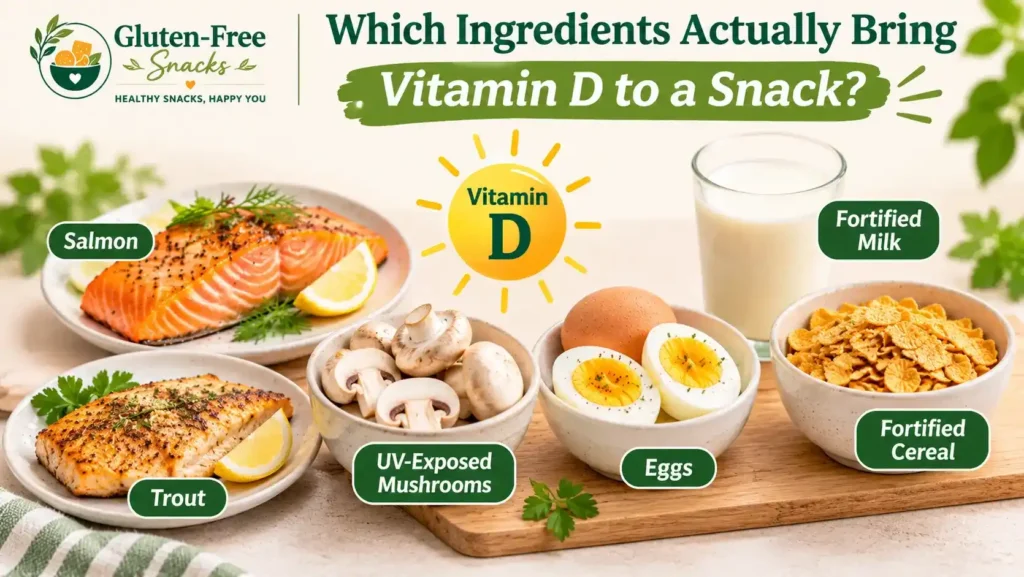
The following figures come from the NIH Office of Dietary Supplements and provide a useful starting point for comparing foods.
| Food or drink | Reference serving | Approx. vitamin D |
| Cooked rainbow trout | 3 oz | 16.2 mcg (645 IU) |
| Cooked sockeye salmon | 3 oz | 14.2 mcg (570 IU) |
| UV-exposed white mushrooms | ½ cup | 9.2 mcg (366 IU) |
| Vitamin D-fortified 2% milk | 1 cup | 2.9 mcg (120 IU) |
| Vitamin D-fortified cereal | 1 serving | 2.0 mcg (80 IU) |
| One large scrambled egg | 1 egg | 1.1 mcg (44 IU) |
These are U.S. reference values, not guaranteed amounts in every product available in Pakistan or elsewhere. Fish type, preparation, mushroom treatment, and fortification can change the figures.
Fruit, nuts, seeds, and most ordinary vegetables can add flavor and variety to snacks, but they are not meaningful vitamin D sources. For a broader introduction to naturally gluten-free foods and everyday snacking, see our gluten-free snack fundamentals guide.
10 Gluten-Free Snacks Built Around Real Vitamin D Sources
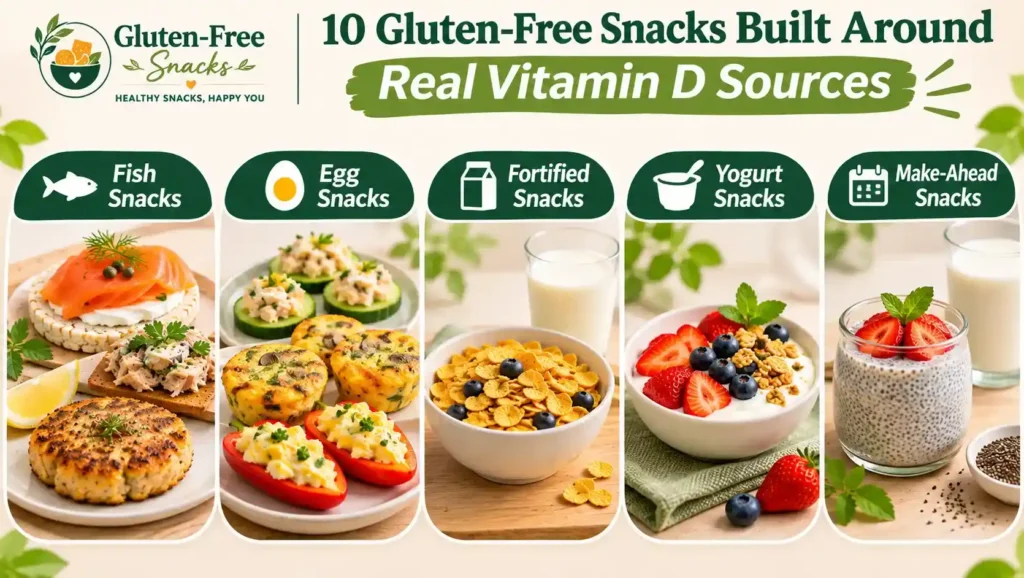
The easiest way to make a snack count is to start with an ingredient that actually provides vitamin D, then add simple foods for flavor and texture. These ideas range from savory fish bites to make-ahead options using fortified milk and cereal. The vitamin D content will vary by portion and product, so treat each combination as a practical starting point rather than a guaranteed dose.
1. Smoked Salmon on Gluten-Free Rice Cakes
For a quick savory snack, spread a little plain cream cheese on a rice cake and add smoked salmon, cucumber slices, lemon juice, and black pepper. The salmon provides vitamin D, while the rice cake gives you a crisp, convenient base. Check the package if the rice cakes or salmon contain added seasonings or flavorings.
2. Lemon-Sardine Mash on Gluten-Free Crackers
Drain canned sardines and mash them with lemon juice, black pepper, and a little plain yogurt or olive oil. Spoon the mixture onto gluten-free crackers for a snack that takes only a few minutes to prepare. Sardines supply vitamin D naturally, although the amount depends on the product and serving size. Choose plain or simply seasoned crackers with a suitable gluten-free label.
3. Tuna and Egg Cucumber Cups
Mix drained tuna with chopped hard-boiled egg, a spoonful of plain yogurt, and fresh herbs. Serve the mixture on thick cucumber slices or in small lettuce leaves instead of bread. Tuna and eggs both contribute vitamin D, although the amount is generally more modest than in some fatty fish. Keep refrigerated until serving, especially when preparing these cups ahead.
4. Mini Egg and Mushroom Frittatas
Whisk eggs with finely chopped, cooked mushrooms, a little seasoning, and fresh herbs. Spoon the mixture into a lightly greased mini muffin tray and bake until the eggs are fully set. Mushrooms exposed to ultraviolet light can supply useful amounts of vitamin D, while eggs add a smaller contribution. Check mushroom packaging when available because ordinary mushrooms may contain much less vitamin D.
5. Egg Salad Stuffed Mini Peppers
Combine chopped boiled eggs with plain yogurt, mustard, and fresh herbs, then spoon the mixture into halved mini peppers. The peppers add crunch and sweetness without needing crackers or bread. Most of the vitamin D comes from the eggs, so think of this as a convenient way to enjoy an egg-based snack rather than a particularly high-vitamin-D option.
6. Fortified Cereal With Milk
A small bowl of gluten-free breakfast cereal can work just as well for an afternoon snack. Choose a cereal whose nutrition panel lists vitamin D, then serve it with milk that also contains the vitamin. Both products can contribute, but fortification levels vary by brand. Check the amount per serving instead of assuming that every cereal or milk product is fortified.
7. Berry Bowl With Vitamin D-Fortified Yogurt
Spoon vitamin D-fortified yogurt into a bowl and top with fresh strawberries, blueberries, or another fruit you enjoy. It makes a refreshing snack with no cooking required. The yogurt provides vitamin D only if the product has been fortified; berries contribute flavor and other nutrients, but they are not meaningful natural sources of this vitamin. Confirm the amount on the label.
8. Banana Smoothie With Fortified Soy Milk
Blend a ripe banana with unsweetened soy milk that lists vitamin D in its nutrition information. For a creamier texture, add a small spoonful of peanut butter. This is an easy option when you want something drinkable rather than crunchy. The fortified soy milk supplies the vitamin D, while the banana and peanut butter add flavor and texture.
9. Make-Ahead Chia Pudding With Fortified Plant Milk
Stir chia seeds into vitamin D-fortified soy or oat milk, then refrigerate for several hours or overnight until the mixture thickens. Add fruit just before eating. This option works well for preparing snacks ahead of a busy day. Not all plant-based milks contain added vitamin D, so check the nutrition panel and confirm the product is suitable for your gluten-free diet.
10. Mini Salmon-and-Potato Cakes
Mix cooked, flaked salmon with mashed potato, chopped herbs, and a gluten-free binder, such as a suitable gluten-free flour or breadcrumb. Shape into small patties and bake or pan-cook until heated through. Salmon is the main vitamin D source; the potato helps hold the cakes together. Check the binder and seasonings, and refrigerate leftovers promptly.
For the most reliable comparison, check the vitamin D listed for the serving you actually eat. The NIH vitamin D fact sheet provides reference values for common food sources, while product labels help you judge fortified foods.
You can also explore our guide to different types of gluten-free snacks for more ideas beyond these vitamin D-focused combinations.
Vegetarian or Vegan? Find Vitamin D in the Foods You Already Enjoy
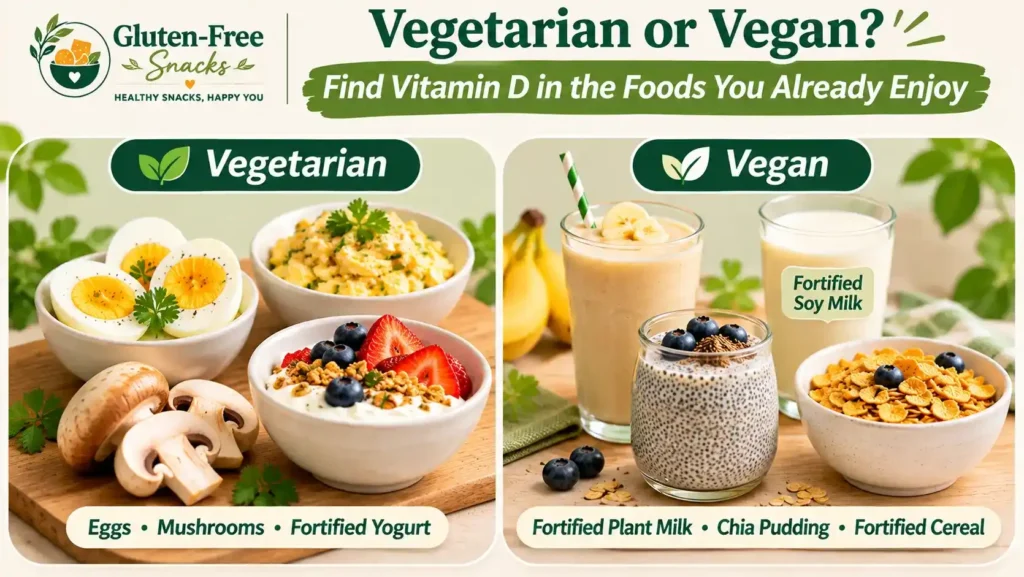
Vegetarian gluten-free snacks can include boiled eggs, egg salad, and dairy products such as milk or yogurt fortified with vitamin D. Vegan choices need a little more label-checking, but there are convenient options, too. Try a bowl of gluten-free cereal with fortified soy milk, a smoothie made with a vitamin D-fortified plant drink, or a snack featuring UV-exposed mushrooms.
The important detail is that plant-based does not automatically mean vitamin D-rich. Ordinary mushrooms may contain much less vitamin D than UV-exposed varieties, and not every yogurt, cereal, or plant-based drink is fortified. Before buying, check the nutrition panel for the amount of vitamin D per serving and confirm that packaged ingredients are suitable for your gluten-free diet. That way, you can choose snacks that fit your preferences without guessing about their nutritional value.
Two Label Checks That Make Choosing Vitamin D Snacks Easier
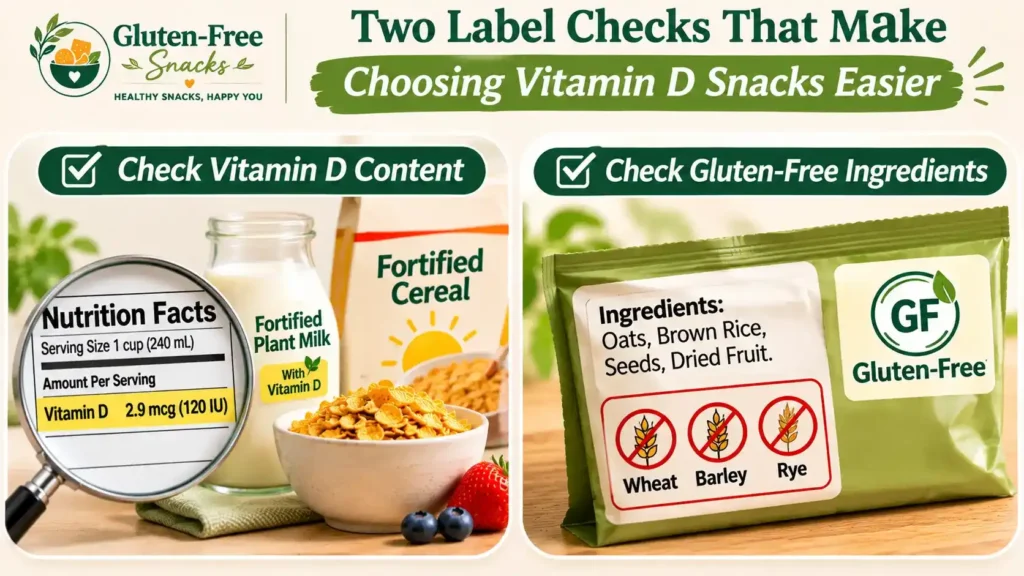
A product can look like a healthy choice without providing much vitamin D, so check two things before adding it to your shopping basket.
First, check the vitamin D content. Look at the nutrition panel or fortification details on cereals, yogurt, milk, and plant-based drinks. Compare the amount per serving rather than assuming that a product contains vitamin D because it is dairy-free or marketed as nutritious.
Second, check that it is gluten-free. Read the ingredient list for wheat, barley, rye, and other gluten-containing ingredients. If you have coeliac disease, cross-contact during manufacturing or food preparation matters, too. In the United States, foods labeled gluten-free must meet the FDA standard of less than 20 parts per million (ppm) of gluten. Rules may differ in other countries.
If you want to compare packaged snack ingredients, serving sizes, and nutritional information before buying, explore our gluten-free snack products and buying guides.
For more practical shopping advice, read our guide to reading gluten-free food labels.
You can also read our guide to gluten-free diet safety and labeling for more information about gluten-free requirements and preventing cross-contact.
What Can One Snack Add to Your Daily Vitamin D?
A snack does not need to provide your entire daily vitamin D requirement to be worthwhile. What matters is how much it contributes alongside the rest of your meals. According to the NIH Office of Dietary Supplements, the recommended daily intake for most adults aged 19–70 is 15 mcg (600 IU), increasing to 20 mcg (800 IU) for adults over 70.
When comparing vitamin D snacks, check the serving size as well as the amount listed on the nutrition panel. A small portion of salmon or a fortified drink may contribute more than a snack containing only a little vitamin D. Needs can vary, so speak with a healthcare professional if you are concerned about vitamin D deficiency rather than relying on food choices alone.
Make Vitamin D Part of Your Everyday Snacking
Finding gluten-free snacks with vitamin D doesn’t have to be complicated. A few simple choices, such as salmon, eggs, UV-exposed mushrooms, or fortified foods, can add variety to your day. Just remember to check how much vitamin D each serving provides and read the labels to make sure your snacks are suitable for your gluten-free diet.
Quick Answers About Vitamin D and Gluten-Free Snacks
Salmon on gluten-free rice cakes and sardines on gluten-free crackers are practical options because fatty fish provides vitamin D naturally. Eggs contribute smaller amounts, while fortified cereal, milk, and plant-based drinks can help when their labels confirm added vitamin D.
Vitamin D itself is not a gluten-containing grain. However, supplements and packaged products may contain other ingredients, so check the label and contact the manufacturer if their gluten-free status is unclear.
Fatty fish, including salmon and trout, are among the best natural food sources. UV-exposed mushrooms can also provide useful amounts, while egg yolks contain smaller quantities. The amount varies by food and serving size.
Yes, some supplements are labeled gluten-free, but formulations vary between products. Check the ingredient list and manufacturer’s information rather than assuming every vitamin D supplement is suitable for a gluten-free diet. Ask a healthcare professional whether supplementation is appropriate, especially if you suspect a deficiency.
Most ordinary fruits and vegetables are not meaningful sources of vitamin D. UV-exposed mushrooms are an exception, while fortified foods, such as certain plant-based drinks and cereals, offer another option. Always check the nutrition panel to confirm how much vitamin D a serving provides.