With shelves full of gluten-free options, how do you know which snacks are actually worth buying? Walk into a grocery store today and you will find crackers, popcorn, snack bars, dried fruit, protein snacks, and many other options. But with so many choices, it can be hard to know which ones are actually worth putting in your cart.
The gluten-free label is an important starting point, but it is not the whole story. A snack can be gluten-free and still vary widely in its ingredients, nutritional value, price, and overall quality. That is why it helps to look at the ingredient list, nutrition facts, serving size, allergen information, and packaging before you buy.
Whether you are stocking your pantry, looking for convenient gluten-free snacks to buy, or simply trying to find the best gluten-free snacks for your routine, this guide will help you shop with more confidence and make choices that genuinely suit your needs.
What Should You Look for in a Gluten-Free Snack?
With so many gluten-free snacks to buy, it is easy to focus only on the words “gluten-free” on the package. But there is more to consider when choosing a product. A good snack should fit your dietary needs, preferences, routine, and budget.
Start with the gluten-free label and then look a little closer at the rest of the package. The ingredient list, nutrition facts, serving size, allergen information, storage needs, and price can all help you decide whether a product is right for you.
| What to Check | Why It Matters |
| Gluten-Free label | Helps identify products that meet applicable gluten-free requirements |
| Ingredients | Shows what the snack is actually made from |
| Protein | Useful when you want a more satisfying option |
| Fiber | Helps add nutritional value |
| Added sugar | Helps you compare sweet snack products |
| Sodium | Useful when comparing savory options |
| Serving size | Makes nutrition and price comparisons clearer |
| Allergens | Helps identify other ingredients you may need to avoid |
| Portability | Matters for work, school, travel, or on-the-go eating |
| Storage | Helps you choose snacks that fit your available space and conditions |
| Price | Helps you compare overall value |
You do not have to find a perfect product every time. The goal is to understand what you are buying and choose gluten-free snack products that make sense for your needs.
Best Gluten-Free Snack Products by Category
With so many gluten-free snack products available, shopping becomes easier when you start with the type of snack you actually want. From something crunchy to a quick sweet bite, there are plenty of options to fit different tastes and routines.
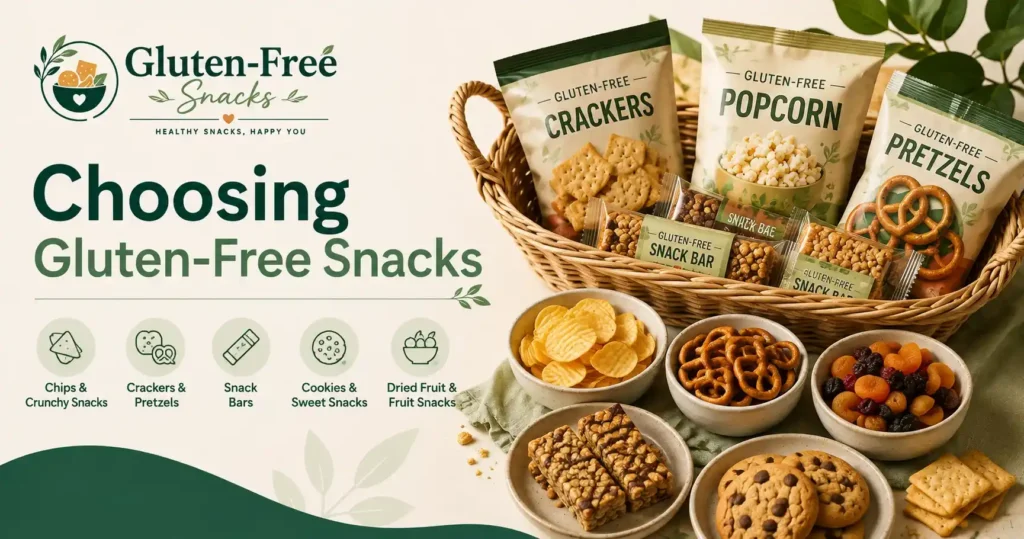
Gluten-Free Chips and Crunchy Snacks
- Gluten-Free chips and tortilla chips
- Popcorn and rice cakes
- Corn based snacks
- Crunchy snack mixes
Gluten-Free Crackers and Pretzels
- Gluten-Free crackers
- Gluten-Free pretzels
- Rice crackers
- Seed crackers
- Cheese crackers
Gluten-Free Snack Bars
- Granola bars
- Protein bars
- Fruit bars
- Nut based bars
- Energy bars
Gluten-Free Cookies and Sweet Snacks
- Gluten-Free cookies
- Brownie style snacks
- Chocolate snacks
- Granola and sweet snack bars
Gluten-Free Fruit Snacks
- Dried fruit
- Fruit cups
- Fruit leather
- Freeze dried fruit
- Fruit bars
When comparing similar products, look at what is inside the package as well as the serving information and gluten-free labeling.
Best Healthy Gluten-Free Snacks to Buy
Choosing healthy gluten-free snacks to buy starts with looking beyond the gluten-free claim. A snack can be gluten-free and still contain a lot of added sugar, sodium, or refined ingredients. What matters is how the whole product fits your needs.
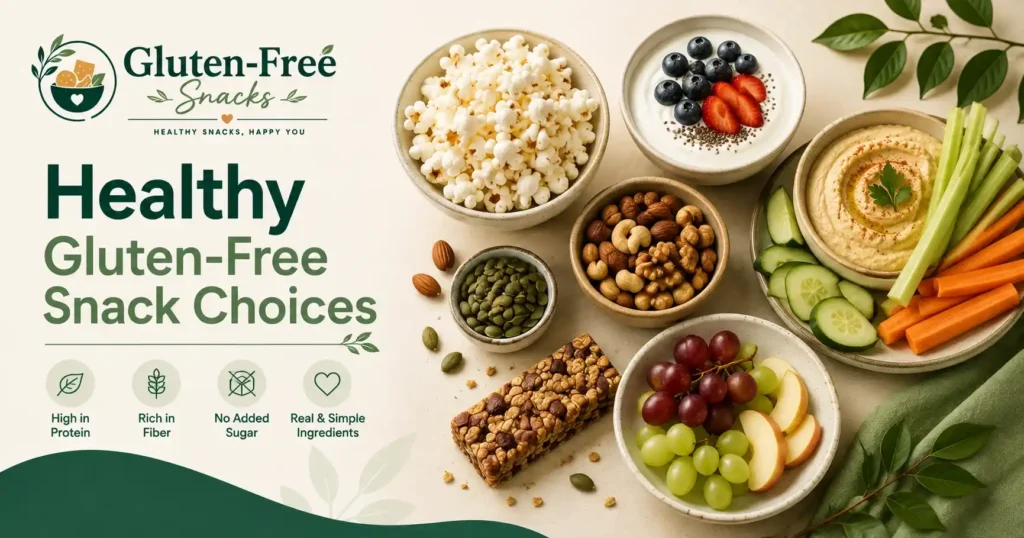
What Makes a Packaged Snack a Better Choice?
Look for:
- Recognizable, whole-food ingredients
- A useful amount of protein or fiber
- Lower added sugar
- Reasonable sodium
- A serving size that suits you
- Minimal processing where practical
Healthy Gluten-Free Snack Ideas to Buy
Good options can include:
- Nuts and seeds
- Fruit based snacks
- Popcorn
- Plain or suitable yogurt
- Protein bars
- Trail mix
- Hummus with vegetables
You do not have to avoid packaged foods altogether. Instead, compare products and choose gluten-free snacks with ingredients and nutrition information that match what you are looking for.
Best Gluten-Free Snacks for Different Needs
The right gluten-free snack can look different depending on who will eat it, where it will be eaten, and what you need from it. Instead of choosing the same snack every time, match the product to the situation.
| Need | Product Types to Consider |
| Kids | Crackers, fruit snacks, bars |
| Adults | Nuts, popcorn, snack bars |
| Work | Desk friendly bars, trail mix, crackers |
| Travel | Shelf stable bars, dried fruit, nuts |
| Protein | Protein bars, nuts, seeds |
| Lower sugar | Nuts, seeds, plain snack options |
| Quick snack | Single serve bars, popcorn, fruit cups |
| Family | Crackers, popcorn, trail mix |
For gluten-free snacks for kids, look for easy-to-eat options. Adults may prefer convenient snacks for work or home, while travelers often need portable, shelf-stable choices. If protein is your priority, nuts, seeds, and suitable protein bars can be useful options.
The key is simple: choose the product based on your needs, not just the gluten-free label.
How to Read a Gluten-Free Snack Label
The front of a package can tell you a lot, but it should not be the only thing you check. When buying gluten-free snack products, take a moment to read food labels carefully when choosing gluten-free products. The ingredient list, gluten-free claim, allergen information, and details about cross-contact can all help you make a more informed choice.
Check the Gluten-Free Claim
In the United States, the FDA defines requirements for foods that use a gluten-free claim. Among other requirements, a food carrying the claim must contain less than 20 parts per million of gluten, including any unavoidable gluten from cross-contact.
Read the Ingredient List
Look carefully for ingredients derived from:
- Wheat
- Barley
- Rye
- Triticale
- Malt and other barley-based ingredients
The FDA also explains that naturally gluten-free foods do not have to carry a gluten-free claim, so the absence of a label does not automatically mean a food contains gluten. (U.S. Food and Drug Administration)
If you are unsure about an ingredient, the gluten-free Food Checker can provide general guidance. Always confirm the current product label because ingredients and processing methods can vary.
Check Allergens and Cross Contact
Gluten-Free does not mean allergy free. A product may be gluten-free while containing another ingredient you need to avoid.
Also consider information about:
- Shared equipment
- Manufacturing facilities
- Cross contact
- Other dietary restrictions
If you need to avoid gluten carefully, checking the label each time you buy a product is a sensible habit because ingredients and formulations can change. For a closer look at gluten-free snack ingredients and naturally gluten-free foods, see our detailed guide.
For more detail on how shared equipment, surfaces, and food preparation can create risks, read our guide to gluten cross-contact.
Gluten-Free vs Certified Gluten-Free: What Is the Difference?
The terms gluten-free and certified gluten-free are related, but they are not exactly the same. In the United States, “gluten-free” is a regulated food labeling claim, while third-party certification is an additional program that manufacturers may choose to use.
| Label Type | What It Tells You |
| Gluten-Free | Meets applicable gluten-free labeling requirements |
| Certified gluten-free | Also carries certification from a third-party |
| No gluten claim | Does not automatically mean the product contains gluten |
Third party certification is not required for a product to use a gluten-free claim in the United States. The important point is to understand what the label means and choose products that fit your needs.
Best Gluten-Free Snack Products for Protein and Fiber
If nutrition is part of your buying decision, look for products that provide useful amounts of protein or fiber.
Protein options: Protein bars, nuts, seeds, trail mix, appropriately labeled meat snacks, and yogurt-based snacks.
Fiber options: Fruit, nuts, seeds, popcorn, fruit bars, and legume based snacks.
Check the nutrition facts and ingredient list when comparing products rather than relying on the gluten-free claim alone.
Best Gluten-Free Snacks for Work, Travel, and On the Go
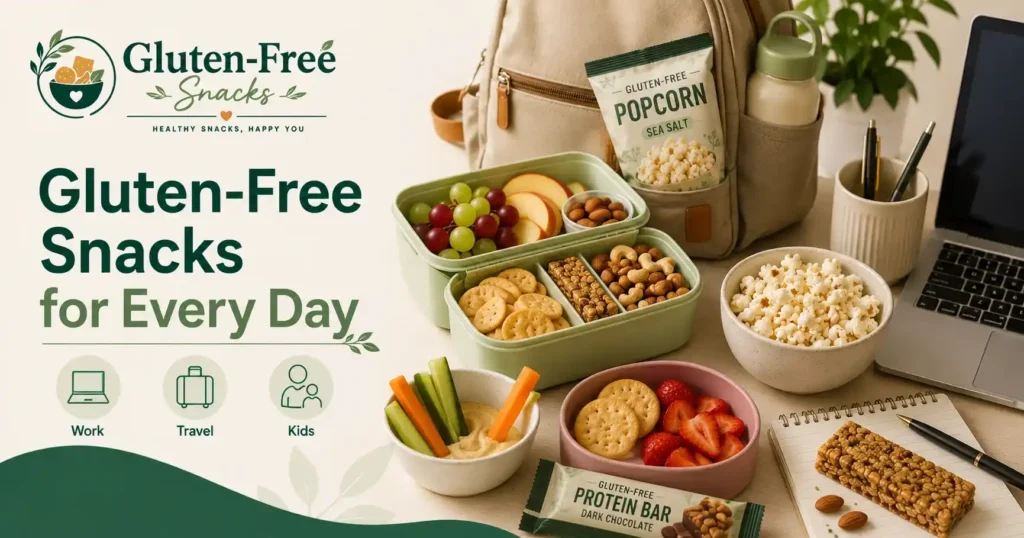
The best gluten-free snacks for work or travel are the ones that are easy to carry, store, and eat when you need them. Look for options that fit naturally into your routine without creating extra mess or requiring much preparation.
Gluten-Free Snacks for Work
For the office, practical choices include:
- Individually packaged snacks
- Shelf stable options
- Low mess foods
- Easy to portion snacks
- Desk friendly packaging
Gluten-Free Snacks for Travel
When you are away from home, portability matters. Consider:
- Dried fruit
- Nuts and seeds
- Snack bars
- Gluten-Free crackers
- Other shelf-stable snacks
Gluten-Free Snacks for Kids
For children, packaging and school requirements can matter as much as the snack itself. Look for:
- Easy to open packages
- Small portions
- Lunchbox friendly products
- Options that meet school requirements
- Nut free choices when needed
Gluten-Free Snacks Worth Buying on a Budget
Gluten-Free products can sometimes cost more, so comparing the price per serving can help you find better value. Also consider package size, multipacks, and whether a naturally gluten-free food may be a more affordable option.
Budget Friendly Gluten-Free Snack Options
- Popcorn
- Rice cakes
- Bananas
- Apples
- Nuts in larger packages
- Seeds
- Dried fruit
- Plain yogurt
The cheapest option is not always the best choice. Compare the ingredients, serving size, nutrition, and price together to find gluten-free snacks that fit both your needs and your budget.
Gluten-Free Snack Shopping Guide
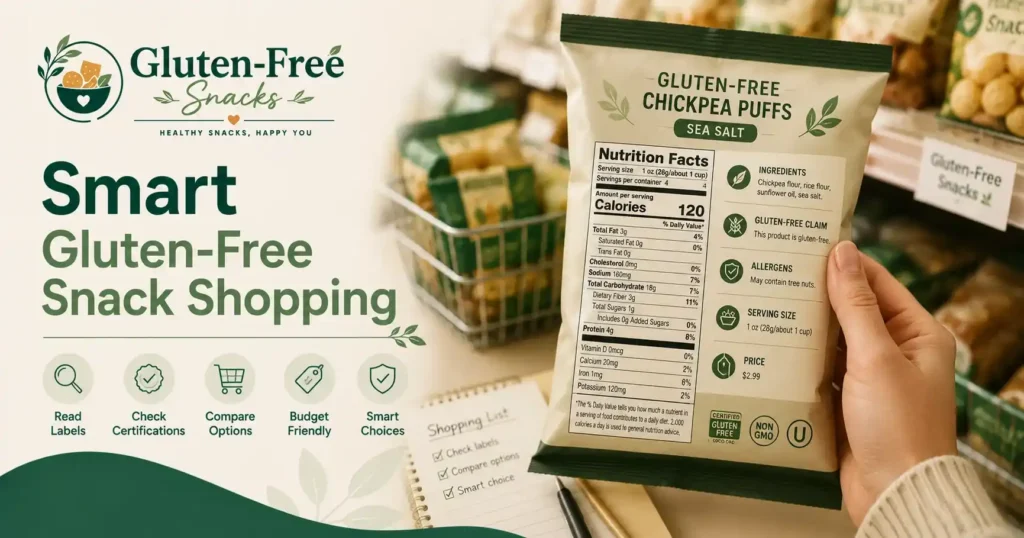
Buying gluten-free snacks becomes much easier when you have a simple plan. Instead of choosing the first product you see, take a moment to think about what you need and what the package tells you.
Step 1: Start With Your Need
Think about where and when you will eat it. Is it for work, school, travel, home, or exercise?
Step 2: Choose the Product Type
- Crunchy: Crackers, popcorn, chips
- Sweet: Cookies, fruit snacks, bars
- Protein: Protein bars, nuts, seeds
Step 3: Check the Label
Look for the gluten-free claim, ingredients, allergen information, and cross-contact details.
Step 4: Compare Nutrition
Check protein, fiber, added sugar, sodium, and serving size.
Step 5: Compare Value
Look at the price, package size, servings per package, and storage needs.
When comparing two similar products, do not judge them by package size alone. Compare the price per serving and the amount of product you actually get. A larger package is not always the better value, especially if the serving size is different.
This quick process can help you choose gluten-free snack products that fit your needs, preferences, and budget.
Popular Gluten-Free Snacks to Buy
When you are shopping for gluten-free snacks to buy, you will find plenty of familiar options in different flavors and formats. The best choice often comes down to what you enjoy, how you plan to eat it, and what fits your nutritional needs.
| Snack Type | Popular Choices |
| Crunchy | Popcorn, chips, crackers |
| Sweet | Cookies, fruit snacks, bars |
| Protein | Protein bars, nuts, seeds |
| Portable | Trail mix, bars, dried fruit |
| Family | Crackers, popcorn, snack mixes |
These choices can make a useful starting point when building a gluten-free snacks list. However, popularity does not automatically mean a product is nutritious or suitable for everyone.
Before buying, compare the package details, including the ingredient list, nutrition information, allergens, and serving size. That gives you a better basis for choosing a product than popularity alone.
Where to Buy Gluten-Free Snacks
You can find gluten-free snacks in many places, including grocery stores, supermarkets, health food stores, online grocery shops, brand websites, and specialty gluten-free retailers. The selection can vary by store and location, so it helps to compare a few options when shopping.
Whether you shop online or in person, check the current package label before buying. Ingredients and product formulas can change, so an older recommendation may not always match what is currently on the shelf.
Quick Gluten-Free Snack Buying Comparison
| What You Need | Good Product Types | What to Check |
| Quick snack | Bars, fruit cups | Sugar, serving size |
| Protein | Protein bars, nuts | Protein, ingredients |
| Fiber | Fruit snacks, seeds | Fiber, added sugar |
| Crunchy | Popcorn, crackers | Sodium, ingredients |
| Travel | Dried fruit, bars | Shelf life, packaging |
| Work | Trail mix, bars | Portability, mess |
| Kids | Crackers, fruit snacks | School and allergy requirements |
| Budget | Popcorn, rice cakes | Price per serving |
This makes it easier to match a gluten-free snack product with what you actually need.
Final Thoughts
Buying gluten-free snacks becomes much easier when you know what to look for instead of relying only on the gluten-free label.
Start with the type of product you need, then take a closer look at the ingredients, gluten-free labeling, nutrition facts, allergens, and cross-contact information. If you are comparing several options, price, convenience, serving size, and storage can also help you decide which product makes the most sense.
There is no single best gluten-free snack for everyone. The right choice depends on your personal needs, preferences, routine, and budget.
Once you know how to evaluate gluten-free snack products, you can shop with more confidence and choose options that fit your everyday life without making the process unnecessarily complicated.
Frequently Asked Questions About Gluten-Free Snack Products
Look for products with clear gluten-free labeling, suitable ingredients, and nutrition that fits your needs.
Popcorn, crackers, snack bars, nuts, seeds, dried fruit, and gluten-free cookies are popular choices.
No. A snack can be gluten-free while still being high in added sugar, sodium, or refined ingredients.
Read the package carefully, paying attention to the gluten-free claim, ingredients, allergens, serving information, and cross-contact details
Choose options that suit your needs and have clear labeling and ingredients you are comfortable with.
Protein bars, nuts, seeds, trail mix, and suitable yogurt-based snacks can provide protein.