Choosing gluten-free snacks becomes much easier when you understand what to look for instead of simply searching for products labeled gluten-free. Many everyday foods are naturally gluten-free, while packaged snacks require more attention to ingredients and labeling. This guide explains the basics of gluten-free snacking, from naturally gluten-free foods and healthy snack choices to store-bought options and label reading. You will also find practical ideas for work, travel, kids, and everyday eating. Whether you follow a gluten-free diet because of celiac disease, gluten intolerance, or personal dietary needs, understanding these fundamentals can help you make more informed snack choices.
What Does Gluten-Free Mean?
Gluten-free means a food does not contain gluten at levels that meet the applicable gluten-free standard. Gluten is a group of proteins naturally found in grains such as wheat, barley, and rye. It can also appear in foods made with these grains, including many breads, crackers, cereals, and baked products.
Many foods are naturally gluten-free, including fresh fruits and vegetables, eggs, plain dairy products, nuts, seeds, rice, corn, and quinoa. However, packaged foods can contain added ingredients or be exposed to gluten during processing, so checking the label is important.
It is also helpful to understand that gluten-free and wheat-free are not exactly the same thing. A wheat-free product may still contain another source of gluten, such as barley or rye. Likewise, a gluten-free food does not necessarily mean it is healthier or more nutritious.
For anyone following a gluten-free diet, understanding these basics makes it easier to identify suitable foods and choose snacks with confidence. You can explore our gluten-free snack ingredients and naturally gluten-free foods guide for a more detailed look at suitable ingredients.
Gluten-Free Snacks and Celiac Disease
For people with celiac disease, avoiding gluten is more than a food preference. Gluten can trigger an immune response, so choosing suitable foods and preventing cross-contact is especially important. Naturally gluten-free foods such as fresh fruit, vegetables, eggs, nuts, seeds, rice, and plain dairy can be simple snack choices, but packaged foods still need careful label checking.
It is also important to distinguish celiac disease from gluten sensitivity or gluten intolerance. These conditions are not necessarily the same, so people with specific medical or dietary needs should follow guidance from their healthcare professional.
Naturally Gluten-Free Foods for Snacking
Many simple foods are naturally gluten-free, which makes them a great starting point when building everyday snacks. Fresh foods such as fruit, vegetables, nuts, eggs, and plain dairy can provide variety without relying on specialty gluten-free products. Grains such as rice, corn, quinoa, and buckwheat can also be part of a gluten-free diet.
| Food Group | Snack Ideas |
| Fruits | Apples, bananas, berries, grapes, oranges |
| Vegetables | Carrots, cucumber, celery, bell peppers |
| Nuts and seeds | Almonds, walnuts, pumpkin seeds, sunflower seeds |
| Eggs and dairy | Hard-boiled eggs, plain yogurt, Greek yogurt, cheese |
| Rice | Rice cakes, plain cooked rice with suitable toppings |
| Corn | Corn tortillas, plain popcorn |
| Quinoa | Cooked quinoa with fruit or yogurt |
| Buckwheat | Buckwheat-based snacks or foods made with buckwheat flour |
These naturally gluten-free foods can be enjoyed on their own or combined into more balanced snacks. For example, an apple with nut butter adds healthy fats, while Greek yogurt with berries provides protein and fruit.
One important point: naturally gluten-free does not always mean every packaged version is gluten-free. Flavored, processed, or prepared foods may contain other ingredients or have cross-contact with gluten. Check labels when buying packaged products, especially if you need to follow a strict gluten-free diet.
What Makes a Good Gluten-Free Snack?
A good gluten-free snack should do more than simply avoid gluten. Ideally, it should also provide useful nutrients and keep you satisfied until your next meal. Look for snacks that combine protein, fiber, and healthy fats, while being mindful of added sugar and portion size.
Protein can help make a snack more filling. Good choices include Greek yogurt, eggs, cheese, nuts, and seeds. Fiber is another useful part of a balanced snack and can come from fruit, vegetables, popcorn, nuts, seeds, and gluten-free whole grains.
Healthy fats from foods such as nuts, seeds, avocado, or nut butter can add flavor and staying power. It is also helpful to choose nutrient-dense snacks that provide more than just calories, especially when snacking regularly.
For packaged snacks, check the amount of added sugar and compare serving sizes. A product can be gluten-free without being a particularly nutritious choice.
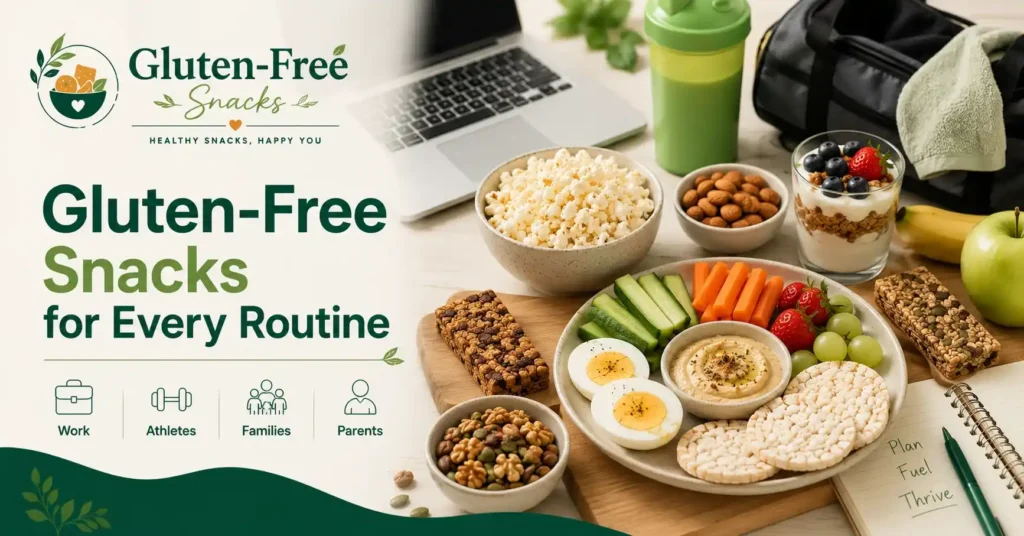
Try these simple combinations:
| Snack Combination | What It Provides |
| Apple + peanut butter | Fiber + healthy fats |
| Greek yogurt + berries | Protein + fruit |
| Carrots + hummus | Fiber + protein |
| Cheese + gluten-free crackers | Protein + carbohydrates |
| Nuts + fresh fruit | Protein + healthy fats + fiber |
The best healthy gluten-free snacks are practical, enjoyable, and suited to your individual needs.
Easy Gluten-Free Snack Ideas
You do not need complicated recipes to enjoy easy gluten-free snacks. Simple foods can be prepared in minutes and work well for busy days, work, or travel.
No-Cook Snacks
Try fresh fruit, Greek yogurt, nuts, cheese, rice cakes, or vegetables with hummus.
Homemade Snacks
Make simple options such as gluten-free energy bites, chia pudding, or homemade trail mix. For more inspiration, explore these homemade gluten-free snacks and easy recipes.
If you want a specific no-bake option, no-bake energy bites are a convenient homemade snack that can be prepared ahead.
Protein Snacks
Choose hard-boiled eggs, Greek yogurt, cottage cheese, cheese, nuts, or seeds when you want something more filling.
Savory Snacks
Popcorn, roasted chickpeas, gluten-free crackers, and vegetables with hummus are easy choices.
Sweet Snacks
Fruit, berries with yogurt, or dark chocolate labeled gluten-free can satisfy a sweet craving. For a simple homemade fruit option, try these air-fryer cinnamon apple chips.
Mix and match these gluten-free snack ideas based on your taste, schedule, and dietary needs. You can also browse more gluten-free snack ideas for everyday inspiration.
Choosing Store-Bought Gluten-Free Snacks
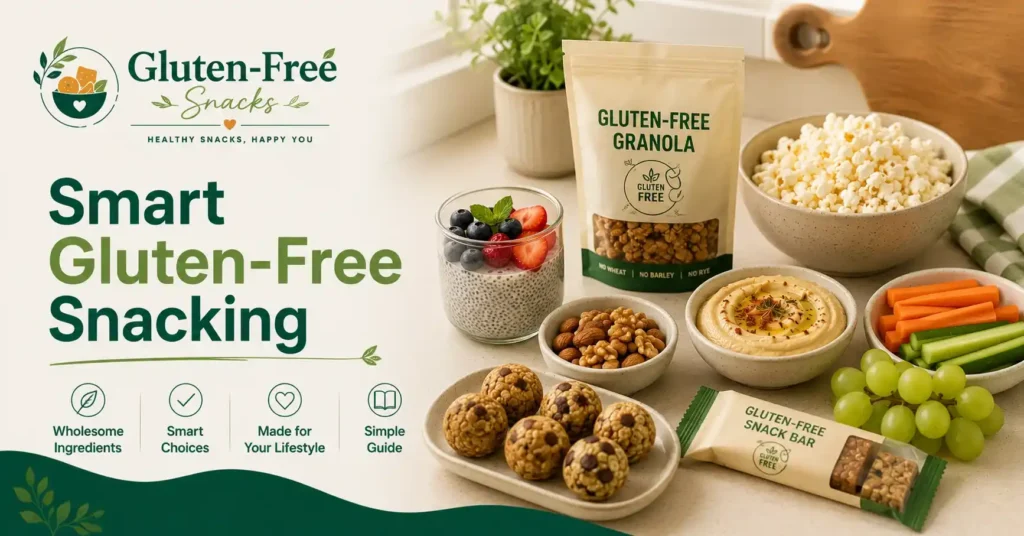
Store-bought gluten-free snacks can make busy days easier, but choosing the right product takes more than picking up a package marked gluten-free. Start by checking the gluten-free label and ingredient list, especially if you need to avoid gluten carefully. It is also helpful to compare protein, fiber, added sugar, and serving size.
Popular options include:
- Gluten-free crackers: Look for options with simple ingredients and useful fiber.
- Snack bars: Compare protein, fiber, and added sugar.
- Gluten-free cookies: Good for an occasional treat, but check sugar and portion size.
- Chips and popcorn: Useful for savory cravings; check seasonings and ingredients.
- Trail mix: Nuts, seeds, and dried fruit can provide a convenient combination.
- Jerky: A portable protein option, but check ingredients and added sugar.
- Freeze-dried fruit: A convenient way to enjoy fruit without refrigeration.
Remember, gluten-free does not automatically mean healthy. A packaged snack can be gluten-free while still being high in added sugar, sodium, or calories. Choose products that fit your dietary needs, taste preferences, and the occasion.
How to Read a Gluten-Free Snack Label
Reading the label is one of the simplest ways to make more informed gluten-free snack choices. Start with the gluten-free labeling on the package, then check the ingredient list rather than relying only on the front of the package.
For a more detailed explanation of ingredient lists, allergen statements, serving sizes, and gluten-free claims, see our guide to reading food labels and choosing gluten-free foods.
Look for:
- Gluten-free label: Helps identify products that meet applicable gluten-free labeling requirements.
- Ingredients: Check what is actually in the snack, especially if you need to avoid gluten carefully.
- Allergens: Look for other allergens that may matter to you, such as milk, peanuts, or tree nuts.
- Cross-contact: Consider information about shared equipment or facilities when strict gluten avoidance is important.
- Nutrition facts: Compare protein, fiber, added sugar, sodium, and other nutrients.
- Serving size: Check how much the nutrition information represents before comparing products.
- Certification: Some products carry third-party gluten-free certification in addition to their labeling.
Remember, gluten-free does not automatically mean healthy. A good choice should also fit your nutritional needs and dietary preferences. If you follow a strict gluten-free diet, careful label reading can help you make safer and more suitable snack choices.
If you are unsure about a particular ingredient, our gluten-free Food Checker can provide a starting point for understanding what to look for. Always confirm the current product label and manufacturer information.
Gluten-Free Snacks for Different Dietary Needs
A snack can be gluten-free and still contain other ingredients you may want to avoid. Gluten-free does not automatically mean dairy-free, vegan, sugar-free, or allergy-free, so always check the label for your specific needs.
| Dietary Need | Snack Options |
| Dairy-free | Fresh fruit, vegetables, nuts, seeds |
| Vegan | Hummus, fruit, vegetables, seeds, nuts |
| Low-sugar | Eggs, cheese, nuts, seeds, vegetables |
| High-protein | Eggs, Greek yogurt, cheese, tuna, nuts |
| Allergy-friendly | Choose products based on the specific allergens to avoid |
For gluten-free and dairy-free snacks, naturally gluten-free foods such as fruit, vegetables, and nuts can be simple choices. If you follow a vegan diet, hummus, seeds, and fresh produce offer convenient options.
For low-sugar gluten-free snacks, focus on whole foods and check packaged products for added sugar. If you need high-protein gluten-free snacks, eggs, Greek yogurt, cheese, tuna, and nuts can work well.
If you have food allergies or need to avoid gluten strictly, read ingredient and allergen information carefully and consider cross-contact.
Gluten-Free Snacks for Kids, Work and Travel
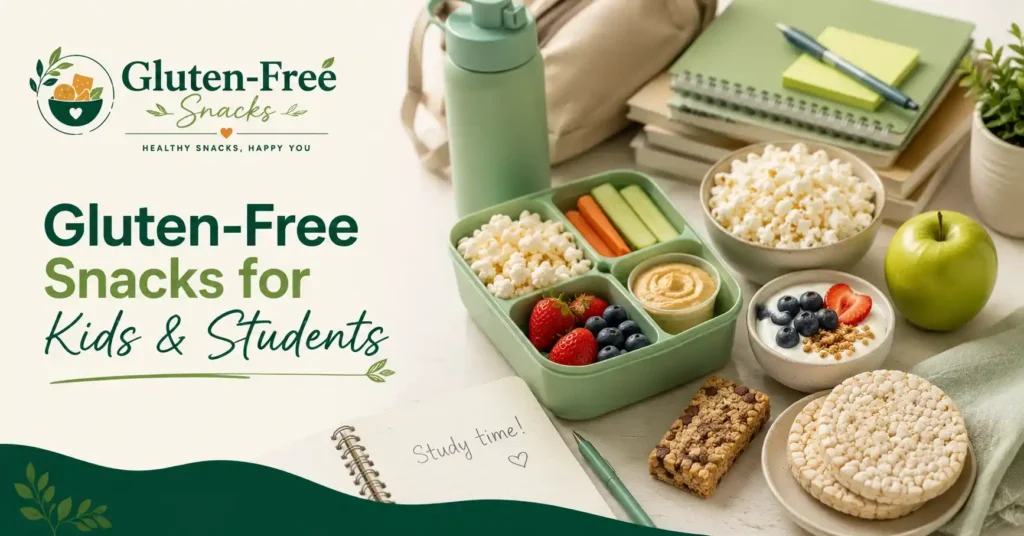
The best gluten-free snacks often depend on where you are and how much convenience you need. A good snack should be easy to pack, store, and eat without creating a mess.
Gluten-Free Snacks for Kids and Lunchboxes
For lunchboxes, choose simple options such as fruit, yogurt, rice cakes, popcorn, nuts when appropriate, or suitable gluten-free snack bars. If snacks are going to school, check the school’s food and allergy rules.
Gluten-Free Snacks for Work
For workdays, gluten-free snacks for work can include individually wrapped nuts, fruit, protein bars, gluten-free crackers, or popcorn. Keeping a few shelf-stable options at your desk can make busy afternoons easier.
Gluten-Free Snacks for Travel and On the Go
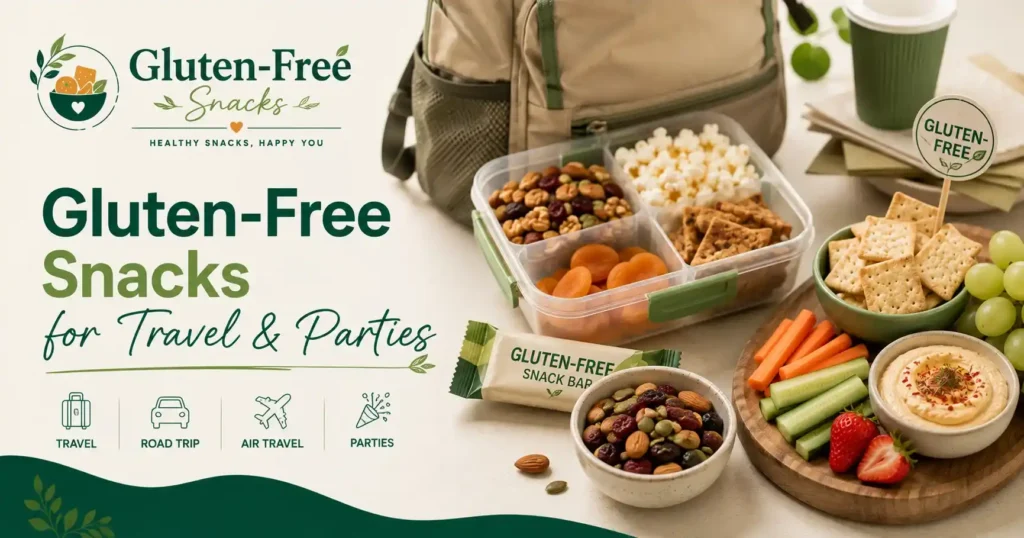
Gluten-free snacks on the go should be portable, easy to store, and simple to eat. Nuts, trail mix, suitable snack bars, rice cakes, popcorn, and individually packaged snacks can work well for road trips and busy travel days.
When choosing packaged snacks for kids, work, or travel, check the gluten-free label and ingredients before buying, especially when avoiding gluten is medically necessary.
Affordable Gluten-Free Snack Choices
Eating gluten-free does not have to mean buying expensive specialty products. Many affordable gluten-free snacks are simple foods you can find at most grocery stores.
Good budget-friendly options include:
- Bananas and apples
- Carrots and other fresh vegetables
- Plain popcorn
- Rice cakes
- Eggs
- Nuts and seeds bought in bulk
- Roasted chickpeas
- Homemade trail mix
Buying basic foods in larger packages and preparing snacks at home can also help reduce costs. Naturally gluten-free foods are often a practical starting point for anyone looking for cheap gluten-free snacks without sacrificing variety.
Quick Gluten-Free Snack Comparison
If you need a quick way to choose between different gluten-free snack options, this table can help:
| Snack | Best For | Main Benefit | Portable |
| Greek yogurt | Protein | High protein | Yes |
| Apple + peanut butter | Everyday snacking | Fiber and healthy fats | Yes |
| Nuts | Travel | Protein and healthy fats | Yes |
| Popcorn | Crunchy cravings | Fiber | Yes |
| Hummus + vegetables | Healthy snacking | Fiber and protein | Sometimes |
| Gluten-free crackers | Convenience | Easy and versatile | Yes |
The best choice depends on your nutritional needs, budget, schedule, and personal preferences.
Final Thoughts
Choosing gluten-free snacks does not have to be complicated. Start with naturally gluten-free foods such as fruit, vegetables, nuts, seeds, eggs, and plain dairy, then add convenient packaged options when they fit your routine. For packaged snacks, take a moment to check the gluten-free label, ingredients, allergens, and nutrition facts.
The best snack depends on your dietary needs, taste, budget, and lifestyle. Whether you need a quick snack for work, a lunchbox option for kids, or something portable for travel, understanding the basics makes it easier to make confident gluten-free choices.
Frequently Asked Questions About Gluten-Free Snacks
Fresh fruits, vegetables, nuts, seeds, eggs, plain dairy products, rice, corn, quinoa, and buckwheat are naturally gluten-free. Always check packaged versions for added ingredients.
Good choices include fruit with peanut butter, Greek yogurt with berries, vegetables with hummus, nuts, seeds, and plain popcorn. Combining protein, fiber, and healthy fats can make a more balanced snack.
Fruit, nuts, yogurt, cheese, rice cakes, popcorn, and hard-boiled eggs are simple gluten-free snack options that require little or no preparation.
Some crackers, bars, cookies, chips, popcorn, and other packaged foods are gluten-free. Check the package label and ingredients before buying.
Not necessarily. Gluten-free does not automatically mean healthy. Some packaged products can still be high in added sugar, sodium, or calories.
Check for a gluten-free label, review the ingredients and allergen information, and consider cross-contact information when strict gluten avoidance is necessary.