If you enjoy a good crunchy snack, these crispy homemade gluten-free crackers are worth making at home. They have a light, crisp texture with a savory garlic and herb flavor, and they are simple enough to make without relying on complicated ingredients. This easy gluten-free crackers recipe also gives you more control over what goes into your snack. The trick to getting crispy gluten-free crackers is to roll the dough into a thin, even layer before baking. Garlic, rosemary, oregano, and thyme add plenty of flavor, but you can easily adjust the herbs to suit your taste. When all the ingredients are gluten-free, these homemade gluten-free crackers make a convenient snack to enjoy with hummus, dips, cheese, or your favorite spread.
Why You’ll Love These Garlic Herb Gluten-Free Crackers
There is something satisfying about a homemade cracker that actually gives you a good crunch. These garlic herb gluten-free crackers are crisp, savory, and full of simple flavor, making them an easy choice for everyday snacking. You can adjust the herbs and seasonings to create your favorite combination, while homemade preparation gives you more control over the ingredients. They are also great with hummus, dips, cheese, or spreads. No complicated equipment is needed, so you can make a batch with basic kitchen tools. When you use gluten-free ingredients throughout, they can also fit easily into a gluten-free snack routine.
Gluten-Free Garlic Herb Crackers Recipe
These homemade crackers use a simple combination of arrowroot flour, herbs, garlic, olive oil, and water. Rolling the dough very thin between sheets of parchment paper helps create the light, crisp texture that makes these crackers so good for snacking.
Recipe at a Glance
| Recipe Detail | Information |
| Prep Time | 15 minutes |
| Cook Time | 20 minutes |
| Total Time | 35 minutes |
| Yield | About 24–30 crackers |
| Oven Temperature | 400°F (200°C) |
| Recipe Type | Homemade snack |
| Dietary Note | Gluten-free when all ingredients are gluten-free |
Ingredients
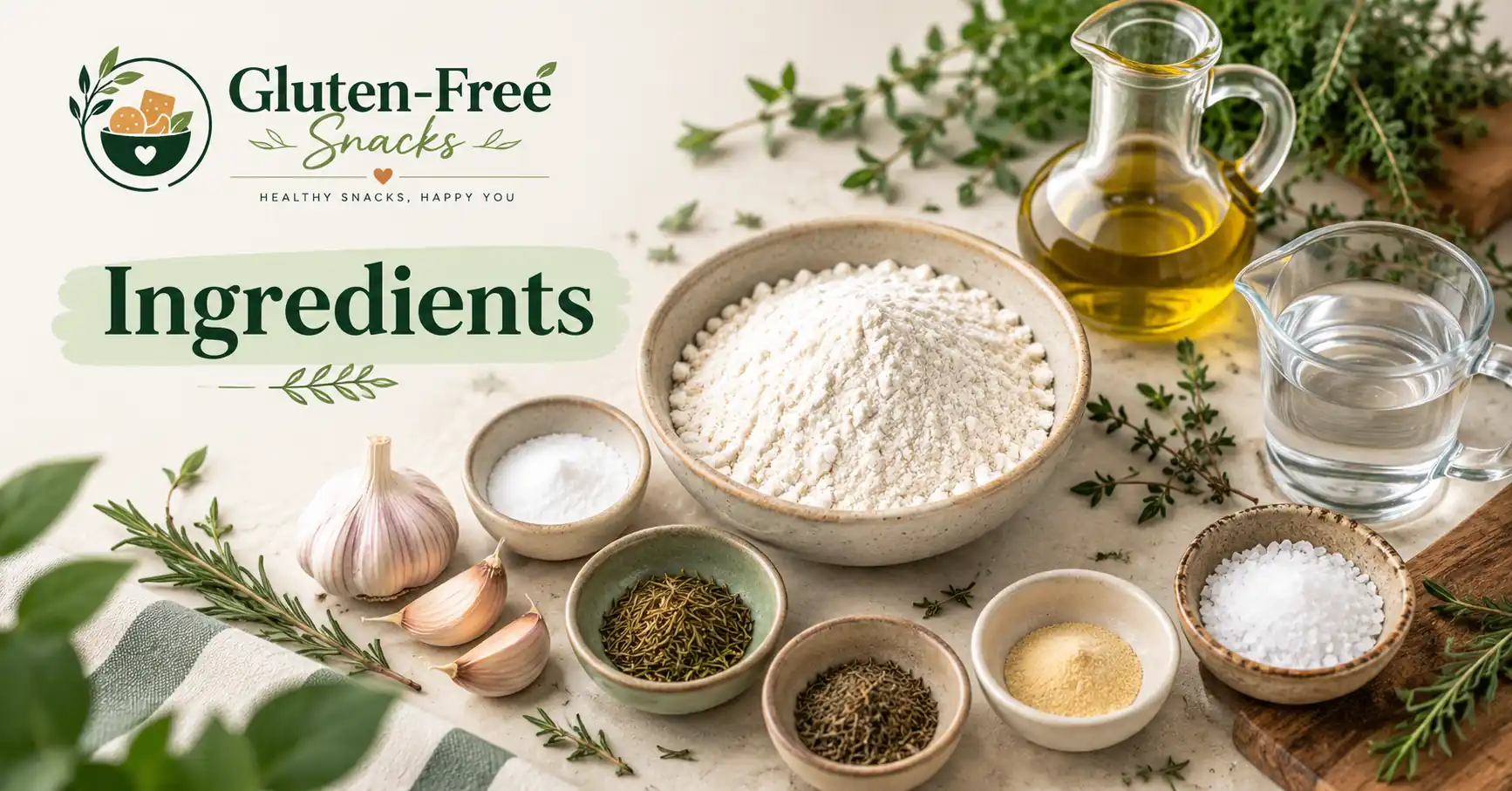
- 1 cup (145 g) arrowroot flour
- ¼ teaspoon baking soda
- ½ teaspoon dried thyme
- ½ teaspoon dried rosemary
- ¼ teaspoon garlic powder
- 4 tablespoons extra-virgin olive oil
- 5 tablespoons water
- Coarse sea salt, for topping
How to Make Them
- Prepare the dough: Preheat the oven to 400°F (200°C). Add the arrowroot flour, baking soda, thyme, rosemary, and garlic powder to a bowl and mix well.
- Add the wet ingredients: Pour in the olive oil and water. Stir until the ingredients come together into a smooth dough. If needed, work the dough gently with your hands until it forms a ball.
- Roll the dough: Place the dough between two sheets of parchment paper. Roll it into a very thin, even layer. Try to keep the thickness consistent so the crackers bake evenly.
- Cut the crackers: Remove the top sheet of parchment. Use a pizza cutter or sharp knife to cut the dough into roughly 2-inch squares. You can leave the cut pieces together on the baking sheet rather than separating them.
- Season and bake: Sprinkle the surface lightly with coarse sea salt. Bake for about 20 minutes, keeping a close eye on the thinner pieces toward the end. The crackers should be lightly golden and crisp.
- Cool completely: Remove the crackers from the oven and let them cool for at least 15 minutes. They will firm up as they cool. Once completely cool, break the crackers apart along the cut lines.
Recipe note: For a gluten-free diet, check the labels of packaged ingredients and choose products that are clearly labeled gluten-free when necessary. This is especially important if you need to avoid gluten because of celiac disease or another dietary requirement.
How to Make Gluten-Free Crackers Extra Crispy
Getting that satisfying crunch comes down to a few small details. If your crackers are coming out soft, start with the dough thickness rather than simply baking them longer.
Roll the Dough Thin
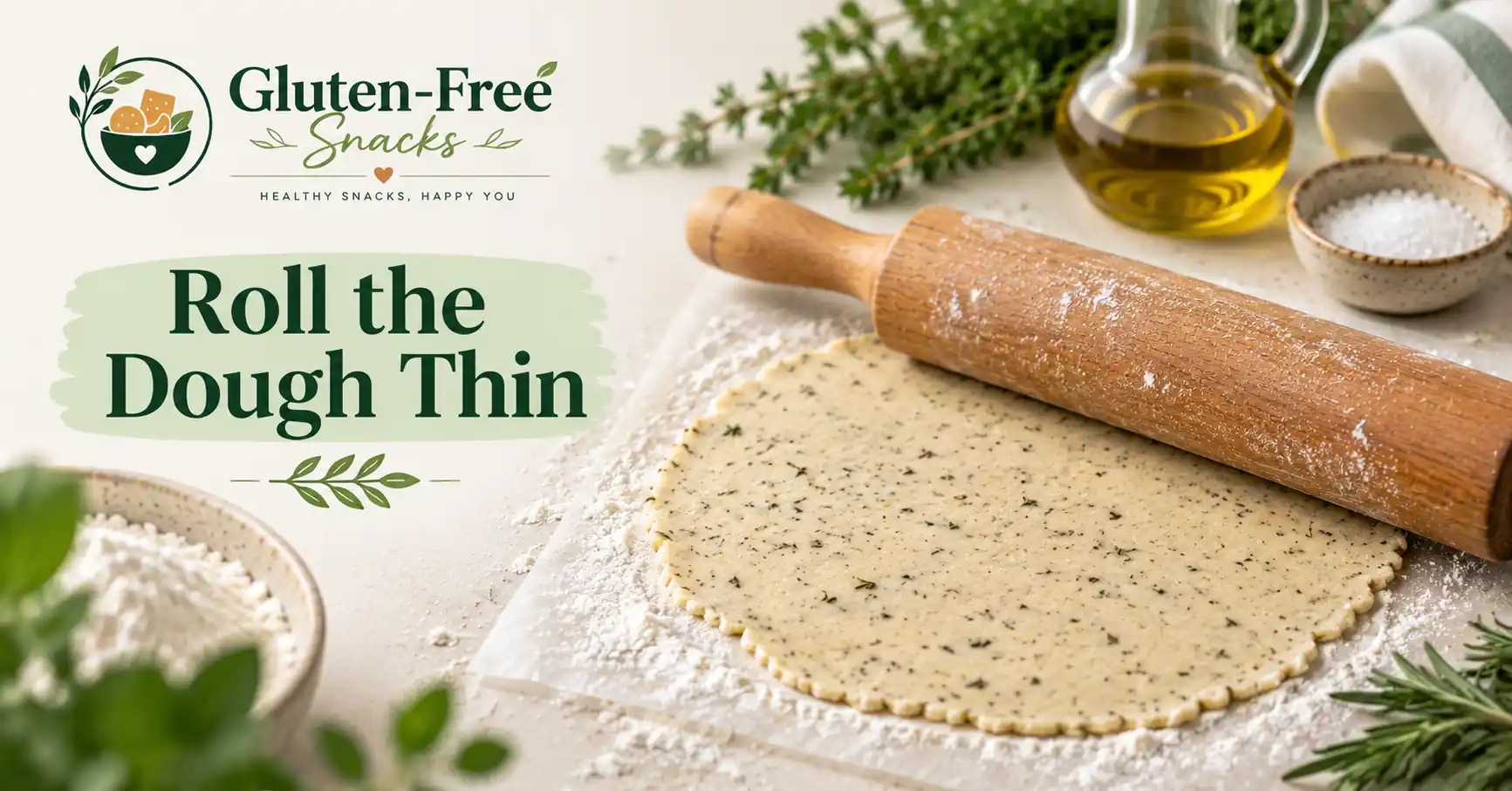
For crispy gluten-free crackers, roll the dough into a thin, even layer. Thick areas can stay soft in the center.
Keep the Thickness Consistent
Try to maintain the same thickness across the whole sheet. Even dough helps the crackers bake at a similar rate.
Don’t Overload the Dough
Too much moisture can make crunchy gluten-free crackers harder to achieve. Add water gradually and stop once the dough comes together.
Bake Until Crisp
Use the crackers’ appearance and texture as your guide. They should become lightly golden and feel crisp rather than soft. If you are wondering why your gluten-free crackers are not crispy, uneven thickness or excess moisture may be the reason.
Let Them Cool
Don’t judge the final texture straight from the oven. Freshly baked crackers can firm up as they cool, giving them a better crunch.
Best Flour for Gluten-Free Crackers
There is no single best flour for gluten-free crackers because each flour behaves differently in the dough. Gluten-free flour blends are often convenient because they combine several flours and starches for a more balanced texture. Almond flour can add a mild, nutty flavor and a tender texture, while cassava flour can create a more neutral base. Chickpea flour brings a distinct savory taste, and rice flour can help create a lighter, crisp texture. Coconut flour absorbs a lot of moisture, so it usually needs different proportions than other flours.
Cassava and Tapioca Flour
Cassava flour crackers can have a mild flavor and crisp texture. Tapioca or arrowroot starch is often used alongside other gluten-free flours to help with structure and texture. These options can also be useful when exploring cassava crackers or a tapioca crackers recipe.
Almond Flour vs. Starch-Based Crackers
Almond flour generally gives crackers a more tender, nutty character, while starch-based recipes can produce a lighter, crispier bite. The right choice depends on the recipe and the texture you want.
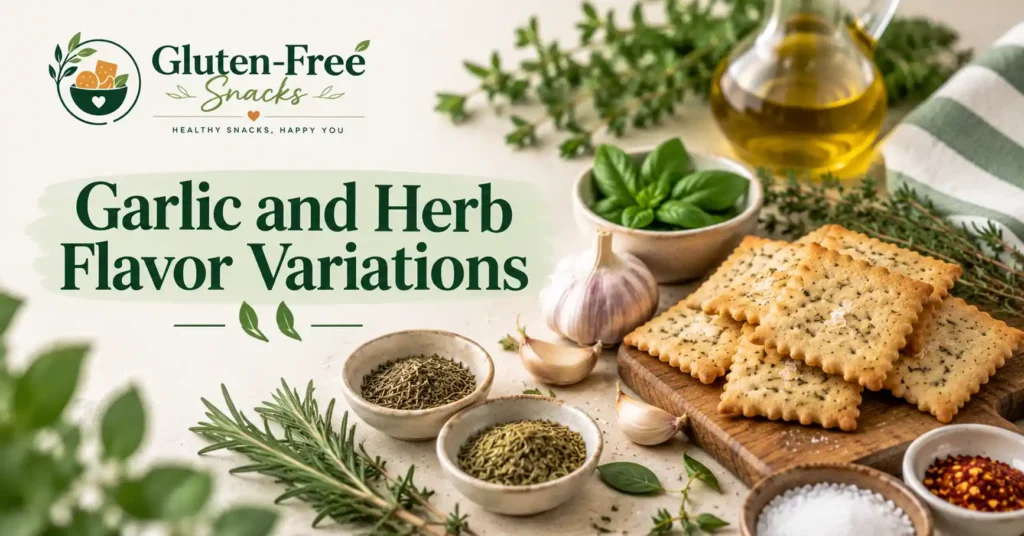
Garlic and Herb Flavor Variations
One of the best things about homemade garlic herb crackers is how easy they are to adjust. You can keep the base recipe the same and change the herbs to match your taste.
Rosemary and Thyme
Rosemary and thyme make a classic savory combination. Use them together for a fragrant, herby flavor that works especially well with dips and cheese.
Garlic and Oregano
Oregano gives the crackers a stronger, Mediterranean-style taste. It pairs naturally with garlic and makes a flavorful snack on its own.
Garlic and Basil
Basil has a milder, more aromatic flavor. It is a good option when you want the herbs to stand out without making the crackers too strong.
Spicy Garlic Crackers
For a little heat, add red pepper flakes, black pepper, or mild chili seasoning. If fresh garlic is inconvenient, garlic powder or garlic granules can provide an easy alternative and distribute evenly through the dough.
Gluten-Free, Dairy-Free and Other Dietary Variations
These gluten-free crackers can sometimes be adapted for other dietary needs, but the exact ingredients matter. Always check packaged ingredients and labels before making a substitution.
Dairy-Free Gluten-Free Crackers
If the recipe does not contain dairy ingredients, it can fit a dairy-free diet. Check seasonings and other packaged ingredients for unexpected dairy ingredients when needed.
Vegan Gluten-Free Crackers
A recipe made without meat, dairy, eggs, or other animal-derived ingredients may be suitable for a vegan diet. Check every ingredient rather than assuming a product is vegan.
Nut-Free Gluten-Free Crackers
Nut-free crackers are possible when the recipe contains no nuts and all packaged ingredients are suitable. Check labels carefully for allergen information and cross-contact warnings.
AIP-Friendly Crackers
An AIP crackers recipe needs to follow the specific ingredients and restrictions of an autoimmune protocol. This recipe should not be labeled AIP unless its complete ingredient list supports that claim.
What to Serve With Garlic Herb Gluten-Free Crackers
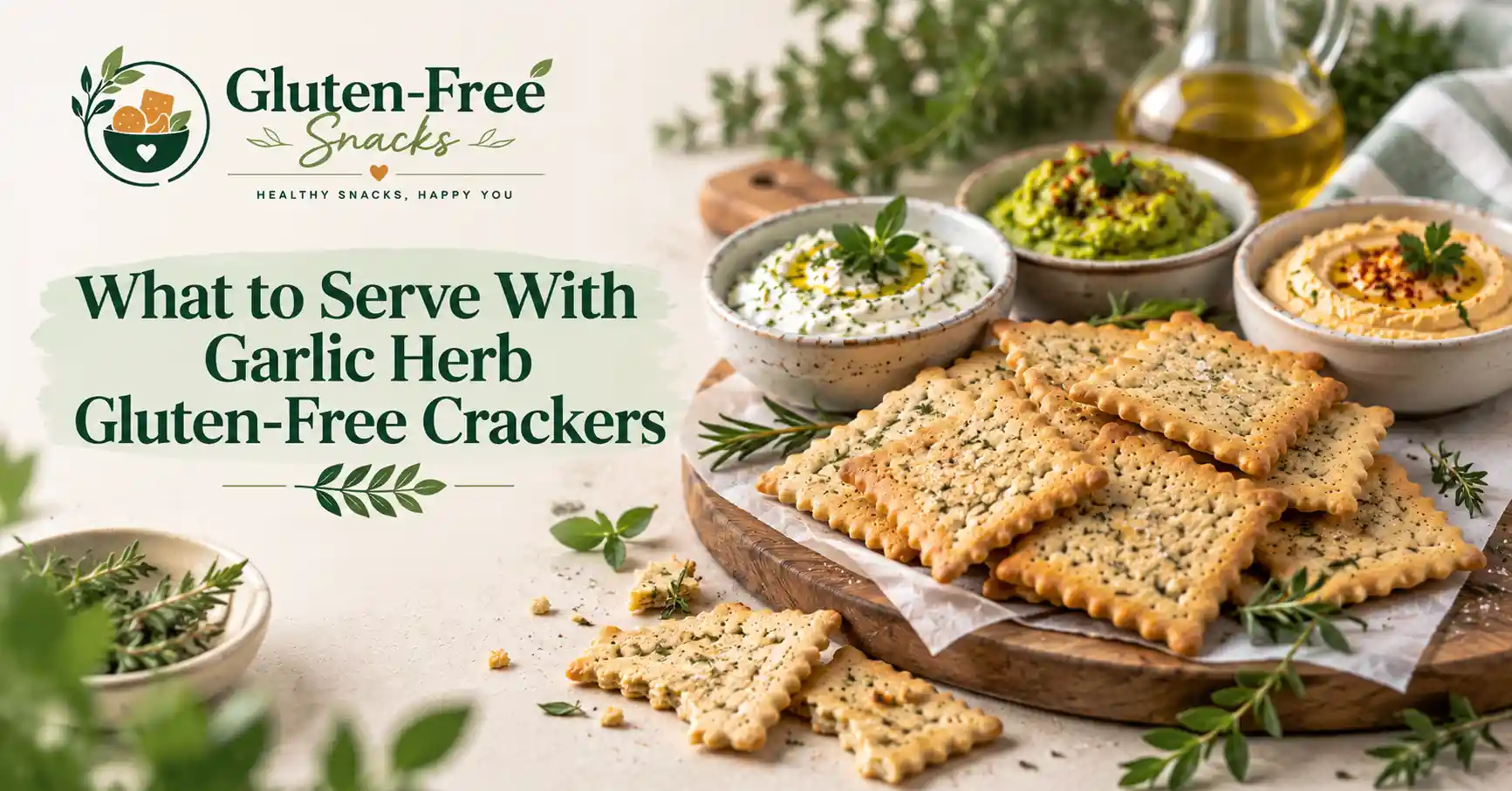
These garlic herb crackers are easy to pair with both dips and spreads. Try them with:
- Hummus or guacamole
- Cheese or dairy-free spreads
- Olive tapenade
- Salsa or vegetable dips
- Pesto
- Soup
- A mixed snack board
The savory garlic and herb flavor works especially well with creamy dips, fresh vegetables, and flavorful spreads, making these homemade gluten-free crackers a versatile addition to a snack plate.
Common Problems With Homemade Gluten-Free Crackers
Even a simple cracker recipe can take a little practice. Gluten-free dough does not always behave like traditional wheat-based dough, so small changes in thickness, moisture, or baking can affect the final result.
Why Are My Gluten-Free Crackers Not Crispy?
If your crackers are soft, the dough may have been rolled too thick or contain too much moisture. They may also need a little more baking time. Let them cool completely, as they often become firmer as they cool.
Why Are My Crackers Breaking?
Gluten-free dough can be more delicate. Mix it until it holds together, then roll it gently between parchment sheets. Avoid pressing or stretching the dough too aggressively.
Why Are Some Crackers Done Before Others?
Uneven dough thickness or different-sized pieces can cause some crackers to bake faster than others. Keep the dough and cuts as even as possible.
Why Did My Crackers Become Soft?
Moisture is often the problem. Allow the crackers to cool fully before storing them in an airtight container.
Why Is My Dough Difficult to Roll?
If the dough is too sticky or dry, it may be difficult to handle. Rolling it between parchment paper can make the process much easier and help create evenly thin crackers.
How to Store Homemade Gluten-Free Crackers
Let the crackers cool completely before storing them. Place them in an airtight container and keep them away from moisture, which can reduce their crunch. Room-temperature storage may work when the finished crackers are completely dry and the recipe supports it. If they lose some crispness, you can re-crisp them briefly in the oven and allow them to cool again. Freezing can also be an option for some cracker recipes, but it is best to follow storage guidance that has been tested for the specific recipe rather than assuming a universal storage time.
Final Thoughts
Making crispy homemade gluten-free crackers does not have to be complicated. Rolling the dough thin and evenly is one of the most important steps for getting that satisfying crunch, while garlic and herbs bring a simple savory flavor. The flour you choose can also affect the crackers’ texture and taste. When gluten avoidance is important, check the labeling of every ingredient used. You can easily adjust the flavor with different herbs or seasonings and serve the finished crackers with dips, cheese, spreads, or on a snack board. Making them at home also gives you greater control over the ingredients.
Frequently Asked Questions About Gluten-Free Crackers
They can be, as long as every ingredient used is gluten-free. Check packaged ingredients and labels, especially for flour blends and seasonings.
There is no single best choice. Gluten-free flour blends, almond flour, cassava flour, and rice flour can produce different textures and flavors.
Roll the dough thin and evenly, avoid excess moisture, bake until crisp, and let the crackers cool completely.
They may be too thick, underbaked, or exposed to moisture. Proper cooling and airtight storage can help maintain their crunch.
Yes. Almond flour can create crackers with a mild, nutty flavor and a more tender texture.
Yes. Cassava flour can be used for homemade gluten-free crackers, depending on the recipe and desired texture.
Yes. Tapioca flour or starch can be used in some cracker recipes, often alongside another gluten-free flour.
Cool them completely, then keep them in an airtight container away from moisture.
Rosemary, thyme, oregano, basil, and parsley all pair well with garlic and can be mixed or used individually.