Gluten cross-contact happens when gluten from a food, ingredient, surface, utensil, or preparation area comes into contact with food that should be gluten-free. It can happen at home, during cooking, in food manufacturing, or when eating at a restaurant.
For people who need to follow a strict gluten-free diet, understanding these everyday risks is an important part of gluten-free food safety. A gluten-free ingredient can still be exposed to gluten during preparation if shared equipment, crumbs, flour, or utensils are involved.
This guide explains common sources of gluten cross-contact, including shared kitchen equipment, food preparation, storage, labels, restaurants, and simple cleaning practices that can help reduce accidental gluten exposure.
What Is Gluten Cross-Contact?
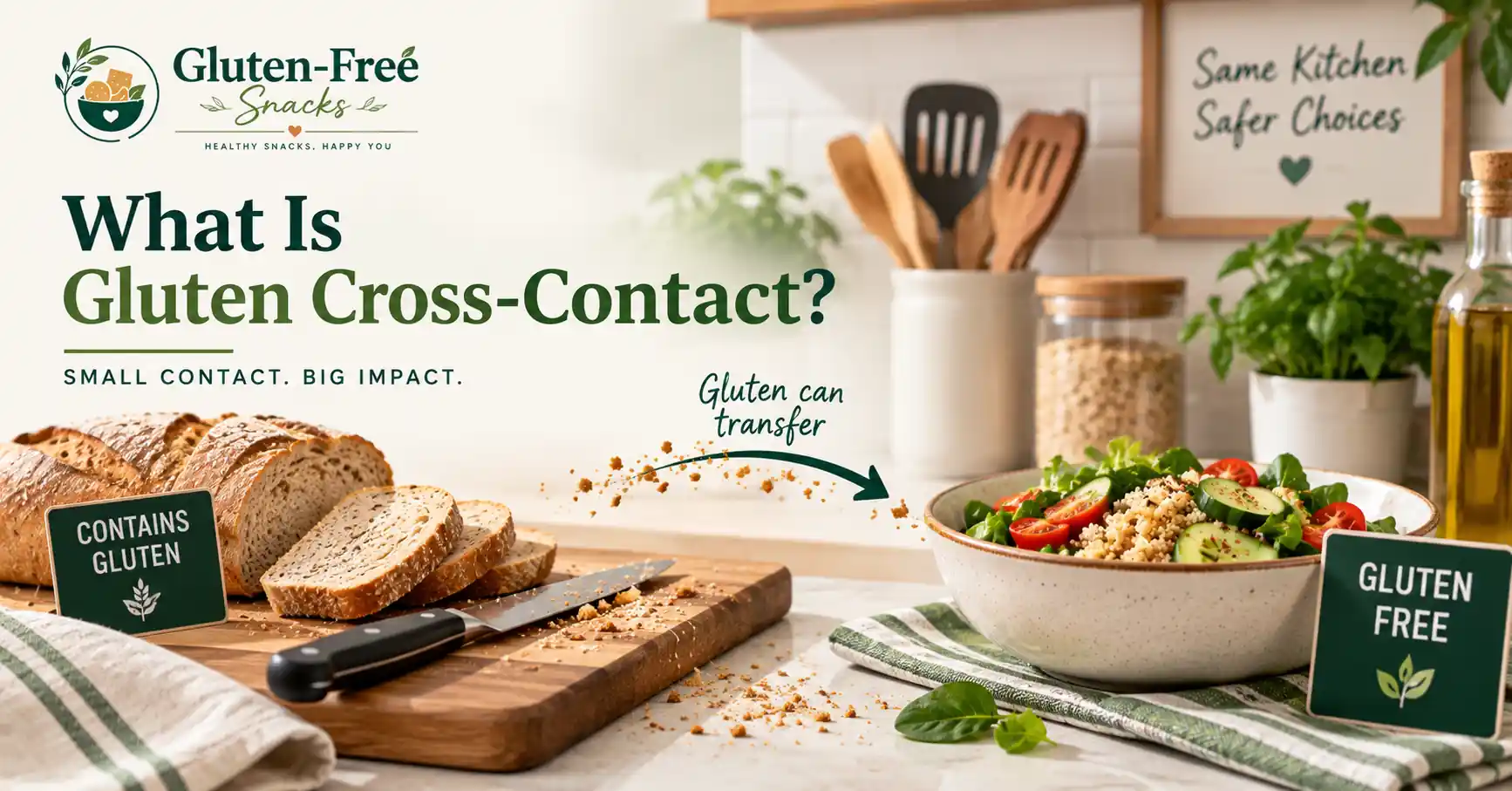
Gluten cross-contact happens when a gluten-containing food or ingredient comes into contact with food that should be gluten-free. Gluten can transfer through shared utensils, cookware, surfaces, or equipment, even when the original gluten-containing food is no longer present. It can happen at home, in restaurants, during food processing, or while food is being stored, prepared, or served.
The preferred term is cross-contact, rather than gluten “cross-contamination.” Cross-contamination is generally used for the transfer of microorganisms such as bacteria, while gluten is a protein.
For example, using a knife with gluten residue to prepare gluten-free food can transfer gluten to it. This is why careful gluten-free food preparation matters.
How Does Gluten Get Into Gluten-Free Food?

Gluten can reach gluten-free food in several everyday ways. The transfer may happen through direct contact between foods or through shared tools, surfaces, equipment, or cooking processes.
| Source | Example |
| Food-to-food | Bread touching gluten-free food |
| Utensils | A knife used on regular bread and then gluten-free food |
| Surfaces | Flour or crumbs left on a countertop |
| Equipment | A shared toaster or colander |
| Cooking | Shared frying oil or pasta water |
| Storage | Crumbs falling onto uncovered gluten-free food |
| Condiments | A knife used on regular bread and then placed into a shared jar |
Cross-contact can occur during processing, storage, preparation, and serving. Common sources identified by gluten-free and celiac organizations include shared kitchen equipment, cutting boards, toasters, colanders, utensils, condiments, and restaurant cooking surfaces.
Gluten Cross-Contact at Home
A shared kitchen does not automatically mean gluten-free food is unsafe, but good cleaning and careful food handling are important. Kitchen surfaces and utensils can pick up crumbs or gluten residue from bread, flour, dough, or other foods. Pay particular attention to countertops, cutting boards, knives, spatulas, wooden utensils, colanders, flour sifters, and baking pans. Cutting boards and other tools that are difficult to clean thoroughly may need extra care or separate use.
Crumbs, flour, and shared foods are easy to overlook. Wheat flour can spread onto nearby surfaces, while crumbs can fall into uncovered gluten-free foods. Shared butter, peanut butter, jam, or mayonnaise can also become a source of gluten if a utensil used with gluten-containing food is placed back into the container. Using clean utensils and keeping gluten-free foods protected can help reduce these risks.
Kitchen Appliances That Need Extra Care
Some appliances can be harder to clean or may allow crumbs and flour to reach gluten-free food.
Toasters: A shared toaster can retain crumbs from regular bread, so celiac-focused guidance recommends using a separate toaster for gluten-free bread. Reusable toaster bags may provide a temporary barrier in some situations, but they do not remove every cross-contact risk.
Ovens and convection ovens: A previously used oven is not automatically unusable. However, loose crumbs and flour particles can create a cross-contact risk, especially in convection ovens where a fan circulates air. Keeping gluten-free food covered and using a clean tray or foil barrier can help. Thorough cleaning is also important.
Air fryers: Check the basket and cooking chamber for crumbs and food residue before preparing gluten-free food. Clean the parts that come into contact with food, and consider how the appliance is shared and cleaned rather than assuming every air fryer requires permanent separation.
Can Gluten Cross-Contact Happen During Cooking?
Yes. Gluten cross-contact during cooking can happen when gluten-free food shares water, oil, equipment, or cooking surfaces with gluten-containing foods. One important example is shared pasta water. Research has found that cooking larger amounts of gluten-free pasta in water previously used for wheat pasta can increase gluten levels, which is why separate cooking water is a practical precaution.
Shared frying oil can also be a concern, especially when the same fryer is used for breaded or battered foods containing gluten. The Celiac Disease Foundation recommends asking whether a dedicated fryer or fresh oil is used for gluten-free foods.
Grills and cooking surfaces can also transfer gluten through food residue or crumbs. Cleaning the surface and using clean utensils can help reduce the risk.
How to Prevent Gluten Cross-Contact in a Shared Kitchen
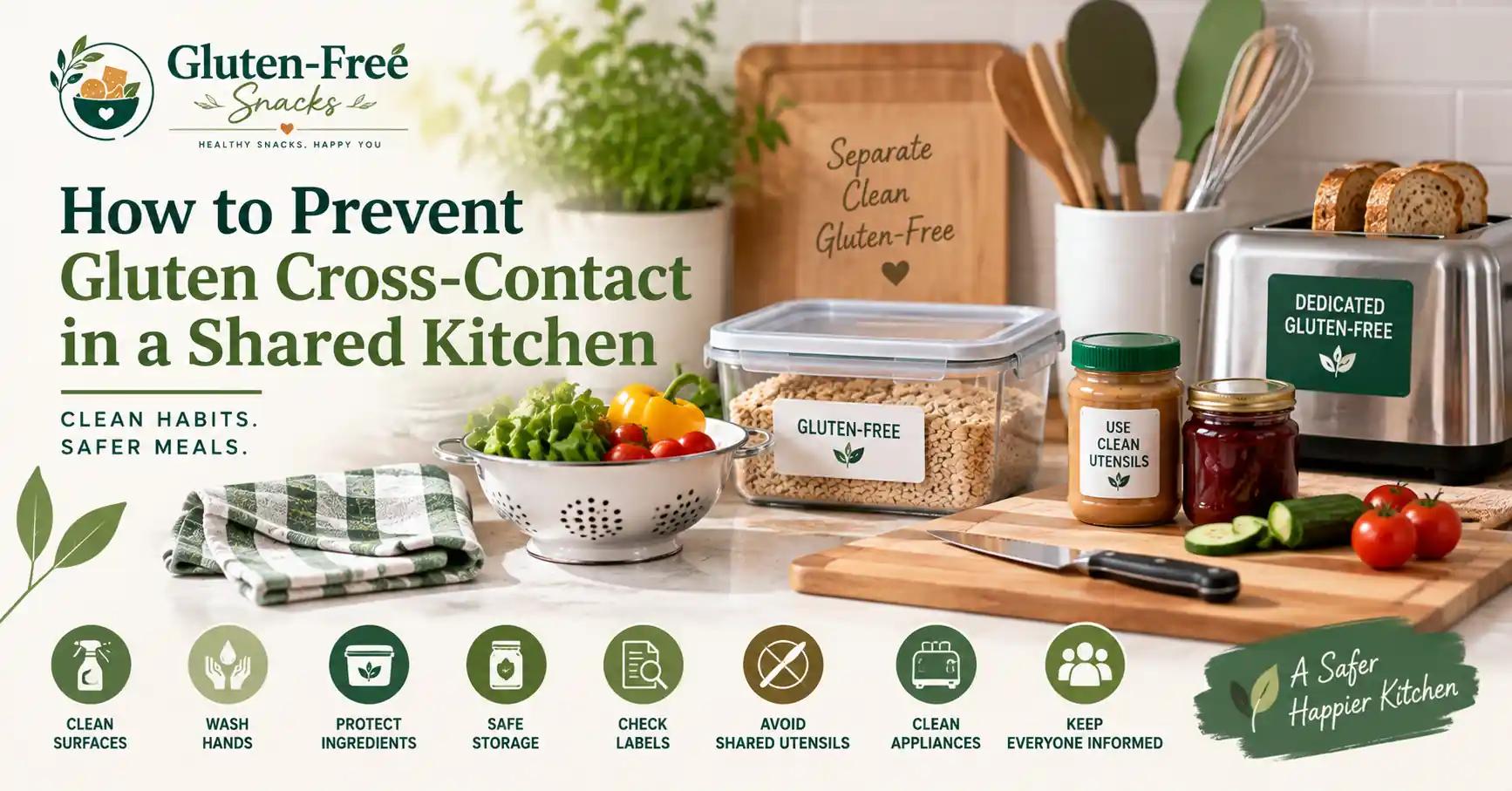
You do not always need a completely separate kitchen to reduce gluten cross-contact, but careful habits matter. Use these simple steps:
- Clean surfaces first. Wash countertops and preparation areas before making gluten-free food.
- Wash your hands and utensils. Clean them thoroughly after handling gluten-containing foods.
- Protect gluten-free ingredients. Keep them covered and away from crumbs or flour.
- Store foods carefully. Keep gluten-free foods in a clearly separated area when practical, preferably where crumbs are less likely to fall.
- Check labels. Verify ingredients, especially flour, grains, sauces, and seasoning mixes.
- Avoid shared condiment utensils. Use a clean utensil each time or keep separate containers.
- Use barriers when helpful. Liners or parchment can protect difficult-to-clean baking equipment.
- Communicate with household members. Everyone should understand how to prepare and handle gluten-free food safely.
How to Read Labels and Spot Hidden Gluten
Reading food labels is an important part of gluten-free food safety. Common gluten sources include wheat, barley, rye, malt, and ingredients made from them. Gluten can also appear in less obvious foods such as sauces, gravies, seasoning mixes, dressings, pasta, and breaded or processed foods.
Do not assume that “wheat-free” means gluten-free. A product may still contain barley or rye ingredients. Check the ingredient list carefully and look for a clear gluten-free label. When strict avoidance is needed, certified gluten-free products can provide an additional labeling signal. Also check products such as oats, which should be specifically labeled gluten-free when appropriate.
Gluten Cross-Contact at Restaurants
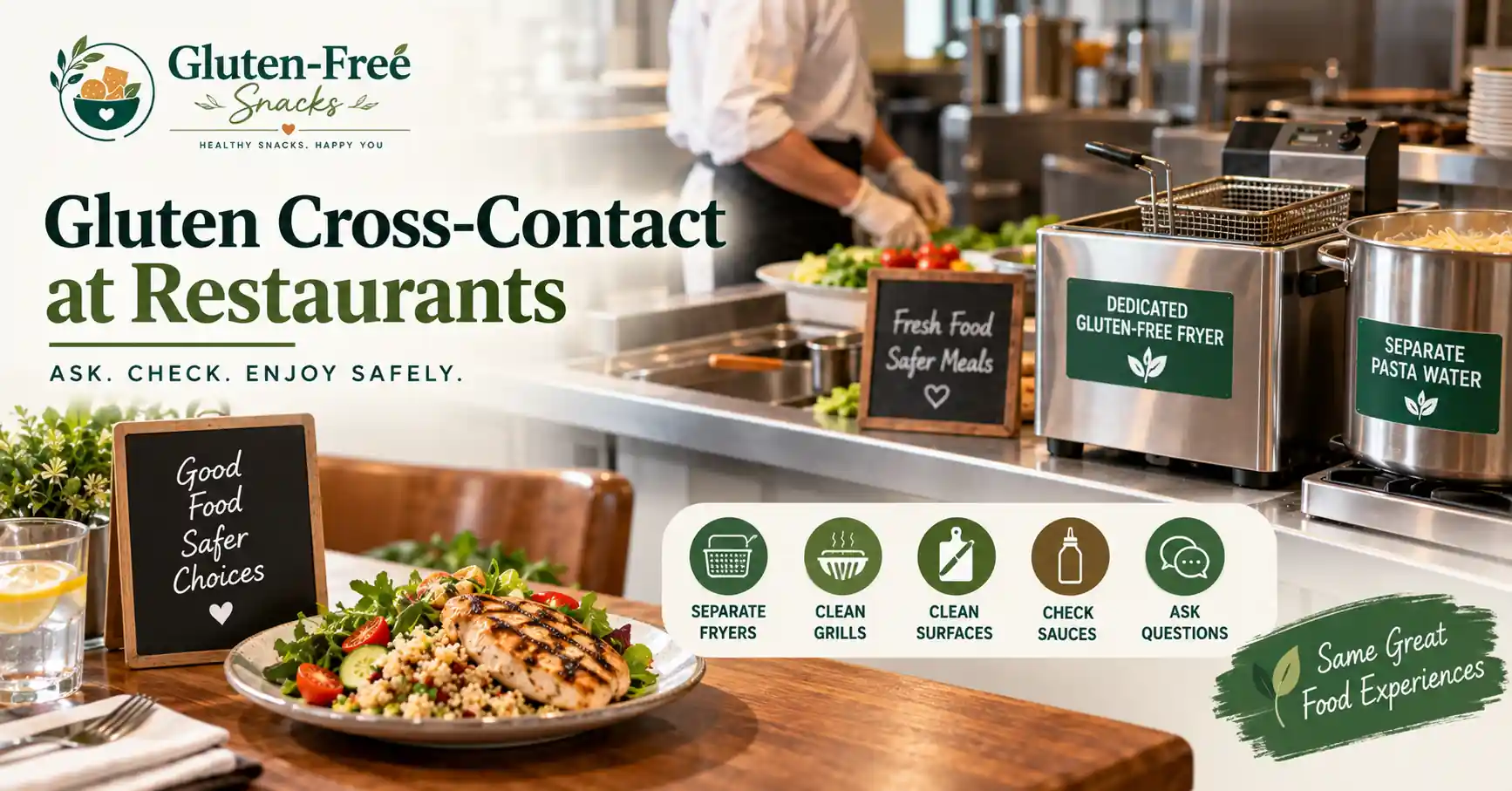
Gluten cross-contact at restaurants can happen through shared fryers, grills, cutting boards, utensils, preparation surfaces, sauces, or pasta water. Even when a menu item appears gluten-free, the way it is prepared can affect whether it stays gluten-free. The American Gastroenterological Association recommends contacting restaurants ahead of time and discussing their food preparation practices.
Questions to Ask Before Ordering
- Is there a dedicated gluten-free fryer?
- Are clean utensils and preparation surfaces used?
- Is gluten-free pasta cooked in separate water?
- Are the sauces, marinades, and seasonings verified gluten-free?
- How is the food prepared to avoid cross-contact?
Shared fryer oil is a particular concern because oil used for gluten-containing breaded or battered foods can transfer gluten to other foods. Shared grills and preparation areas can also require extra care.
For a medically necessary gluten-free diet, tell the server clearly about your needs and ask to speak with the chef or manager when preparation details are uncertain.
Grocery Stores and Packaged Foods
Gluten cross-contact can happen before food even reaches your kitchen. Bulk bins may have shared scoops or nearby spills from gluten-containing foods. Deli counters, salad bars, and prepared foods can also use shared utensils, surfaces, or containers. When buying packaged foods, check the ingredient list and look for a clear gluten-free label when needed. Products made on shared manufacturing equipment may also require closer attention. Choosing sealed products and avoiding foods with unclear preparation details can make gluten-free food safety easier to manage.
Cleaning Shared Kitchen Equipment Safely
A completely separate kitchen is not always necessary. What matters is using good cleaning and food-handling practices for shared equipment. Wash your hands, clean countertops, remove visible crumbs, and wash utensils and food-contact surfaces before preparing gluten-free food. Pay extra attention to equipment with cracks, grooves, or hard-to-clean areas. Liners or parchment can also provide a useful barrier for baking pans when appropriate. Research suggests that the risk from shared equipment can vary by the item and preparation method, so careful cleaning is more useful than assuming every shared tool must always be replaced.
Common Gluten Cross-Contact Mistakes
Even careful kitchens can have small habits that create problems.
Assuming gluten-free ingredients are enough: The food can still come into contact with gluten during preparation or serving.
Sharing condiment jars: A knife that touched regular bread can transfer crumbs or gluten into butter, jam, peanut butter, or mayonnaise.
Ignoring fryer oil: Oil used for gluten-containing breaded foods can become a source of cross-contact.
Assuming “wheat-free” means gluten-free: Wheat-free products may still contain ingredients such as barley or rye, so check the label carefully.
Forgetting crumbs and flour dust: Crumbs and loose flour can settle on surfaces or uncovered gluten-free foods.
Final Thoughts
Gluten cross-contact can happen in everyday kitchens, restaurants, and food preparation areas, but thoughtful habits can help reduce the risk. Clean surfaces, careful label reading, protected storage, appropriate equipment practices, and clear communication when eating out all matter. Understanding where gluten transfer can happen makes gluten-free food safety easier to manage without treating every shared kitchen as automatically unsafe.
Frequently Asked Questions
Gluten cross-contact occurs when gluten unintentionally transfers to food that should be gluten-free, often through shared food, utensils, surfaces, or equipment.
People often use “cross-contamination,” but gluten cross-contact is the more precise term for unintended gluten transfer.
Clean surfaces, wash hands and utensils, protect gluten-free foods, check labels, and use careful storage and preparation practices.
Yes. Utensils with gluten residue or crumbs can transfer gluten to otherwise gluten-free food.
Yes. Crumbs from regular bread can remain inside a toaster and come into contact with gluten-free bread.
It can. Crumbs, flour, or residue may create contact, so use clean trays and protect gluten-free food when appropriate.
Shared fryer oil can be a cross-contact concern when gluten-containing breaded or battered foods are cooked in it.
It can occur through shared fryers, grills, utensils, preparation surfaces, sauces, or pasta water, so preparation practices matter.
Yes. Crumbs can transfer gluten to uncovered food, containers, utensils, or preparation surfaces.
Yes. Some oat products may contain gluten, so people who need strict gluten avoidance should check labeling and sourcing carefully.